Source:Best Coffee > News Author:qjroot Published:2026-09-03 18:51:59
To make coffee brewed with a Bialetti moka pot feel more oily and rich, bean selection is only the starting point; the pot's capacity, filter basket specifications, grind size and heating rhythm all need to work together. A moka pot does not produce the stable crema of an espresso machine, but rather a thick coffee liquid with fine foam; when the parameters are well coordinated, the surface looks fuller and the sip is more concentrated.
Capacity directly affects the thickness of the coffee bed and the extraction state. A 3-cup pot should not be filled with only half the coffee, and a 6-cup pot is not suitable for working reluctantly with a small amount of grounds. Fill the original filter basket full and level it gently, so the coffee column height is more stable and water is less likely to channel through in one spot. If you want an oily texture, first choose the pot type you normally use; this is more helpful than blindly adjusting other variables.
The water level should remain below the safety valve, and the water surface must not cover the valve. With too little water, steam pressure builds quickly and the coffee tends to be strong and sharp; with too much water, heating may be prolonged and aroma weakened. Using hot water in the pot shortens the time on the stove, reduces the chance of the coffee bed being continuously baked, and better preserves heavy notes such as cocoa and nuts.
Grind size is the key parameter affecting flow rate. A moka pot needs particles slightly coarser than an espresso machine and finer than ordinary pour-over; if the powder is too fine, water flow is blocked and the coffee becomes burnt and bitter; if the particles are too coarse, the brew is not concentrated enough and the foam is looser. When loading the coffee, simply level it; do not tamp it hard, so hot water can pass evenly through the entire coffee bed.
The roast level of the beans determines the suitable range of adjustments. Medium-dark roasting usually more easily forms a thick mouthfeel in a moka pot, and its lower acidity also suits pairing with milk. Qianjie Brazil Queen's Estate has toasted nut, cocoa and caramel-like sweet aromas; brewed in a moka pot, its texture is smooth, suitable for adding hot water directly to make a rich americano, and also suitable for adding a small amount of milk.
If you prefer herbal notes, dark chocolate and a steady cup, you can choose Qianjie PWN Indonesia Golden Mandheling. Its acidity has a low presence, and under the concentrated extraction of a moka pot, dark chocolate and woody herbal aromas become more obvious. It is recommended to use a medium-coarse grind, not too high a water temperature, and to remove the pot from the heat when the color of the coffee starts to lighten, so the finish stays thick without feeling dry.

The point of heat is not to be as high and fast as possible, but to let the pressure inside the pot rise steadily. When using a gas stove, keep the flame within the base of the pot and avoid letting it lick up the sides. In the early stage of extraction you can keep medium-low heat; after hearing a continuous flowing sound, lower it appropriately; before the coffee turns from dark to light brown and begins to sputter, move the pot off the heat, and residual heat will complete the later stage of extraction.
Once the spout begins to flow continuously, observing color and sound is more reliable than watching the clock alone. Dark brown liquid is usually more concentrated; when the later stage becomes lighter in color and the flow suddenly speeds up, it means the water is nearly through. At this point, placing the pot on a wet cloth or cold water to cool it briefly can quickly stop the heating, so residual pressure no longer carries too much bitterness into the cup.
If you want to make a milk coffee, you can choose Qianjie Classic Blend. It focuses on nut, cocoa and caramel directions; the coffee brewed in a moka pot has good weight, and after adding hot milk it still retains coffee aroma. It is recommended to use the amount of coffee corresponding to the original filter basket capacity; after extraction, take about 30 to 40 g of concentrated coffee liquid, then add milk according to personal taste. The less milk, the clearer the coffee profile.
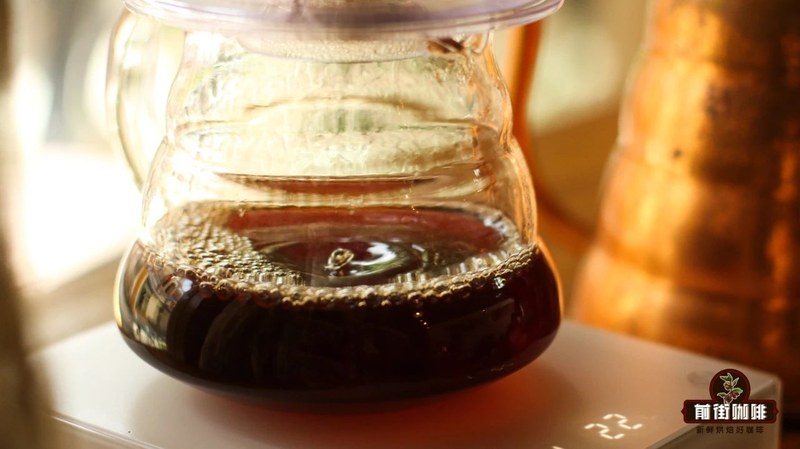
Freshness also affects the surface foam. Beans roasted recently degas vigorously, and more bubbles tend to appear when the pot is brewing, but the flavor is not necessarily stable yet; after resting the beans for several days, the aroma and sweetness are often more harmonious. Grinding should be done as close as possible to brewing, and the particles should be kept even. After the coffee comes out of the pot, shake it gently to mix, then divide into cups; the strength and oily feel will be more consistent.
You can treat capacity, grind, heat and the moment you remove the pot from the heat as a linked set of parameters to adjust: when the flavor is thin, first check whether the filter basket is filled enough and whether the grind is too coarse; when bitterness is obvious, lower the heat or end heating earlier; when there is little foam, pay attention to bean freshness and flow rate. Once you find the rhythm that suits your pot type, a moka pot can consistently present a richer, smoother everyday coffee.
Related Reading


Comments (0)
Loading comments...
You May Be Interested



Trending Reviews
Popular Videos

With you, wherever you are! We provide useful features to help you find new things you'll love






