Source:Best Coffee > News Author:qjroot Published:2024-12-12 18:43:18
Colombian coffee and Brazilian coffee have long been typical of the flavor profile of American coffees, yet the two differ: Colombian coffee has rich aromas of nuts and chocolate, and its exquisite taste comes from a balance of fresh acidity and sweetness. So where does this rich flavor of Colombian coffee come from?
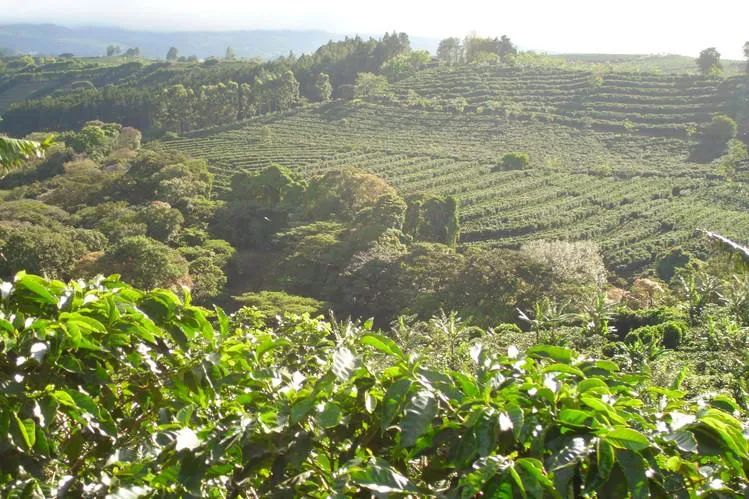
As the world's third-largest coffee-producing country, Colombia has a rich and vast terrain; its high-altitude mountains and diverse climates allow Colombia to maintain production while still guaranteeing coffee quality. Coffee-growing regions are mainly spread across western Colombia, home to the Andes, known for their high altitude. The mountain terrain forms an environment of three ranges and two rivers, spans a large north-south distance, and has different microclimates, so Colombia produces coffee in all four seasons.
Moreover, Colombia is divided into different regions. In earlier years, before the concept of specialty coffee existed, the country's coffee focus was mainly concentrated in coffee-producing regions such as Quindio, Cauca Valley and Cundinamarca in the north-central part, because these areas have two rainy seasons and two dry seasons in a year, and therefore two harvest seasons; to this day they remain the country's major production areas.
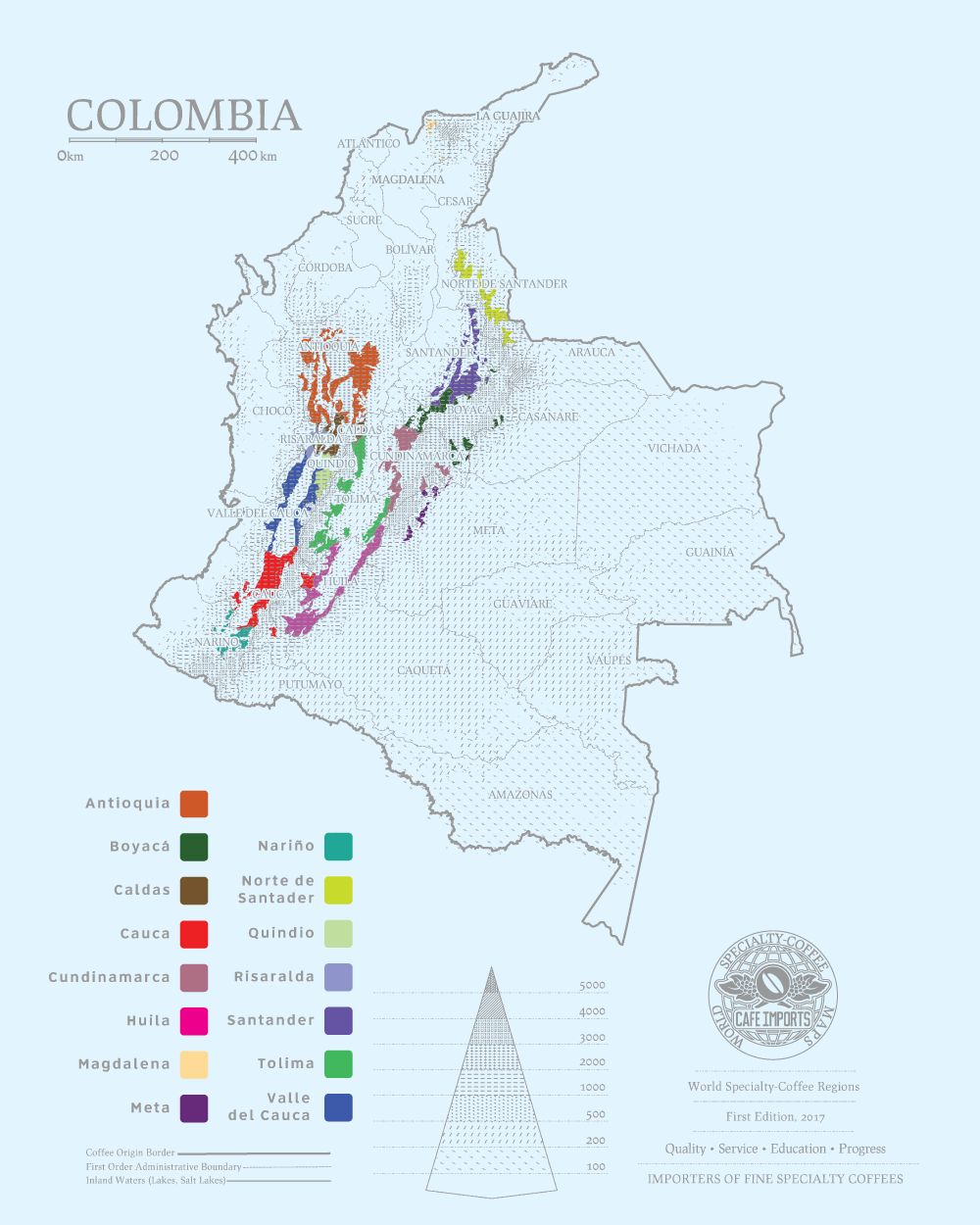
However, with the spread of specialty coffee, the core area of Colombian coffee began to shift southward. This area is closer to the equator and is the main specialty coffee-producing region, including Narino, Cauca and Huila.
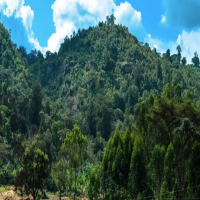
Among them, the best known is the Huila region. This producing area is surrounded by mountains, forming a canyon area; the canyon blocks the invasion of cold winds while also forming cool mountain breezes, keeping the temperature moderate here, remaining between 17-23ºC all year round. Coffee is mainly grown on hillsides at altitudes above 1250-2000 m. At higher altitudes, the temperature difference between day and night is large, which can slow the growth rate of coffee cherries and develop more flavor. In addition, several major rivers of Colombia flow through this place, and the nearby Huila Volcano brings fertile soil to the area, so many well-known coffee estates come from here.
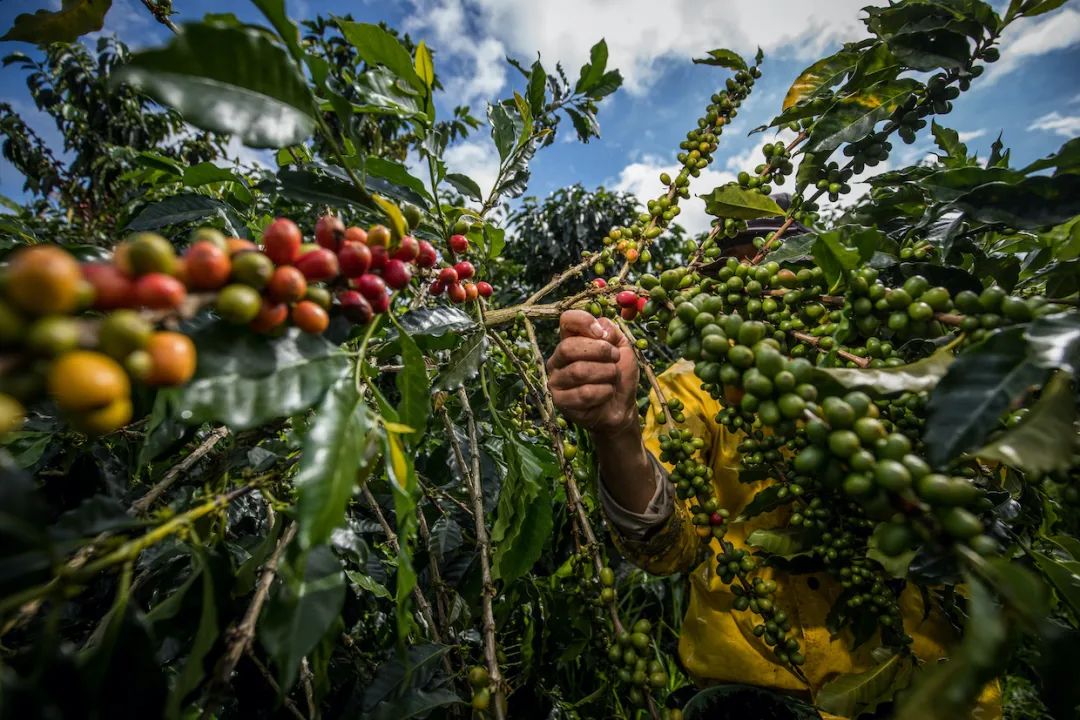
In addition, Colombia cultivates many coffee varieties, including traditional ones, Caturra, and Catuai, as well as the Geisha variety from Panama, and quite a few new varieties such as Sidra and Ombligon.
In the early days, only washed processing existed nationwide in Colombia, because the country once legislated that only washed coffee was allowed to be exported. Later, however, as other processing methods such as natural and honey processing gradually became popular internationally, the regulation was abolished in 2012 in order to increase the competitiveness of Colombian coffee, which brought about today's situation in which a hundred flowers bloom and various processing methods coexist in Colombia.
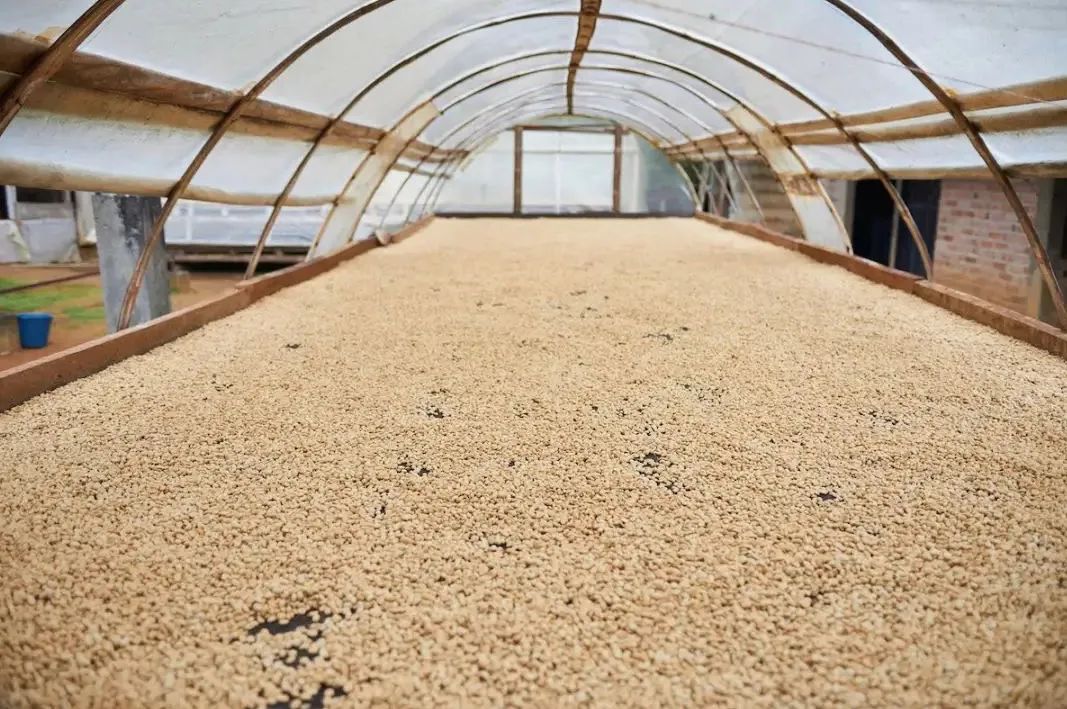
Although many Colombian coffees on the market today use novel processing methods to present richer and more vivid flavors, quite a few coffee farmers still choose the most traditional washed and natural processing. Washed processing can restore the aroma of the coffee beans themselves to the greatest extent and showcase the basic flavor of the region itself.
Through cupping, Qianjie found that some traditionally processed Colombian coffee beans have rich aromas like nuts and chocolate, with soft fruit acidity and sweetness, and are clean and balanced overall. To preserve these characteristics, Qianjie uses medium roasting during roasting.
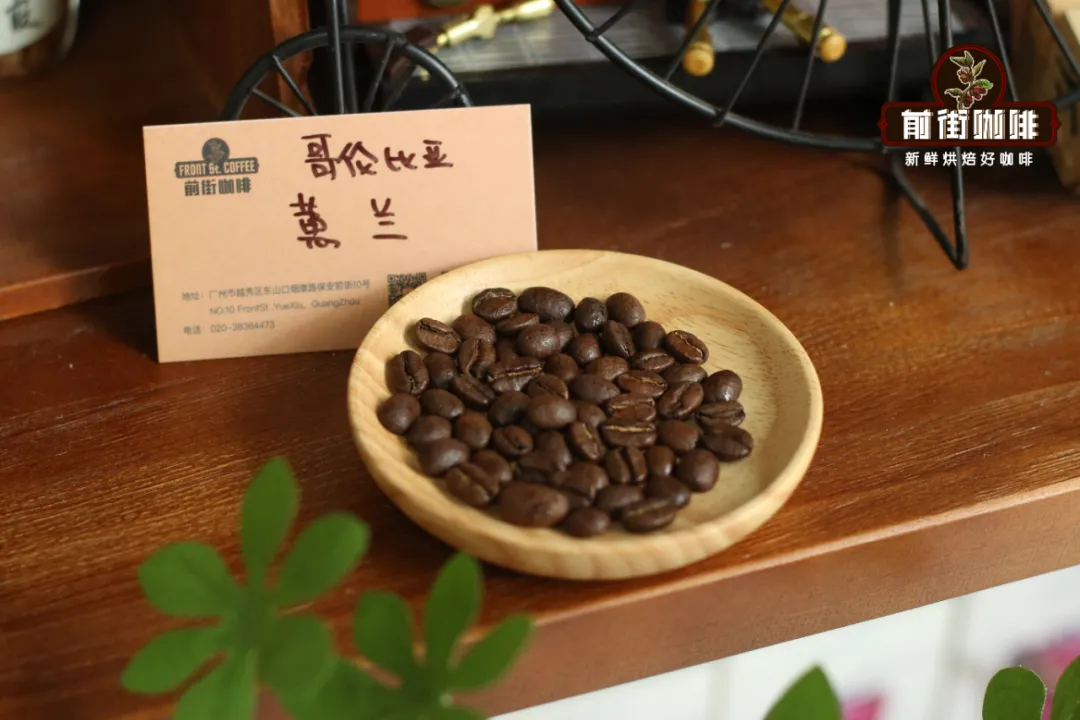
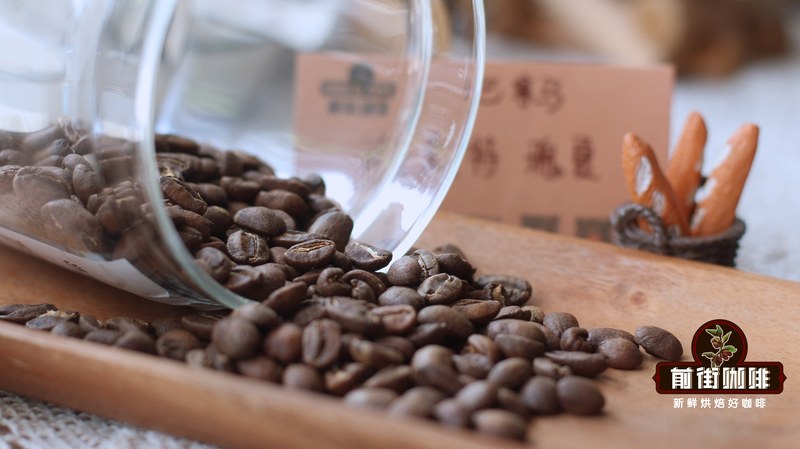
Best Coffee's introductory selection series includes a washed Caturra from the Huila region of Colombia, medium roasted to highlight the local regional flavor; after brewing, it enters with a soft fruit acidity, nutty and chocolate flavors, a caramel-like sweetness, and an overall soft and balanced cup.
To learn more about coffee origins and information, please scan the QR code to follow: Kaping
Long-press the QR code to follow:

Related Reading



Comments (0)
Loading comments...
You May Be Interested


Trending Reviews
Popular Videos

With you, wherever you are! We provide useful features to help you find new things you'll love






