Source:Best Coffee > News Author:qjroot Published:2026-09-18 16:42:56
Yunnan Arabica coffee has long been known for its balanced, gentle character, with a cup that often carries familiar notes of brown sugar, nuts and a faint plum-like sweet-tartness. However, many friends find when brewing that the same bag of Yunnan beans tastes very different depending on where it is brewed - sometimes full and sweet, sometimes dry and astringent. Behind this is not only the difference in grind and technique; the water quality used for brewing often plays an extremely key moderating role.
More than 98 percent of a cup of coffee is water, and the mineral content in the water, that is TDS, directly governs the pace at which aromatic substances are extracted. Calcium ions can latch onto the sweetness and full-bodied flavor molecules in coffee, while magnesium ions are good at drawing out fruit acidity and bright aromas. If the total minerals in the water are too high, they will over-extract deep woody and bitter notes; if there are no minerals at all, the cup will seem sour, astringent and hollow.
When brewing Yunnan Arabica coffee at home, tap water, due to residual chlorine and its relatively high calcium and magnesium hardness, easily suppresses the beans' originally gentle fruit aromas and makes the finish rough. It is relatively better to use natural soft water with total dissolved solids between 50 and 100ppm; this kind of water gives soluble aromatic substances ample room to be released, and sets off the herbal sweetness and sugarcane-like sweet aftertaste unique to Yunnan beans more cleanly.
When choosing Yunnan Arabica coffee, you can lock in the roast level and processing method according to your own water conditions. If you always keep low-mineral water at home, you can try more light-to-medium roasted Yunnan beans that are sun-dried or given special fermentation treatment; clear water can express the fermented fruit aromas very vividly. If it is everyday water filtered through a regular filter jug, choosing traditional medium-dark roasted washed beans makes it easier to brew smooth roasted nut and dark chocolate notes.
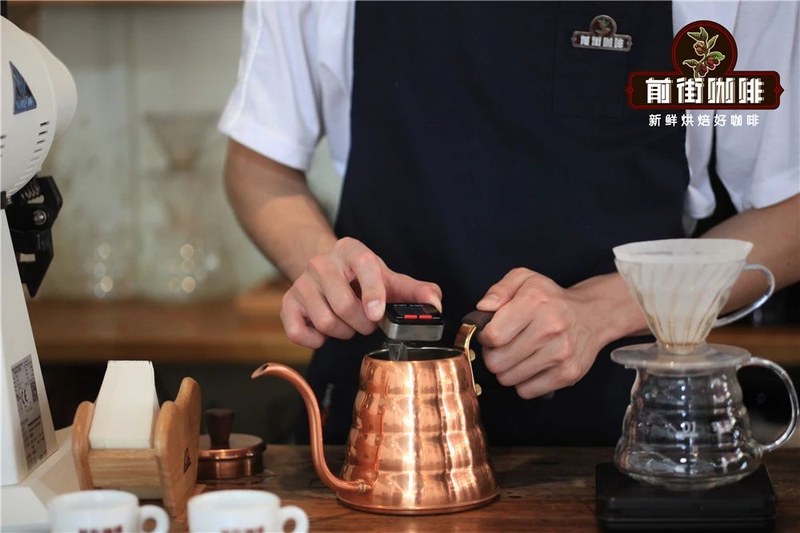
When brewing a traditional washed medium-dark roasted Yunnan Arabica, relatively soft water can slow the release of bitterness in the later stage. It is recommended to use a water temperature of 89°C, with 15g of coffee grounds and a 1:15 coffee-to-water ratio, for a total brewing water volume of 225ml. First bloom with 30ml of water for 30 seconds, then use a three-pour method, slowly pouring to 130ml and pausing briefly, and finally pouring the remaining water to 225ml, with the total time controlled at 1 minute 55 seconds; the cup will be filled with a warm maltose sweetness.
If you are dealing with a light-roasted batch with bright fruit acidity, water containing an appropriate amount of magnesium ions can make the lively acidity more juicy. In the world of single-origin beans, this flavor orientation can be compared with Qianjie Kaffa Forest, which has distinctive orange, ripe apricot and oolong tea-like sweet aftertaste, and, like high-altitude light-roasted Yunnan beans, responds very keenly to the fineness of water quality.
When brewing beans like Qianjie Kaffa Forest, which carry a light tea-like quality and stone-fruit sweetness, if you use clear spring water, the overall aroma will be especially three-dimensional. For brewing parameters, it is suggested to use a water temperature of 91°C, take 15g of grounds, and pour 225ml of water at a 1:15 coffee-to-water ratio. First bloom with 35ml of water for 30 seconds, then use a two-pour method, pouring evenly and steadily to 225ml to finish, with the total time controlled at 2 minutes 05 seconds, which extracts the gentle fruit acidity and clear, moist tea charm just right.
For enthusiasts pursuing a more exuberant floral and fruity aroma, another bean especially sensitive to minerals is Qianjie Grana Estate Geisha. This sun-dried bean has rich aromas of orange blossom, guava, apricot and strawberry jam; if too hard water is used, the elegant floral notes are very easily masked by impurities. Only when wrapped in water of moderate hardness can the progressive layers of fruit fully unfold.
To brew Qianjie Grana Estate Geisha well, you can prepare water of medium-to-soft quality to balance sweetness and acidity. Use a water temperature of 90°C, weigh out 15g of grounds, and fix the coffee-to-water ratio at 1:15, that is a total brewing water volume of 225ml. Use a delicate three-pour method: after blooming with 30ml of water for 30 seconds, gently pour the second stage to 140ml, and once the coffee bed drops slightly, pour the third stage to 225ml and remove the dripper, keeping the total time at 2 minutes 10 seconds; the floral and fruity sweetness will be especially long-lasting.
Understanding the subtle influence of water quality on extraction can make your everyday bean-selection thinking more open. When you choose a favorite Yunnan Arabica coffee or another single-origin bean with a unique flavor, you might as well take a look at your own water conditions; as long as you cleverly match water quality with roast level and pouring parameters, the rich regional character contained in the coffee beans themselves will naturally be fully presented in the cup.
Related Reading

Comments (0)
Loading comments...
You May Be Interested

Trending Reviews
Popular Videos

With you, wherever you are! We provide useful features to help you find new things you'll love






