Source:Best Coffee > News Author:qjroot Published:2024-09-04 19:04:16
Central America is a narrow strip of land connecting North and South America, but the region is not large in area and is divided into 8 countries in total. The terrain in this region is mainly highlands and mountains, with basins and valleys in between, and it is traversed by the Cordillera mountain system, forming the Pacific Ring of Fire, so volcanoes are found everywhere here. It has mountainous forest areas, a hot and humid climate, and fertile soil brought by volcanic ash, making it very suitable for growing crops such as coffee.
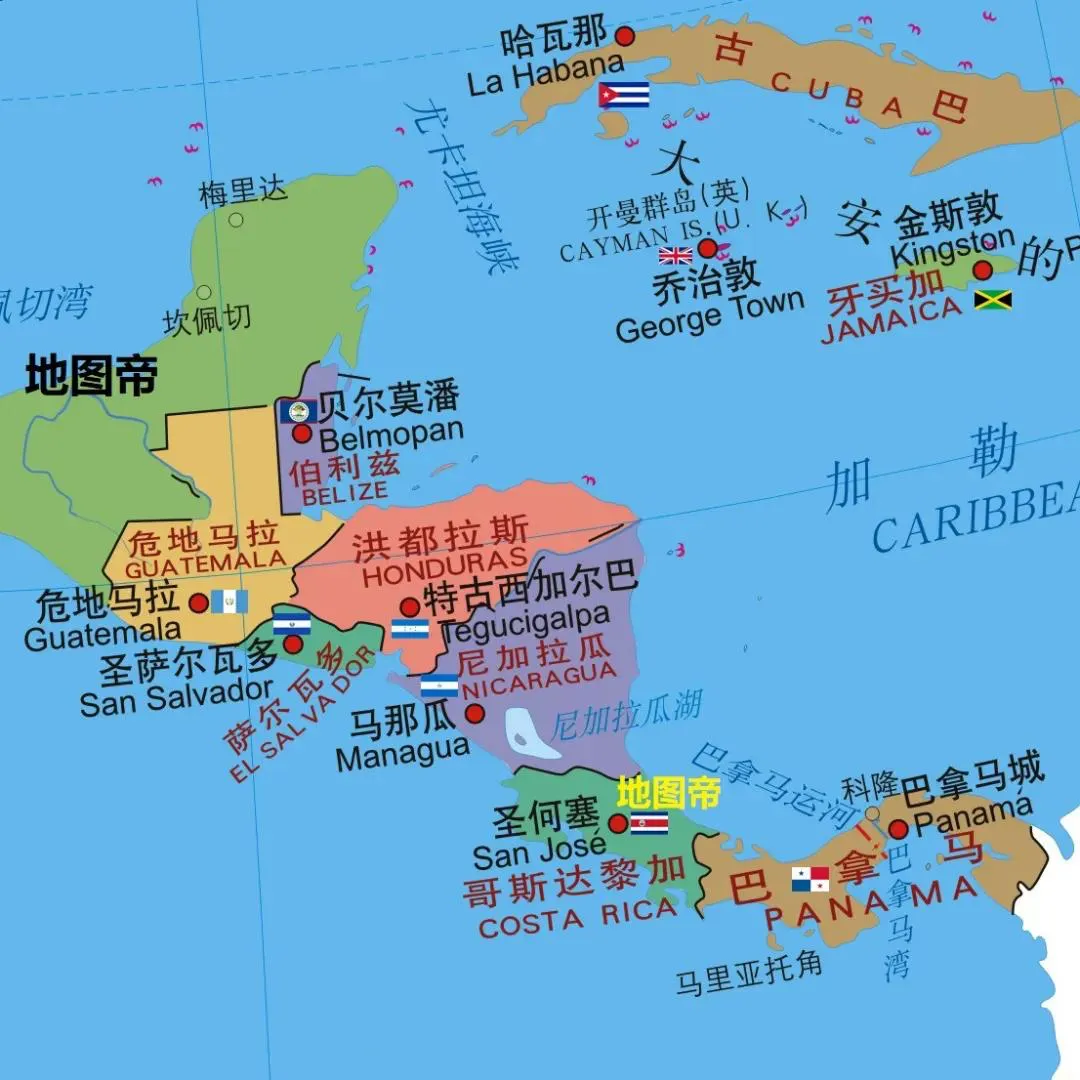
Among the 8 countries, 7 produce coffee and are known for producing coffee, such as Costa Rica, Panama, and Honduras. Among them, Honduras is the largest coffee-producing country in Central America and the fifth largest in the world, and while achieving high output it can maintain a relatively high quality level of coffee.
As early as the 18th century, coffee was introduced to Honduras by Spanish merchants, but at that time Honduran farmers mainly grew crops such as bananas, so only a small number of people grew coffee. By the end of the 19th century, Honduras's coffee industry had passed its initial stage and many coffee plantations were established, but they were all relatively small in scale.
In fact, Honduras's geographical conditions are no inferior to those of its neighbors Guatemala and Nicaragua, but because Honduras's industrial base at the time was relatively weak and it lacked support in transportation and port traffic, Honduras's coffee exports were hindered, resulting in the vast majority of coffee being sold only domestically.
This situation did not improve until the mid-20th century, when roads and ports began to be built, making exports more convenient, and the Honduran Coffee Institute (Instituto Hondureño del Cafe, abbreviated IHCAFE) was established to help improve local coffee quality. But in 1988, the country was hit by the powerful and destructive Hurricane Mitch, causing severe damage, and after the hurricane it encountered an outbreak of coffee leaf rust. The coffee industry was hit again, and later through efforts on many sides, the coffee industry slowly recovered and became an important economic pillar of the country.
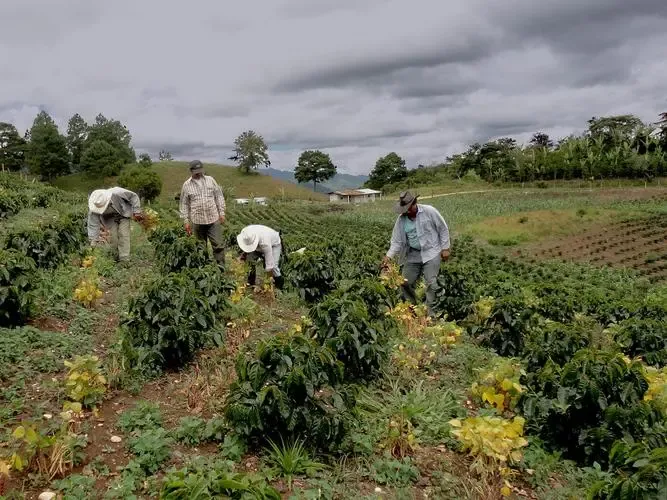
Honduras is a mountainous country, with more than 75% of its territory covered by mountains. The interior is a lava plateau, and the Central American mountain range runs from west to east through the center, forming many basins and river valleys. Forested area accounts for about half of the country's total area, and the national average altitude is 900-1500 m. The country has a tropical climate, with an annual average temperature of about 23°C, mild temperatures, and abundant rainfall. Together with the high-altitude mountain areas and volcanic soil, it has superior conditions for growing coffee.
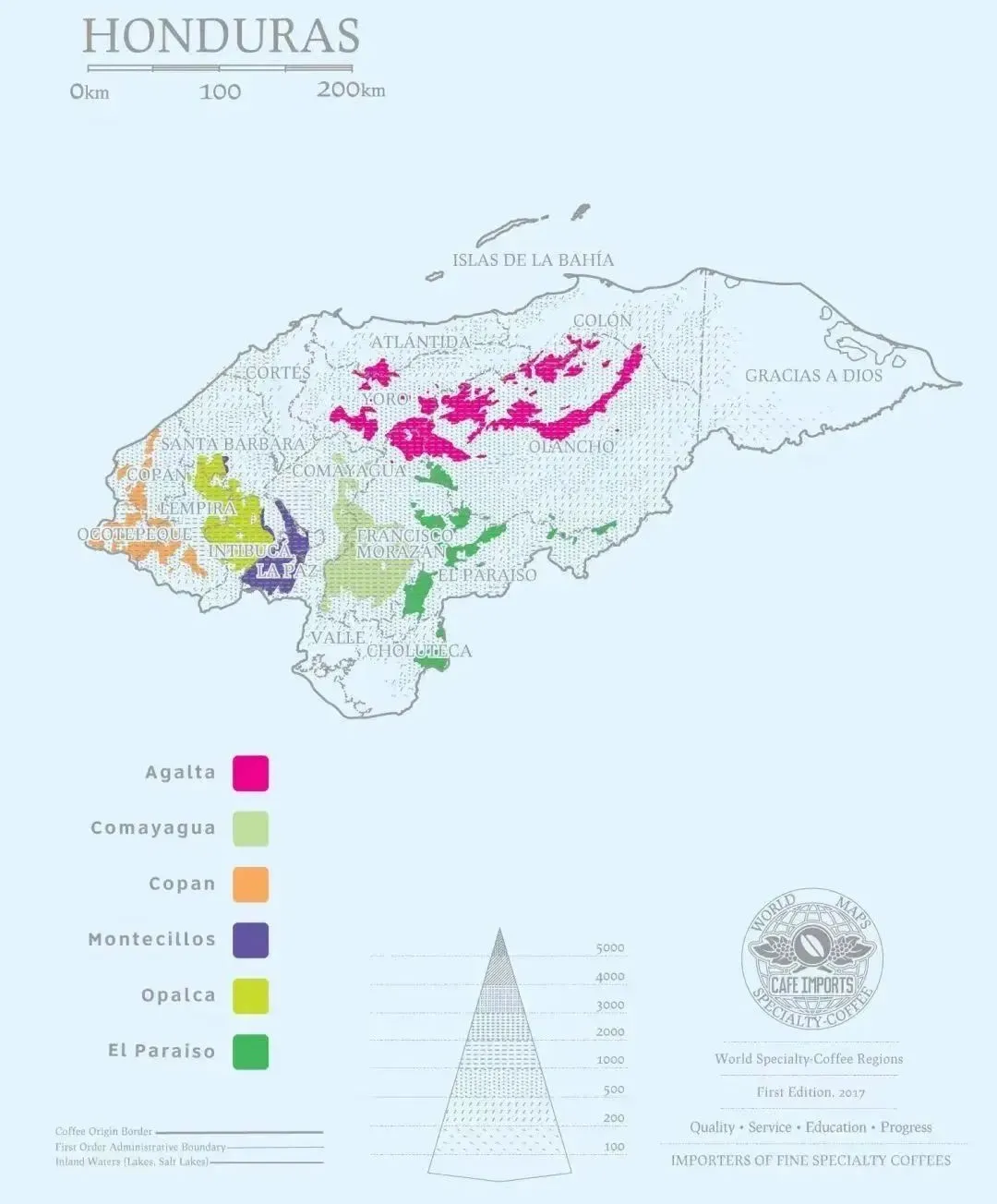
Honduras is divided into six coffee-producing regions: Copan, Opalaca, Montecillos, Comayagua, Agalta Tropical, and El Paraiso, and all of these regions are at altitudes above 1100 m.
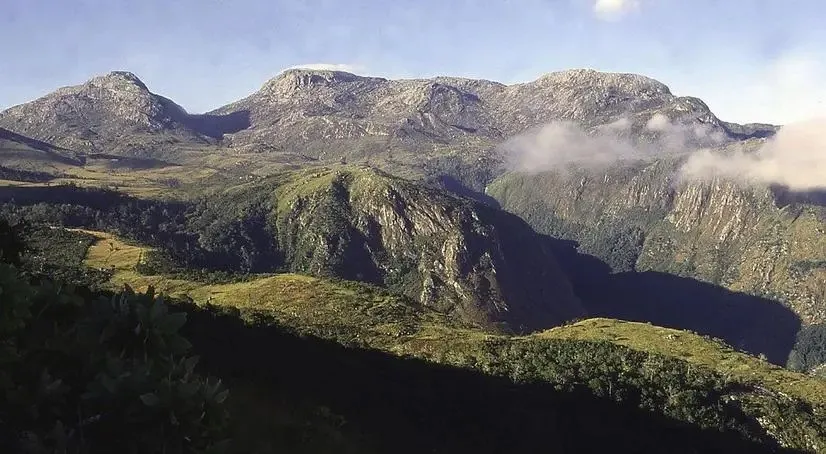
At present, the best known is Opalaca, which has frequently appeared on the country's Cup of Excellence (COE) list in recent years. Opalaca is located between Santa Barbara Department, Intibuca Department, and Lempira Department. In this region is the country's highest volcanic peak, Cerro Las Minas, which gives the area fertile soil. The growing altitude is between 1100-1700 m, and the inland Lake Yojoa provides abundant water resources. Combined with a suitable climate, the coffee produced here has delicate acidity, with flavors of tropical fruits such as citrus, grape, and mulberry, and an overall balanced performance. It mainly grows Bourbon, Catuai, Lempira, and Typica, and in recent years it has also begun growing Geisha.
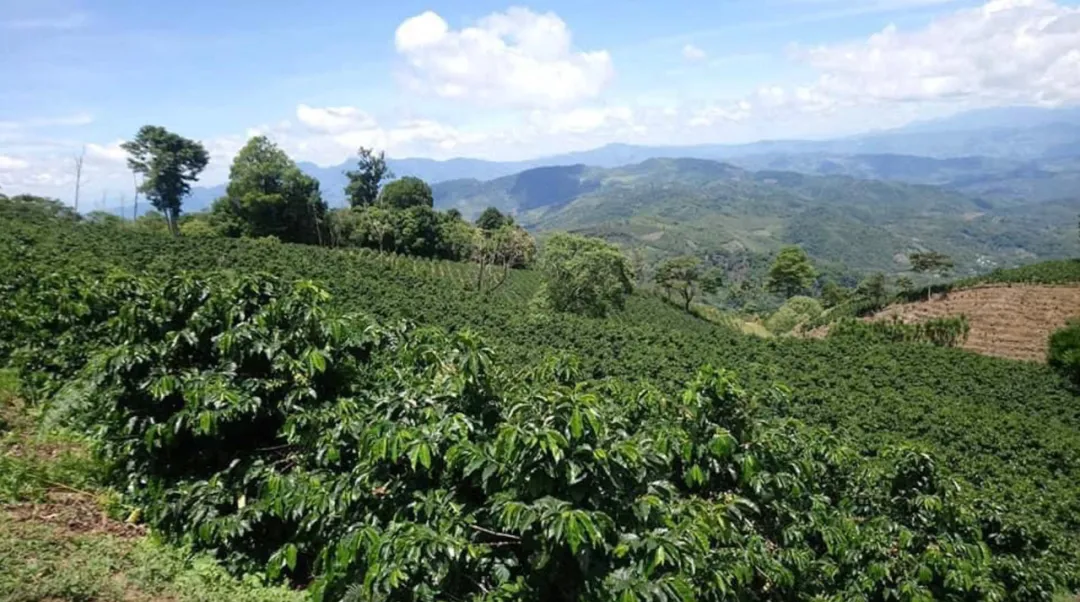
Like most Central American origins, Honduras uses altitude as the main criterion for its crop grades, because the higher the altitude, the greater the temperature difference between day and night, the longer the coffee cherries take to ripen, the more sugars accumulate, the richer the flavor, and the better the density and hardness. They are generally divided into SHG (STRICTLY HARD GROWN, coffee beans produced at altitudes above 1200m) and HB (GOOD GROWN, coffee beans produced at altitudes between 800-1200m).
To learn more about coffee origins, please scan the QR code to follow: Kaping
Long-press the QR code to follow:

Related Reading





Comments (0)
Loading comments...
You May Be Interested




Trending Reviews
Popular Videos

With you, wherever you are! We provide useful features to help you find new things you'll love






