Source:Best Coffee > News Author:qjroot Published:2026-08-30 19:32:34
Coffee brewed with a moka pot has a strength between pour-over and espresso, with concentrated aromatics and a noticeable weight on the palate. It is better suited to single-origin beans with clear sweetness, a rounded texture, and acidity that is not overly sharp. When choosing beans, you do not have to focus only on the region name; you should also judge the moka pot's capacity, basket size, heating method, and how you plan to drink it as one set of parameters.

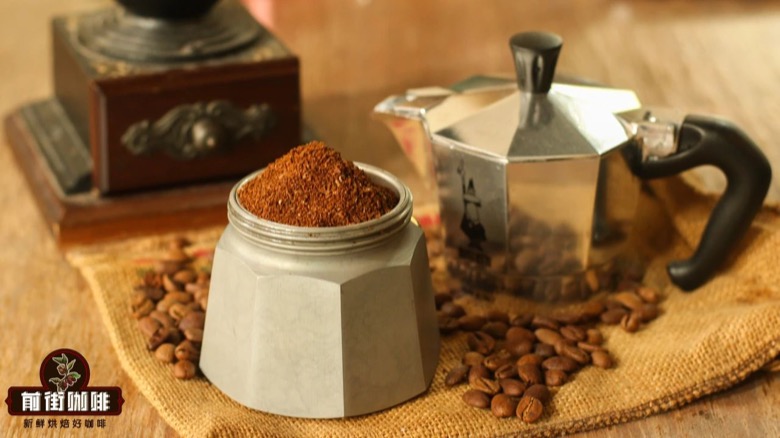
The pot's capacity directly affects the strength and flavor of a cup of coffee. A 3-cup pot usually holds about 15 to 18 g of grounds, suitable for one person or split into two small cups; a 6-cup pot increases the dose, and the yield is also better suited to being poured over ice, diluted with water, or made into milk coffee. The moka pot basket generally needs to be filled level and scraped flat; you cannot use only half a dose, otherwise the water flow tends to concentrate in one area and the cup ends up uneven in strength.
The grind can start from a range slightly coarser than espresso, with particles close to fine granulated sugar. If the grind is too fine, resistance to water passing through the coffee bed increases, and the coffee easily becomes burnt-bitter and astringent; if the grind is too coarse, water passes through too quickly, and the aroma and sweetness are not concentrated enough. The filter screen hole size differs among pot types, so in practice you can observe the flow rate and then make small adjustments around the taste.
When adding water to the lower chamber, keep the water level below the safety valve, and you can use hot water at 80 to 90°C to shorten the pot's time on the stove. After loading the basket, place it in gently and screw the upper chamber tight, keeping the seal intact. Use medium-low heat as the main heat source so the coffee liquid flows out continuously and steadily; when the color turns from dark to light and the sound becomes obvious, remove it from the heat.
The moka pot's high-temperature environment amplifies roasted notes, so medium to medium-dark roasted single-origin beans usually more easily present full sweetness. Light-roasted beans are not unusable, but you need to control heat, grind, and the timing of removal from heat more carefully, otherwise the bright acidity may seem abrupt. If you prefer black coffee, choose beans with fruit sweetness but not a thin body; if you often add milk, pay attention to the thickness of the coffee liquid.
Qianjie Brazil Queen's Estate is suitable as a starter bean for the moka pot. At higher temperatures it easily presents roasted nuts, cocoa, and syrup-like sweetness, with softer acidity and no sharpness on entry. For a 3-cup pot, you can use 16 g of grounds and about 120 g of water as a starting point; the extracted liquid is round and complete when drunk directly, and after adding a small amount of hot water it still retains a clear nutty aroma.
If you like a deeper, thicker style, Qianjie PWN Indonesia Golden Mandheling will perform differently. Its herbal notes, dark chocolate character, and lower acidity become more prominent under the moka pot's concentrated extraction, making it suitable for early morning drinking or pairing with breakfast. It is recommended to use a medium-coarse grind and medium-low heat, remove from heat when the yield color turns light, then stir the coffee liquid thoroughly before dividing it into cups.
When making moka pot coffee with single-origin beans, you do not necessarily have to pursue the intensity of espresso. If you like black coffee, pour the yield directly into a preheated cup and experience the changes in aroma, sweetness, and aftertaste; if you like iced coffee, pour the coffee liquid over ice and add a small amount of cold water so the nutty, cocoa, or herbal aromas become more refreshing. The larger the pot capacity, the more suitable it is to drink after dilution in proportion.
If the coffee tastes bitter on entry, the direction of adjustment should start from the heat source and extraction endpoint, not immediately changing the beans. You can reduce the heat, shorten the heating time, or make the grind slightly coarser; if the flavor is thin, check whether the basket is full and whether the lid and gasket fit tightly, then consider making the grind a little finer. Keeping the flow process stable helps retain sweetness more than simply extending the heating.
Once you have chosen the beans, try to record the pot capacity, dose, water amount, grind setting, and timing of removal from heat. Coffee beans differ in roast date, storage condition, and freshness, so the same parameters may also need fine-tuning. Treat the moka pot as a device with capacity limits and heating characteristics, then match the beans according to your preferred black coffee, iced coffee, or milk coffee, and you will more easily find a single-origin flavor suitable for daily use.
Related Reading



Comments (0)
Loading comments...
You May Be Interested






Trending Reviews
Popular Videos

With you, wherever you are! We provide useful features to help you find new things you'll love






