Source:Best Coffee > News Author:qjroot Published:2026-01-07 16:53:30
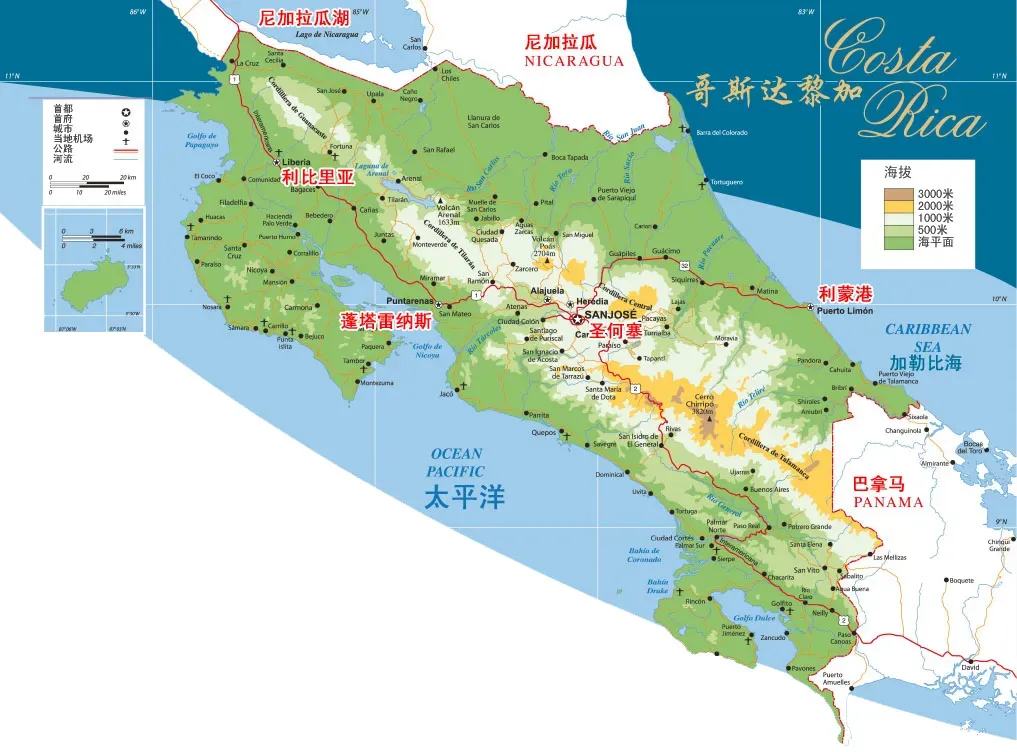
In Central America, also known as the Central American Isthmus, it is located in the connecting zone between the continents of North and South America. The terrain of the countries here is mostly mountainous and hilly, with basins and valleys interspersed. There is also a volcanic belt, and the fertile volcanic soil is good for farming. In addition, because it is in the tropics, the climate in the mountain basins is mild, making it very suitable for growing crops such as coffee. Therefore, among the 7 countries in Central America, 6 produce coffee and are famous for producing coffee, such as Costa Rica, which was the first country in Central America to grow coffee and bananas for commercial value. Coffee and bananas are the country's main export commodities.
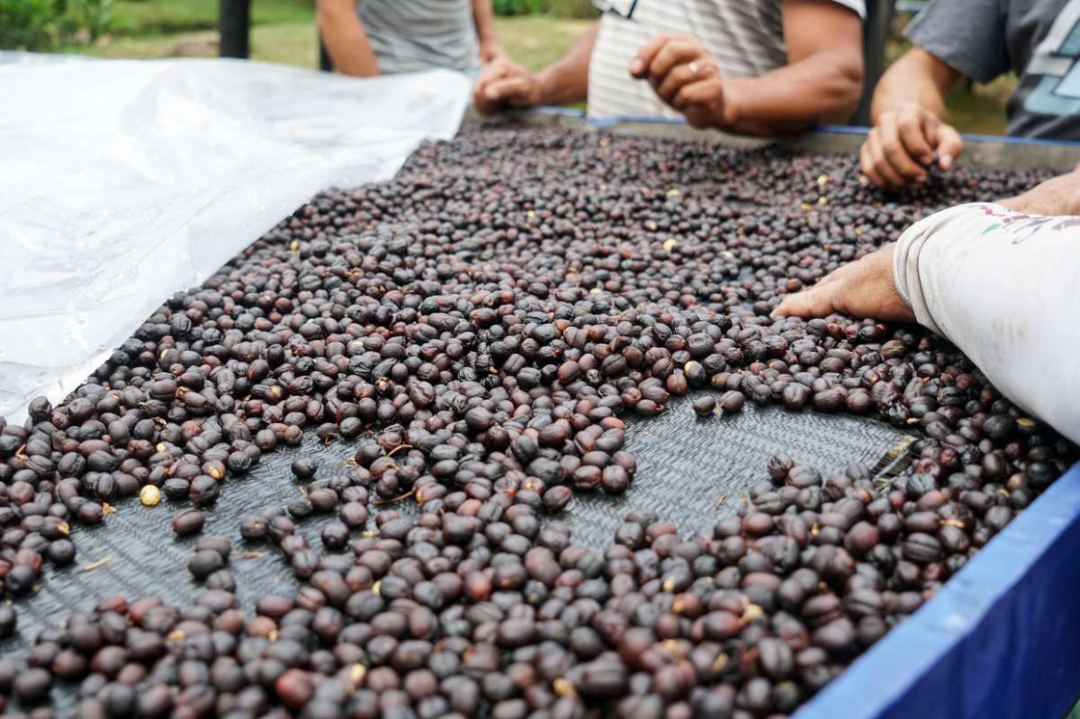
Coffee first entered Costa Rica in the 18th century via Cuba. At that time, Costa Rica was under Spanish rule, and the coffee industry was also controlled by Spain. It was not until the 1820s, when Costa Rica declared independence, that the government distributed coffee seeds to citizens free of charge and implemented tax-free policies to promote coffee production as a cash crop. From then on, the coffee industry developed rapidly in Costa Rica and was sold to Europe and the United States.
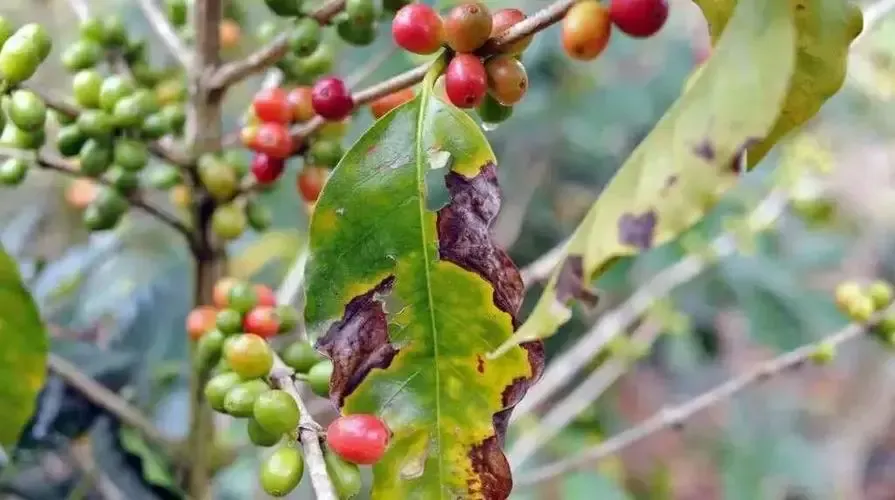
In the 20th century, Costa Rica became the largest coffee supplier to the United Kingdom. However, because World War II broke out, the United Kingdom stopped importing Costa Rican coffee beans, causing a major blow. In addition, in the 1980s, coffee tree diseases swept across the whole of Central America, and more than a million coffee trees died, dealing another blow to Costa Rica's coffee industry.
It gradually recovered later, but the Costa Rican government realized that only by producing high-quality Arabica coffee beans could it gain a firm foothold in the market, so it passed a law prohibiting the cultivation of Robusta coffee varieties.
Coffee can grow in Costa Rica thanks to the country's rich natural resources. Central Costa Rica is traversed by the Cordillera mountain system, mostly rugged mountainous terrain dotted with volcanoes, which separates the regions on the east and west sides. Coffee is planted on the slopes on both sides, where high-altitude mountains, volcanic soil and abundant sunshine make it very suitable for coffee growing.
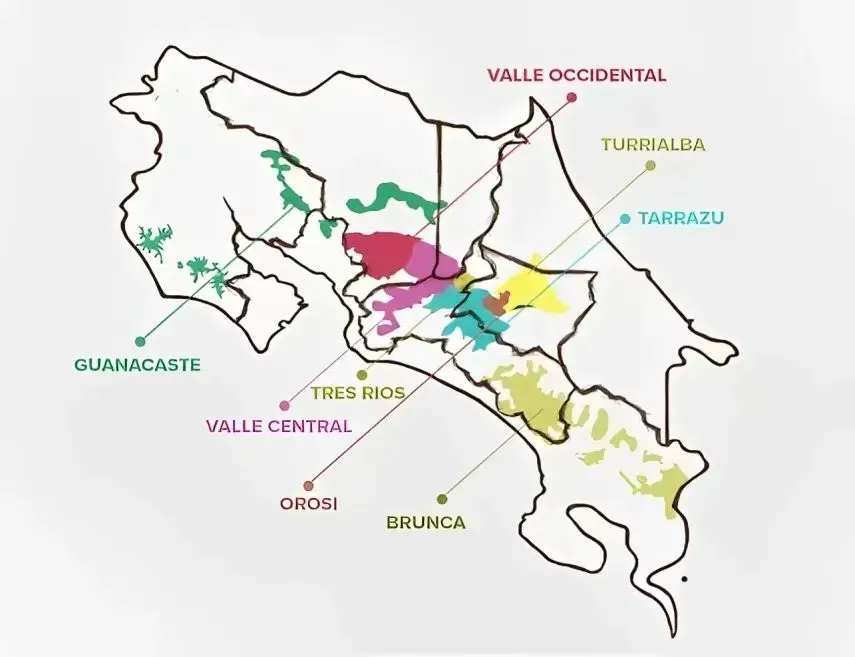
At present, Costa Rica is divided into eight major coffee regions: West Valley, Central Valley, Tarrazu, Tres Rios, Orosi, Brunca, Turrialba and Guanacaste. These regions are all distributed across the central mountain range.
Among them, Tarrazu is the country's largest and most well-known region, located in San Jose Province in the central part of the country. Originally this region was called Los Santos and has a long history of coffee cultivation, including areas such as the town of Tarrazu and the town of Dota. However, Tarrazu was the first to become famous in the area, and in 2019 the Costa Rican government registered the coffee designation of origin "Cafe de Tarrazu" with the European Union and the World Intellectual Property Organization (WIPO), so people have become accustomed to using "Tarrazu" as the name of the broader region.
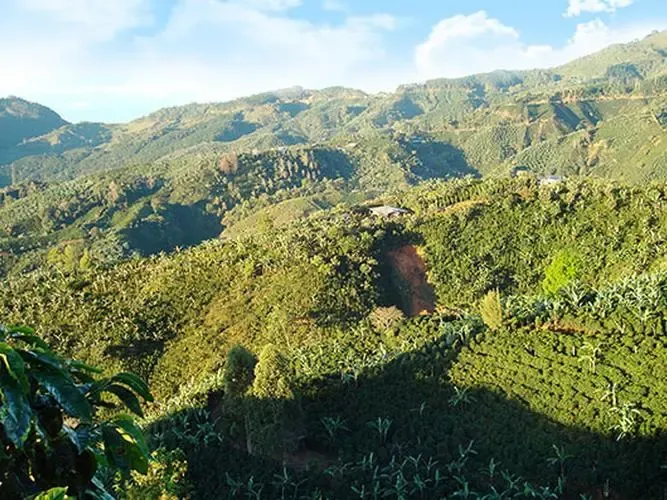
This producing region is close to the Pacific Ocean and influenced by the warm Pacific currents, with high annual rainfall and a mild climate. It also lies in a volcanic area, where coffee is grown on hillsides at 1200-1900 m. The fertile volcanic soil together with the humid climate provides an exceptionally favorable growing environment for coffee.
Costa Rica's grading system is relatively simple. Like most Central American origins, it uses altitude as the main criterion for crop grade, because the higher the altitude, the lower the temperature, the longer the coffee cherries take to ripen, the more sugars accumulate, the richer the flavor, and the better the density and hardness. It is generally divided into SHB (STRICTLY HARD BEAN, coffee beans produced above 1200 m), GHB (GOOD HARD BEAN, coffee beans produced between 1000-1200 m) and MHB (MEDIUM HARD BEAN, coffee beans produced below 1000 m).

The FrontStreet Coffee everyday beans series also includes this well-known region. This is an entry-level selected Tarrazu coffee bean, using the Catuai (Catuai) and Caturra (Caturra) varieties, washed processing method, grade SHB, with a slight fruity acidity after brewing, sweet orange, nut and honey flavors, and a smooth sweet finish.
Costa Rica was the first country in Central America to grow coffee for commercial value, and the country focuses more on improving coffee quality than on coffee yield, so it is known for producing high-quality coffee, with mild fruity acidity, nutty and other flavors, and an overall balanced flavor and mouthfeel, very representative of Central American coffee.
Related Reading




Comments (0)
Loading comments...
You May Be Interested



Trending Reviews
Popular Videos

With you, wherever you are! We provide useful features to help you find new things you'll love






