Source:Best Coffee > News Author:Best Coffee Published:2024-08-10 17:20:53
Distinguishing Blue Mountain from Blue Mountain-flavored Coffee
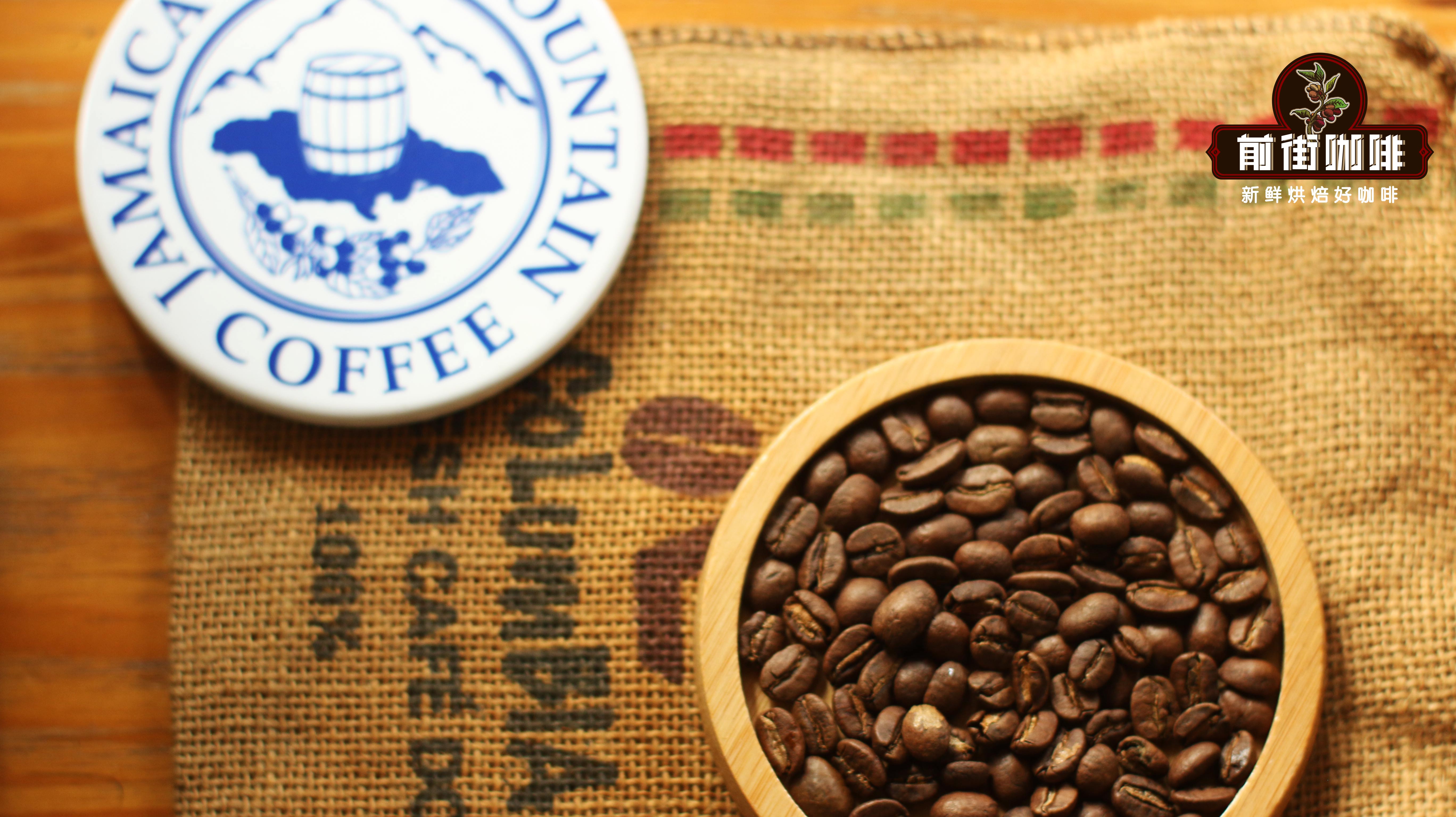
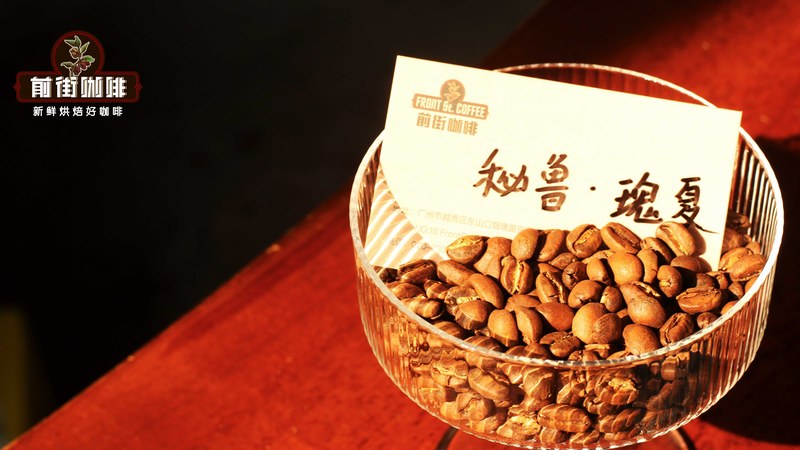
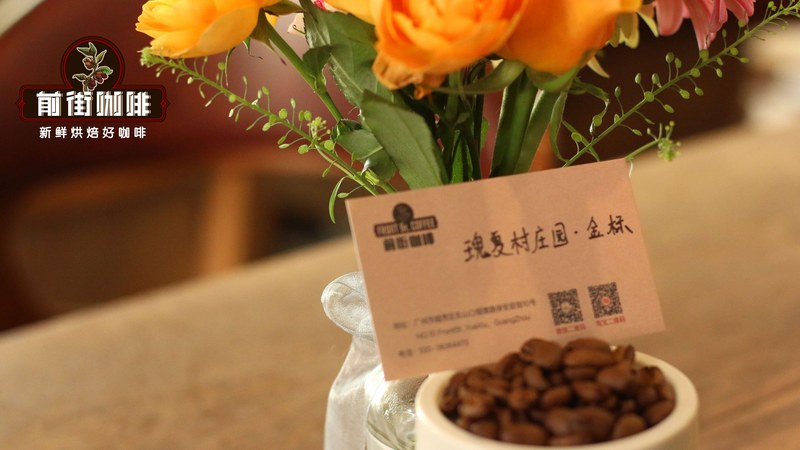
Front Street Coffee: Jamaican Blue Mountain No.1 Coffee Beans
Region: Blue Mountain Region
Farm: Clifton
Altitude: 1310m
Variety: Typica
Processing Method: Washed or Natural
Grade: NO.1
Because early Blue Mountain coffee beans were rare and expensive, some operators blended beans and used dark roasting to mimic the taste of Blue Mountain based on its flavor profile. “Blue Mountain blends” are mixed and the beans vary significantly in shape, making them easy to identify. Also, don’t believe in “premium Blue Mountain” for a few dozen yuan per pound or “Blue Mountain coffee” for over thirty yuan a cup. The landed cost of Blue Mountain coffee is generally around 1000 yuan per kilogram, and after adding various layers of profit, the price is undoubtedly quite high. Below, Front Street will introduce what authentic Blue Mountain coffee is from multiple aspects.
The Story of Jamaican Blue Mountain No.1 Coffee
The history of coffee in Jamaica dates back to the 18th century. In 1717, King Louis XV of France ordered coffee to be planted in Jamaica. In the mid-1720s, Jamaican Governor Sir Nicholas Lawes imported Arabica seeds from Martinique and began promoting their cultivation in the St. Andrew area. Coffee trees were introduced to Jamaica and planted in the Blue Mountains, which are further divided into high-altitude Jamaican Blue Mountain coffee, high mountain coffee, and regular Jamaican coffee. Different grades also determine different prices.

The Planting Altitude of Blue Mountain Coffee
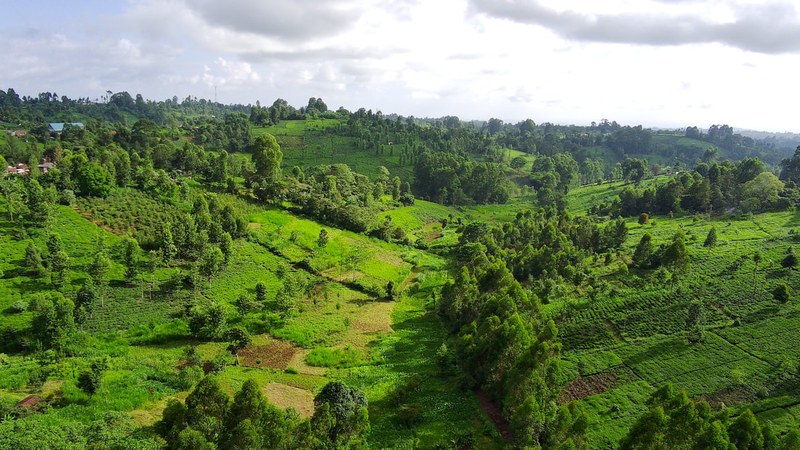
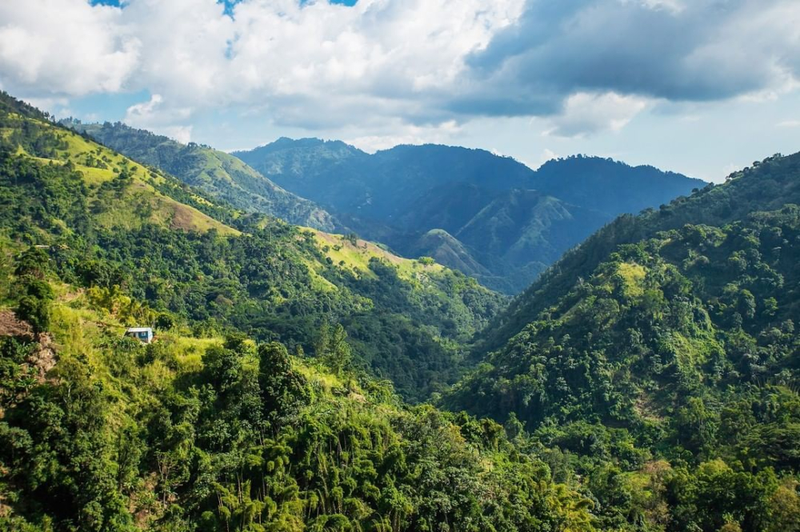
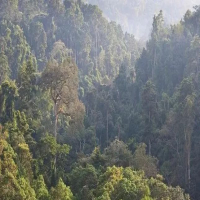
The Blue Mountains are located in the eastern part of Jamaica. The mountain is named for the way the sun shines directly on the deep blue sea on clear days, reflecting brilliant blue light from the peaks. The highest peak of the Blue Mountains is 2256 meters above sea level, making it the highest peak in the Caribbean and a famous tourist destination. Located in the coffee belt, the area has fertile volcanic soil, fresh air, no pollution, a humid climate, and is often foggy and rainy year-round (average precipitation is 1980 mm, with temperatures around 27°C). This climate has created the world-renowned Jamaican Blue Mountain coffee, as well as the most expensive coffee in the world.

Authentic Blue Mountain coffee is one of the coffees grown under the most superior conditions in the world. Jamaica’s weather, geology, and terrain together provide an ideal setting. Designated Jamaican Blue Mountain coffee can only be grown in the Blue Mountain region, located in the northeastern part of Kingston, Jamaica. The mountain ridge that runs across Jamaica extends to the eastern part of the island, with the Blue Mountains rising over 2100 meters. The cool, foggy, and frequently rainy weather creates a well-balanced rainfall in this fertile land. Here, people use mixed planting methods to grow coffee trees alongside banana and avocado trees on terraces.
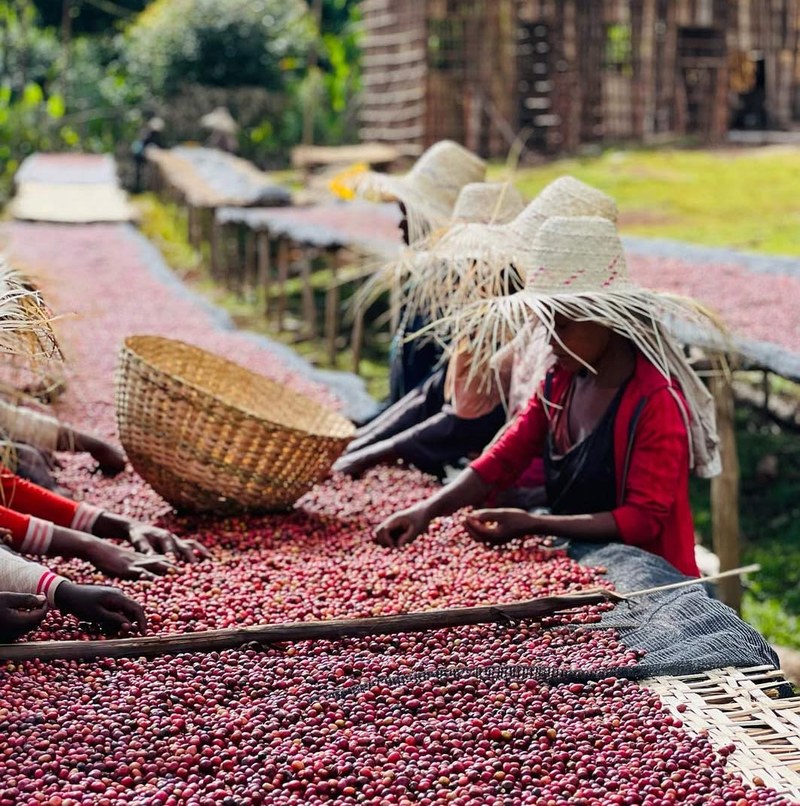
Moreover, the mountains are very rugged, making the harvesting process extremely difficult (harvesting is almost entirely done by women). Their coffee trees all grow on steep slopes, and picking is very challenging—only skilled local female workers can manage it. Selecting perfectly ripe coffee cherries at harvest is crucial; unripe or overripe cherries will affect the quality of the coffee.
Front Street Coffee (FrontStreet Coffee) Blue Mountain No.1 Coffee Variety
The Blue Mountain coffee sourced by Front Street is of the Typica variety. Typica has bronze-colored top leaves, oval or slender pointed beans, tall plants with slightly sloping branches at angles of 50-70 degrees. It has an elegant flavor but is delicate and weak in constitution, with poor disease resistance and very low yield per tree.
A characteristic of the Typica variety is its reddish-copper colored leaf tips, known as red-topped coffee. The coffee tree has long elliptical leaves that grow opposite each other, with smooth surfaces and long, sparsely branched twigs. The flowers are white and bloom at the base where the leaf petiole connects to the branch. Mature coffee cherries resemble cherries and are bright red.
The Processing Method of Blue Mountain No.1 Coffee Beans
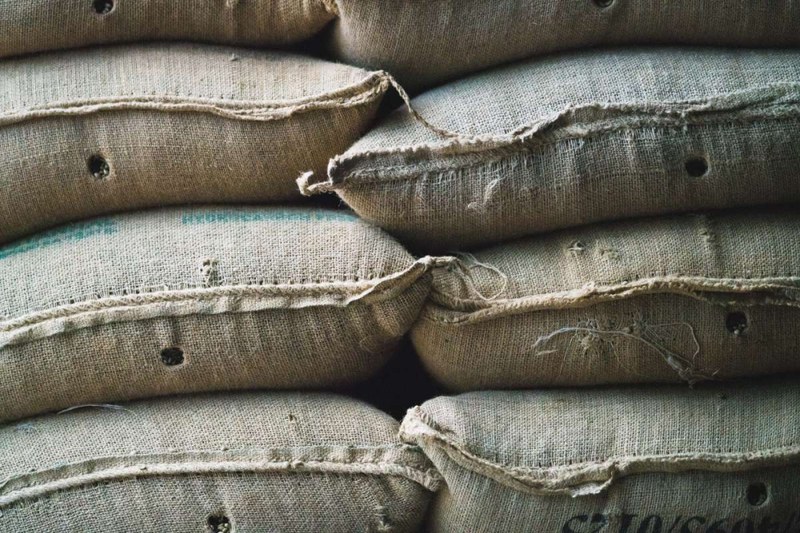
Before this year, Blue Mountain No.1 coffee was only processed using the washed method. The skin, pulp, and mucilage are removed through washing and fermentation. Farms using the washed method must have washing tanks and a continuous supply of fresh water. During processing, the skin and pulp are first removed, then the beans are fermented for 12-18 hours. The fermented beans are then placed in tanks and agitated back and forth, using friction and the force of the water to clean the beans until they are smooth and clean. After washing, the beans are still inside the parchment layer with a moisture content of 50%, and must be sun-dried to reduce the moisture content to 12-14%. Otherwise, they will continue to ferment, mold, and rot. The beans are then sorted and stored in specialized warehouses. These processes must be strictly controlled, otherwise the quality of the coffee will be affected.
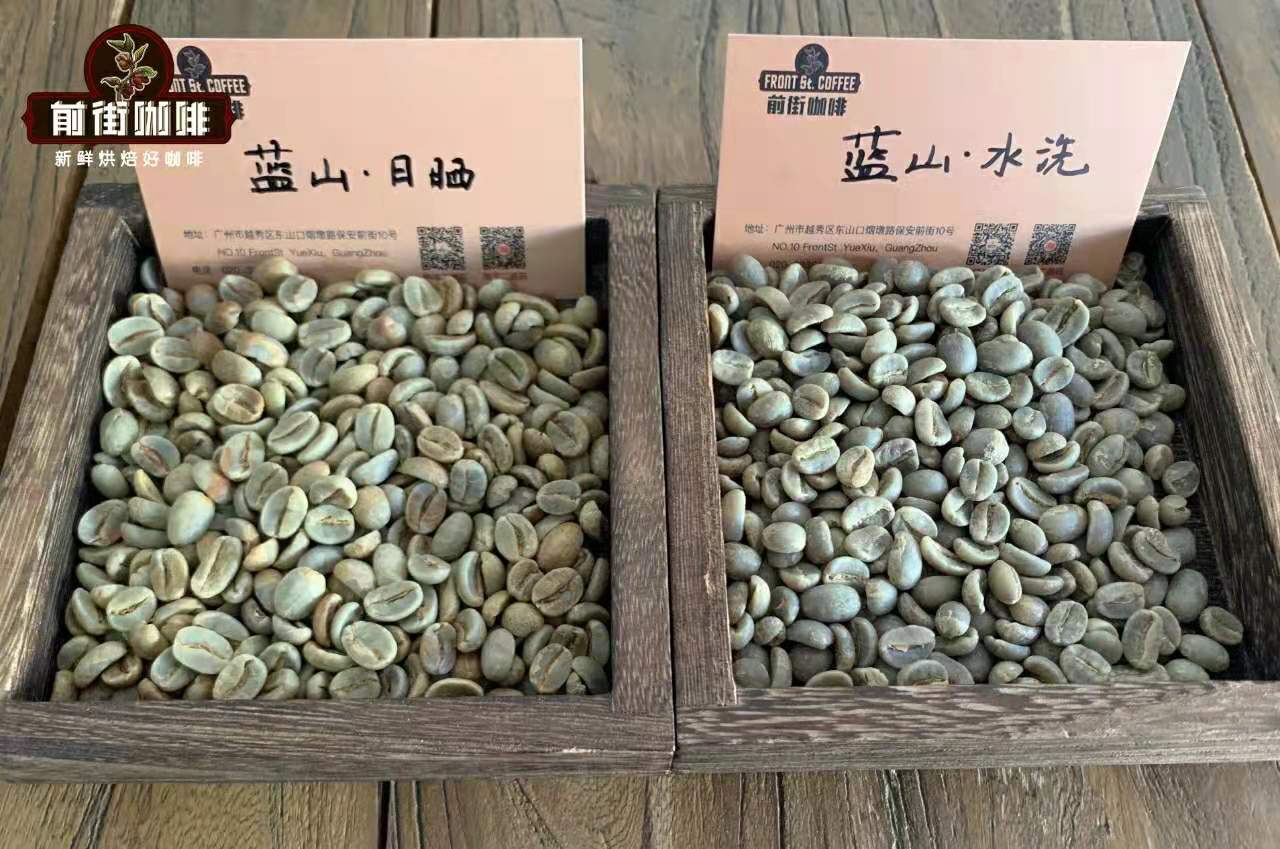
In 2020, the Blue Mountain region also exported a batch of naturally processed Blue Mountain No.1 coffee. Front Street was the first to import and roast them.
In fact, producing this natural Blue Mountain coffee was quite challenging. The reason why only the washed method was used before is because washing is the best way to ensure the essential expression of Blue Mountain flavor, and altering the processing method will inevitably change its flavor profile. This is also why Front Street Coffee (FrontStreet Coffee) always recommends washed-processed coffee beans first when introducing coffee from a particular region to customers—the washed method best represents the region’s flavor. Of course, the use of the natural processing method for Blue Mountain coffee is also in response to market trends, just as Front Street Coffee (FrontStreet Coffee) recently added a naturally processed Mandheling coffee bean, which differs from the traditional wet-hulled method."https://www.gafei.com/uploadfile/ueditor/image/202407/1721115663f4ab33.jpg" title="Bean Rack 875" alt="Bean Rack 875" style="padding: 0px; margin: 0px; outline: 0px; zoom: 1; width: 745px; height: auto !important;" />
Three Major Growing Regions of Blue Mountain Coffee
The Blue Mountain region is a small area with only 6,000 hectares of planted land—it’s impossible for all coffee labeled “Blue Mountain” to be grown there. The other 12,000 hectares are used to cultivate two other types of coffee (non-Blue Mountain): High Mountain Supreme and Jamaica Coffee.
Today, the St. Andrew region remains one of the three major Blue Mountain coffee-growing areas, along with the Portland and St. Thomas regions. Some smaller estates also grow Blue Mountain coffee, such as Wallenford Estate, Silver Hill Estate, and the Atlanta Estate of J. Martinez. Even the largest estate owners in this area are considered small-scale producers by international standards, with many being small landholders whose families have worked the land for two centuries.
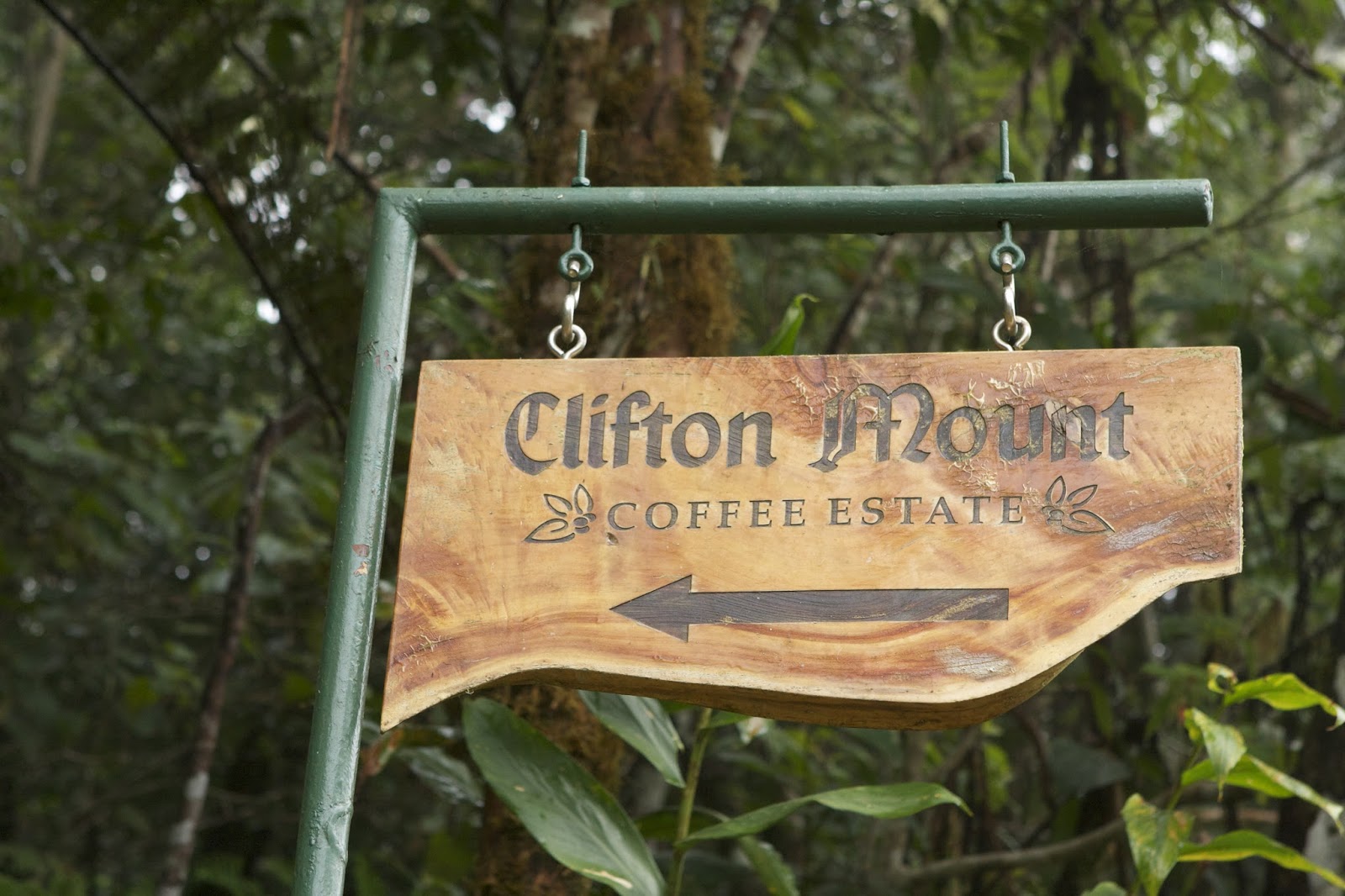
Currently, the representatives of the origin of Blue Mountain coffee include six labels such as M.B.C.E (Mavis Bank Central Factory), M.H.C.C.T. (Blue Mountain Coffee Cooperative Factory), P.X.X.S.H. (Portland Blue Mountain Coffee Cooperative Factory), Coffee Industry Board (Wallenford), Coffee Industry Board (St. John’s Peak), and Blue Mountain Coffee (J.A.S), among others. Some estates will also indicate their grade on the wooden barrels.
Jamaica is the only country in the world with a government coffee regulatory body—the Jamaica Coffee Industry Board (abbreviated as CIB), which is under the Ministry of Agriculture and Fisheries of Jamaica. The functions of the CIB include planting technical guidance, processing training, fair trade, quality supervision, and other matters related to the quality and brand of Jamaican Blue Mountain coffee. The board members of the CIB are all estate owners in Jamaica who own estates of a certain scale (due to industry shifts, newly certified Jamaican Blue Mountain estates now require a minimum of 50 hectares). The CIB stipulates that only Blue Mountain coffee beans produced above 2,200 feet in the Jamaican Blue Mountain region can be called Jamaican Blue Mountain. Its grades are divided according to bean size into NO.1, NO.2, NO.3, and the hand-selected PB. The basic standard for NO.1 Blue Mountain green beans includes beans larger than 17 mesh, a defect rate below 3%, and a moisture content of around 13%.

Another noteworthy company is Coffee Trades, with the estate name CLYDESDALE. The company’s coffee factory is located in the backyard of the CIB office building, and the estate is situated halfway up the Blue Mountains at about 1,200 meters. The other two major Jamaican Blue Mountain coffee companies are Wallenford and Mavis Bank. Both were formerly state-owned enterprises—Wallenford accounts for over 60% of Jamaica’s total Blue Mountain production, while Mavis Bank accounts for over 20%. Moreover, Mavis Bank is one of the few Jamaican Blue Mountain companies that offers all three grades: Jamaican Blue Mountain, Jamaican High Mountain, and Jamaican Select Coffee.
Classification and Grading of Blue Mountain Coffee
(1) Jamaican Blue Mountain Coffee
Under Blue Mountain coffee and High Mountain coffee, there are four grades each. Ranked from highest to lowest quality: NO.1, NO.2, NO.3, and PB (Peaberry). According to CIB standards, only coffee grown above 666 meters is called Jamaican Blue Mountain Coffee. The crème de la crème of coffee, produced in the Jamaican Blue Mountains at elevations of about 910–1,700 meters, is grown on steep mountainsides with limited yield. These beans are large, high-quality, well-balanced in flavor, and possess the right balance of acidity, bitterness, aroma, richness, and sweetness. Universally recognized as the finest, the price of Blue Mountain No.1 is the highest among all Blue Mountain coffees.

(2) Jamaican High Mountain Coffee
Coffee produced below 910 meters in the Jamaican Blue Mountain region is called High Mountain Coffee. It is the second-highest quality coffee after Blue Mountain and is referred to by insiders as the sibling variety of Blue Mountain. Due to the extremely limited production of Jamaican Blue Mountain Coffee, if you want to taste Jamaican-flavored coffee, then Jamaican High Mountain Coffee is your best choice.
(3) Jamaican Select Coffee
Jamaican Select Coffee is grown at elevations below 460 meters and is generally consumed within Jamaica.
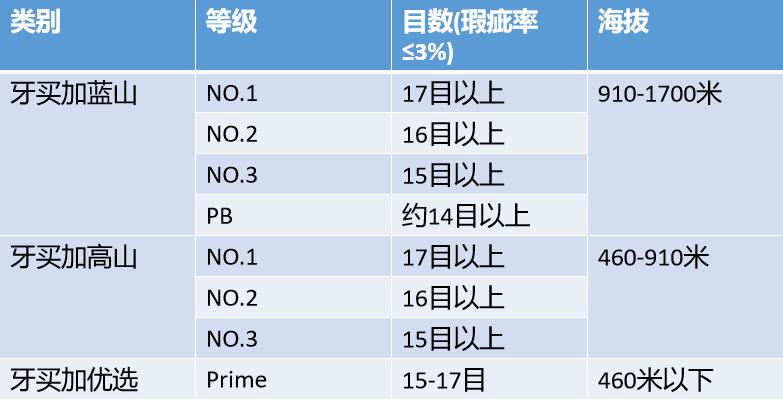
(Elevations in the image are converted from feet to meters: 910 meters ≈ 3,000 feet, 460 meters ≈ 1,500 feet)
Authentic Jamaican Blue Mountain Coffee Has Certification
The Jamaican government has always insisted that all Blue Mountain coffee is roasted in Jamaica to ensure consistent quality. In reality, roasting is a refined art that requires experience, training, and expensive equipment. From the consumer’s perspective, coffee beans should be roasted and consumed immediately. Roasting coffee in Jamaica cannot meet this requirement. Now, Jamaican green coffee beans can be exported.
Front Street Coffee (FrontStreet Coffee) has imported Jamaican Blue Mountain coffee directly from the origin. Currently, the Jamaican Coffee Board can issue certificates for all exported Blue Mountain coffee.
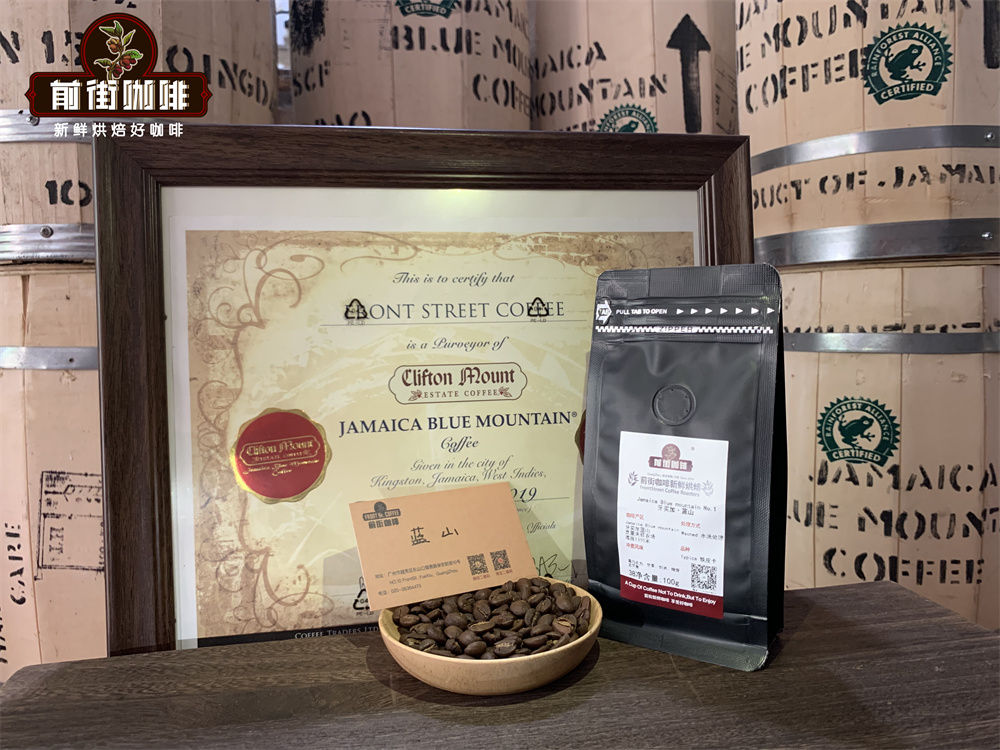
Certificates Are Divided Into Three Types:
(1) Quality Certification Certificate issued by the Jamaica Coffee Board
(2) Authorized Sales Certificate issued by Blue Mountain coffee manufacturers. (Blue Mountain coffee is distributed by four government-licensed processing producers in Jamaica and exported by 16 licensed exporters)
(3) Certificate of Origin for Jamaican Blue Mountain Coffee
Quality certification certificates indicate the time and quantity. The Jamaica Coffee Board randomly selects one package from the submitted Blue Mountain coffee for inspection. If it meets the conditions of Blue Mountain coffee, a certificate is issued.
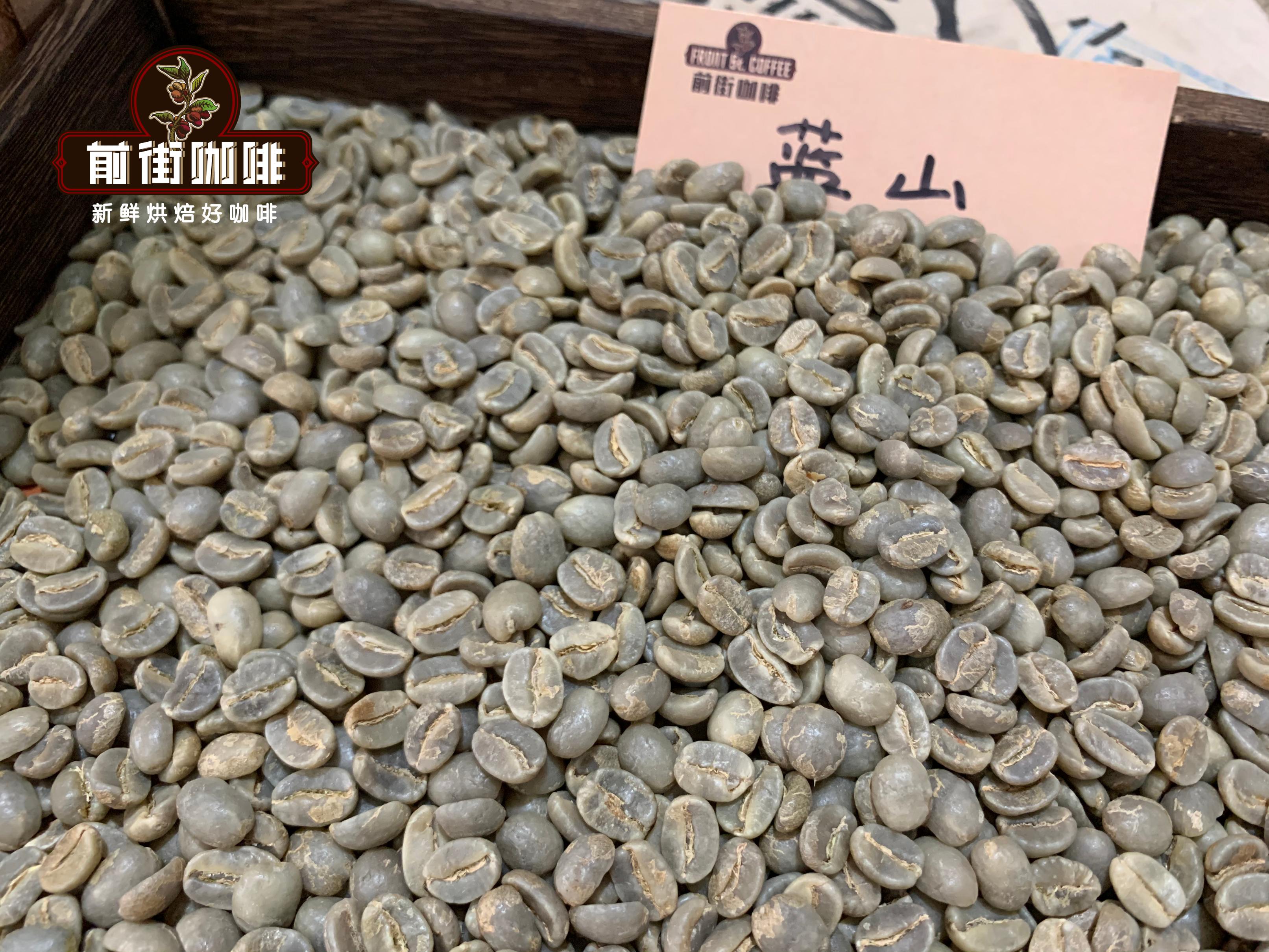
How to Identify Authentic Jamaica Blue Mountain Coffee?
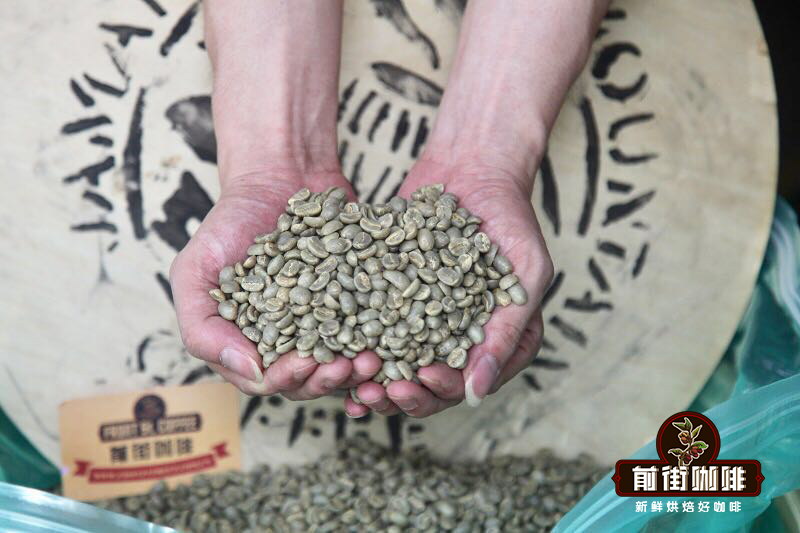
1. Appearance: The green beans of Jamaica Blue Mountain coffee are greenish in color, with a neat appearance. They are medium to small in size, with slightly curled ends. After roasting, their volume increases significantly, becoming very plump.
2. Grinding: Genuine Jamaica Blue Mountain coffee beans are grown at high altitudes, so their cellular structure is relatively loose. When hand-grinding, they feel crisp, smooth, and consistent, with no sense of resistance.
3. Aroma: The aroma is very rich and dense. So-called blended "Jamaica Blue Mountain" coffee does not have this kind of aroma.
4. Taste: Authentic Jamaica Blue Mountain coffee has a balanced and rich flavor, with no single taste being overly prominent or lacking—this is also the most crucial distinguishing feature that no other coffee beans can match. The aroma of Blue Mountain peaberry beans is more subtle, while the taste is relatively stronger.
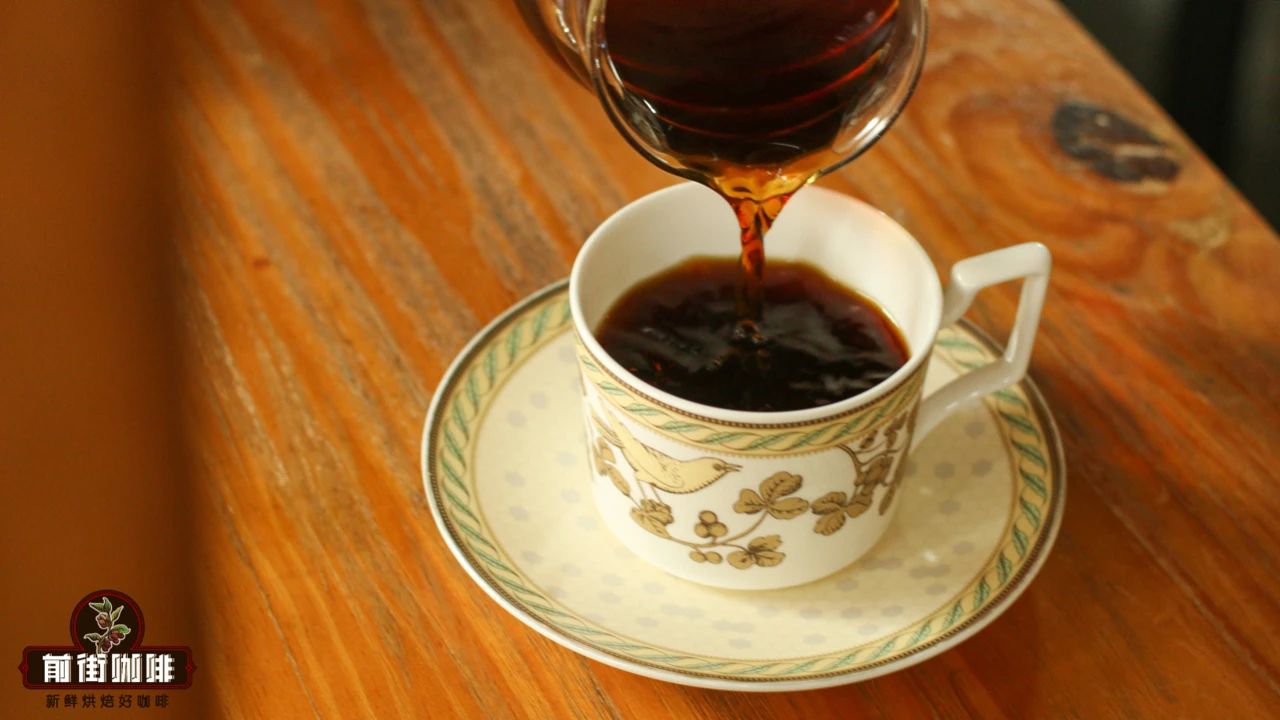
Authentic Jamaica Blue Mountain and "Jamaica Blue Mountain flavor" are two different concepts. Generally, the latter refers to coffee made from other bean varieties roasted to mimic the taste of Jamaica Blue Mountain. The beans used in "Jamaica Blue Mountain blends" are mixed and vary significantly in shape, making them relatively easy to identify. Also, don’t believe in "premium Jamaica Blue Mountain" coffee sold for just a few dozen yuan per pound or "Jamaica Blue Mountain coffee" for just over ten yuan a cup.
Related Reading

Comments (0)
Loading comments...
You May Be Interested

Trending Reviews
Popular Videos

With you, wherever you are! We provide useful features to help you find new things you'll love






