Source:Best Coffee > News Author:qjroot Published:2026-01-03 12:41:28

For beginners just getting into coffee, you may not know how to brew once you have ground the coffee beans. In this article, FrontStreet Coffee will share with you: how should freshly ground coffee be brewed?
According to what FrontStreet has learned, long ago coffee was not brewed in as many ways as it is now. Instead, the coffee grounds were simply steeped directly, which was very convenient, and the true flavor of the coffee grounds could be preserved. However, the only drawback of this direct brewing method was that there was a lot of sediment, which meant that some fine coffee powder was drunk straight into the stomach, and it also affected people's taste experience of the coffee. Therefore, as people pursued better coffee taste, more and more brewing and filtering devices were invented, to preserve the aroma of single-origin coffee to the greatest extent and remove the coffee grounds.

Now, a great many brewing devices have appeared on the market, and based on the way water and coffee grounds come into contact and their particle size, the preparation of coffee grounds is classified into five types: decoction, pressure, gravity, infusion, and cold brew.

If the pour-over coffee beans you bought were just freshly roasted, FrontStreet Coffee generally suggests that you rest the beans first. After resting them for two or three days, it is most appropriate to taste this bean. Resting the beans is not troublesome either. You just need to place the unopened coffee beans in a cool, dry, dark environment free of strong odors. After the resting period, cover the one-way valve (clear tape will do).
The resting process is important, but the storage method for coffee beans is also very important, because if an opened bag is not sealed properly, the coffee beans can very easily become damp, and the aroma is also lost very quickly. So FrontStreet suggests that you can store them in a sealed jar, and the best placement is a cool, ventilated place. If you do not have a sealed storage jar at home, store the coffee beans in a well-sealed bag with a one-way exhaust valve, then just leave it in a cool, dry place. Once the coffee beans have rested well, you can choose a coffee brewing method that suits you according to your preferences.

FrontStreet Coffee would like to introduce five brewing methods for freshly ground coffee.
1. The Boiling Method
The simplest method is to put the coffee grounds in a cup, add hot water, let it cool while the grounds sink to the bottom. This is an old method, still used in some parts of Indonesia today. Be careful not to swallow the grounds at the bottom of the cup. The advantage of this method is its simplicity, and the water temperature is just right. Turkish coffee is an early recipe, still used in the Middle East, North Africa, East Africa, Turkey, Greece and the Balkans. Ultra-fine coffee grounds are boiled with water in a small-mouthed vessel, usually seasoned with sugar and cardamom. The strong coffee served in the cup has foam on top and a layer of sediment below.

"Cowboy coffee" is made by boiling coffee grounds with water directly in a pot. The name suggests a makeshift solution under rough conditions; however, some people prefer it this way. In Finland and Sweden, the countries with the highest coffee consumption per capita, they use traditional brewing methods.
2. The Pressure Method
Espresso is made by forcing hot water at 80-96°C through a compacted puck of coffee grounds at 8-9 atmospheres of pressure, and a single serving is usually only 30 ml.

It is the strongest of the common coffees, yet it has a unique aroma and a layer of crema floating on the surface. It can be drunk on its own, or further made into a variety of other drinks. Because it brews quickly, is highly concentrated, and has a low caffeine content, it is used by many chain coffee shops and flavored coffee makers.
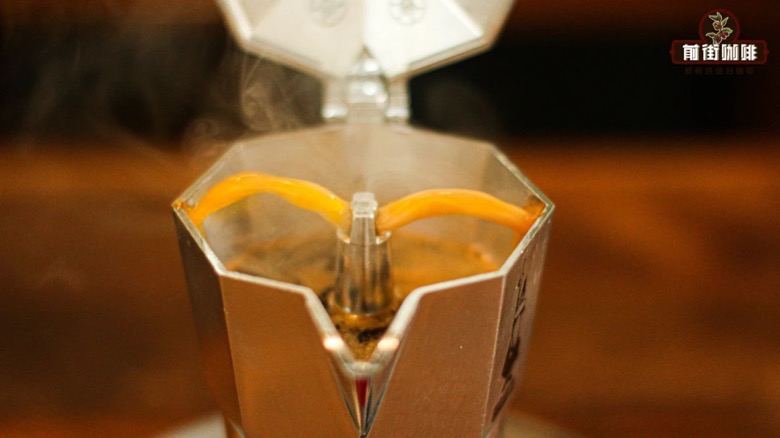
The moka pot, also called the "Italian coffee pot," is a three-tier stove-top device. Boiling water at the bottom is pushed by steam pressure through the coffee grounds in the middle layer and into the upper layer; the resulting coffee can rival espresso in strength, only without the floating oils, but if a pressure-reducing gasket is fitted at the coffee outlet, a golden crema can be extracted. The moka pot and the semi-automatic espresso machine have the same structure, but the water flow is reversed; after about 30-40 cc of coffee has overflowed, remove the pot from the heat source as soon as possible, then wipe the bottom of the pot with a cold towel (never rinse with water)!

3. The Gravity Method
American coffee, or the filter paper method, is made by placing coffee grounds on filter paper or a metal filter and pouring hot water through from top to bottom. The strength of the coffee depends on the water ratio and the coarseness of the grounds, but it is generally lower than espresso.

The electric percolator was widespread in the United States before the 1970s. It differs from the moka pot mentioned above: boiling water rises into the top, then flows down through the coffee grounds and back into the heating chamber; this cycle repeats several times. It is precisely because this method passes hot water through the coffee grounds repeatedly that it may give the coffee a rather poorer taste.
4. The Infusion Method
The French press is a tall, narrow glass cylinder fitted with a plunger that has a filter. Hot water and coffee grounds steep in the cylinder for four to seven minutes, then the plunger filter presses the grounds to the bottom and the coffee on top can be poured out to drink. This "full immersion method" is considered by many experts to be the ideal home method for brewing coffee, and its special feature is that you can taste the full flavor of the coffee.

FrontStreet Coffee thinks the French press is actually a pretty practical piece of equipment. After all, the French press is simple to operate and forgiving. FrontStreet Coffee suggests that if you are brewing with a French press, you can choose relatively balanced filter coffee beans - for example, Indonesian filter coffee beans are excellent, with the unique herbal, medicinal flavor of Mandheling; and Colombian filter coffee beans too, as Colombian coffee beans have a relatively balanced flavor and are also very suitable for filter coffee.
FrontStreet would like to share the French press method:
Step 1: Preheat
Pour hot water into the press pot to about 8 parts full, letting the glass body preheat, then pour out the hot water after about 2 minutes.
Step 2: Add ground coffee and hot water
Pour the ground coffee and hot water into the press pot, place the inner filter screen at the mouth of the pot, and after about 2∼3 minutes, press the inner filter screen down to the bottom. The inner filter screen is not pressed down at first, so that the ground coffee can fully steep before filtering.
Step 3: Filter
If you prefer a cleaner, smoother mouthfeel, take another bottom pot, place a dripper and a folded filter paper on it, then pour the coffee from the press pot in to filter.

Why is that? FrontStreet Coffee analyzes this as because the immersion extraction method makes the extracted coffee relatively strong, and if you choose a coffee with rich flavor layers, the high concentration can easily make the fruit acidity pronounced, so it is not very suitable.
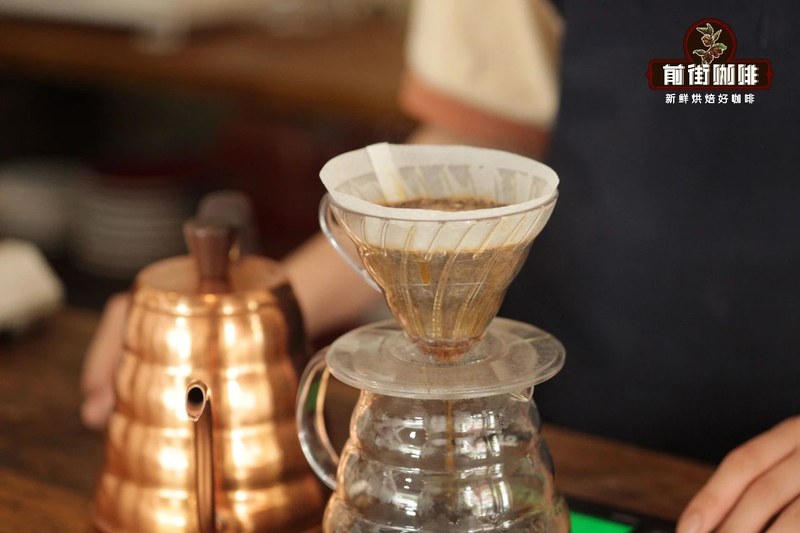
There is another fairly commonly used coffee brewing method, which is also the brewing method used in FrontStreet Coffee shops - pour-over coffee.

Step 1: Preheat the bottom pot
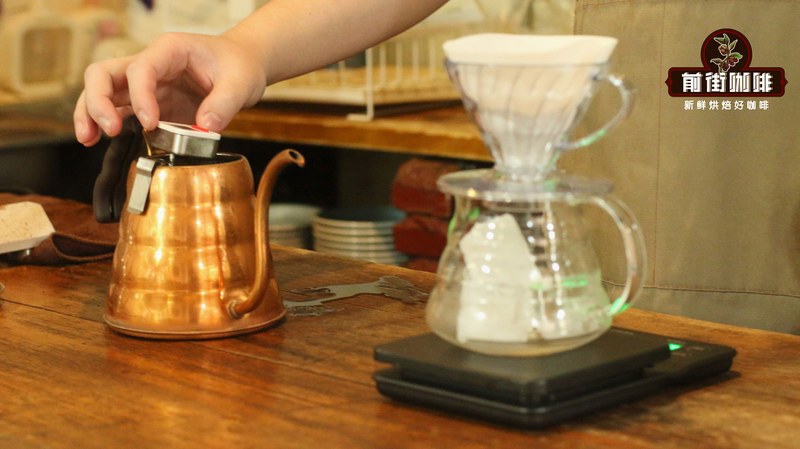
Take a bottom pot and place the dripper on it, pour a little hot water over the dripper to preheat and keep the bottom pot warm, place a folded filter paper in the dripper, pour a little more hot water over it so the filter paper sits snugly against the dripper, then pour the hot water out. The filter paper has a blocking effect that prevents the dripper from heating up, so hot water needs to be poured twice: once before the filter paper is placed in the dripper and once after.
Step 2: Add ground coffee
Pour the ground coffee into the dripper and tap the dripper lightly a few times with your hand to settle the ground coffee.
Step 3: First, bloom with 30 g of water. When pouring, there is no need to use too strong a stream, otherwise it will scatter the ground coffee and the bloom will not work. When pouring in the 30 g of water, the time is exactly 10 seconds, then wait 20 seconds, and once the total time reaches 30 seconds, you can move on to the second step of brewing the coffee. Then, with a gentle stream, slowly pour 125 g in circles from the center outward, and at this point the total time is about one minute. Then, after the coffee bed has dropped, you can pour water again.

The third step is to pour water again, and when the total water volume reaches 225 g, the time is about two minutes, and at this point you can stop pouring. Next, wait for all the coffee liquid in the dripper to flow into the lower pot, and then you can remove the dripper. But it is not over yet. The last action is to shake the lower pot holding the coffee liquid evenly, so that the concentration of the coffee liquid is mixed evenly, and then you can drink a delicious cup of coffee!
There is also the syphon coffee maker (Syphon), which is formed by connecting a heating container and a funnel-shaped container. The connecting part is a filter, with the ground coffee placed on top. After the water in the heating container boils, it rises into the funnel-shaped container and mixes with the ground coffee; at this point the heat source is removed, and the partial vacuum formed as the heating container cools draws the coffee from the funnel-shaped container back through the filter to the bottom, and a rich, aromatic cup of coffee is born.

5. Cold brew method
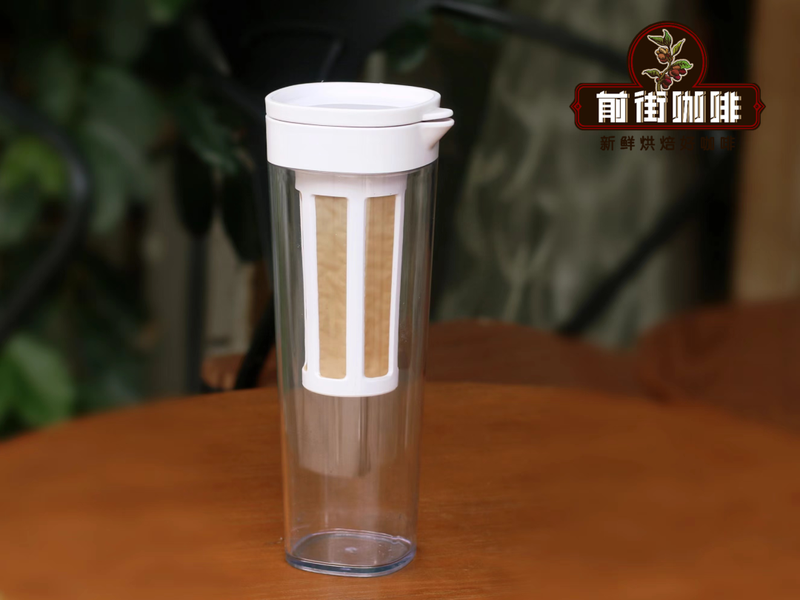
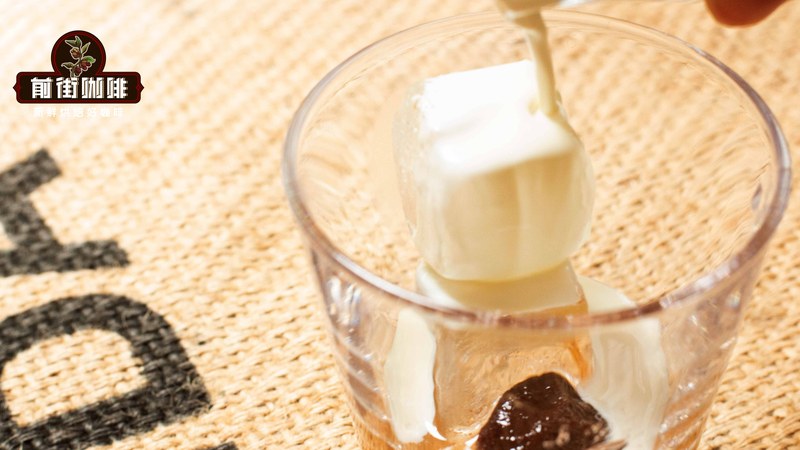
Cold brew coffee, also known as ice drip coffee, differs most from the other 4 methods above in that it does not use hot water, but instead uses ice water produced by the slow melting of ice cubes, slowly dripping through a filter filled with coffee grounds. So it is very, very slow, and only then is there a cup of cold brew coffee, which makes it costly, but the flavor is extremely unique.

The above are all some common coffee brewing methods, but as the pace of modern life becomes busier and busier, everyone prefers to buy drip bag coffee. The history of drip bag coffee originates from Japan, where UCC Ueshima Coffee invented drip bag coffee, and this kind of drip bag coffee is very simple and efficient. In addition, drip bag coffee also requires attention to some small issues. Many customers often come to the FrontStreet Coffee shop to ask whether drip bag coffee can really be brewed repeatedly.
Actually, a small packet of drip bag coffee generally contains 10 g of grounds, and 10 g of grounds can generally only be brewed once. When you brew it repeatedly, you may find that the coffee still tastes quite strong and should still be drinkable. Actually, this is not the case, because when you brew drip bag coffee for a long time, the longer the coffee is brewed, the more caffeine is released. This is because the coffee has already been over-extracted, and over-extraction will release the bitterness and astringency in the coffee. By then, the best flavor of this coffee is basically gone. FrontStreet also advises everyone to drink drip bag coffee within its optimal flavor period.

Also, FrontStreet advises everyone that when buying drip bag coffee, try not to buy drip bag coffee that was made more than five days ago, because once coffee beans are ground into powder, the coffee quickly loses its unique aroma, greatly reducing the coffee's flavor. Just like customers who generally come to FrontStreet Coffee to buy coffee beans, we advise customers that coffee beans are best ground right before drinking. Even though the shelf life of coffee beans is very long, it is best to drink them within the optimal flavor period of the coffee beans. But there are also many customers who do not have a grinder at home and will have it ground into powder directly at the FrontStreet shop, but FrontStreet still advises everyone to finish drinking it within as short a time as possible.
FrontStreet Coffee advises: should freshly ground coffee powder be boiled or brewed? This depends on the characteristics of the beans you have chosen and which utensil is convenient.
Related Reading
Comments (0)
Loading comments...
You May Be Interested

Trending Reviews
Popular Videos

With you, wherever you are! We provide useful features to help you find new things you'll love






