Source:Best Coffee > News Author:qjroot Published:2025-05-25 10:59:04

On the bean list at Best Coffee, Panama occupies the C position on the blackboard, and it includes several single-origin coffees. Some can be had for just a few dozen yuan, while others are priced at several hundred yuan. This has drawn the attention of many first-time guests, who ask the baristas one after another what makes each bean special. To answer the questions of these friends, Best Coffee today will take everyone into this world-famous coffee origin, and along the way tell the coffee story of this place far away in the other hemisphere.
The History of Panamanian Coffee
Compared with other Central American countries, Panama has been growing coffee for a relatively short time, but its reputation is exceptionally large, and it is known to everyone in the specialty coffee circle. Today, coffee has become an ubiquitous drink on Panamanians' tables. From corner inns to high-end restaurants, it is coffee grown in Panama itself.

According to records, coffee first arrived in Panama in 1742 . At that time, there was a ship from Martinique in the French Caribbean, and this ship arrived at Portobelo via Cartagena (which does not produce coffee), with a barrel of coffee beans registered in its cargo. However, coffee cultivation on Panamanian territory was not recorded until 1780. The settler Pedro Antonio de Ayarza tried to grow coffee in Portobelo between 1780 and the 1790s, but he soon realized that this place was not very suitable for growing coffee. It was only in the 1820s that coffee began to be grown in other parts of Panama, and it successfully replaced chocolate as the main drink, competing with tea, which had taken root in Europe.
Geographically, Panama is located in Central America, and beside it are also countries producing high-quality coffee. To its left is Costa Rica, and to its right it borders Colombia. Its coffee path can be said to have been born with a silver spoon in its mouth all the way. By observing the map, Best Coffee found that Panama is sandwiched between two ocean currents. The air currents of the Caribbean Sea and the Pacific Ocean meet at more than 6,500 feet above the Boquete Valley, forming a unique and changeable microclimate. This not only creates moderate temperature and humidity, but also, under the effect of volcanic soil, makes the coffee cherries grown here more likely to form rich and varied aroma characteristics.

As is well known, the Panama Canal was built by the United States, and for a period after its completion it was controlled independently by the United States. It was precisely the construction of the Panama Canal that, toward the end of the 20th century, brought many American elites southward, partly out of work requirements and partly to seek out business opportunities. Many of Panama's famous coffee estates came from the hands of these elites; for example, the owner of Hacienda La Esmeralda was formerly a banker, and the owner of Hartmann Estate was formerly an engineer. In managing their coffee estates, these elites upheld the principles of standardization and refinement. Whether it was allocating plots and elevations when planting coffee trees to form coffee bean grades, or the manualization of picking and the refinement of processing, all were important factors that made Panamanian coffee famous worldwide.
Panama Coffee Regions
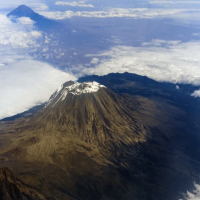
In Panama, coffee cultivation covers about more than 20,000 hectares, of which nearly more than 16,000 hectares are of the Arabica variety. The country's main coffee-growing areas are concentrated in western Panama, near the border with Costa Rica, in Chiriquí Province, where there are three famous coffee-growing areas: Boquete, Volcán and Renacimiento. These three places are adjacent to one another, all on the mountain ridge of Central America, close to the majestic but not very active Barú Volcano, with a maximum elevation of 3475 m. Due to the diverse climate and fertile volcanic soil, Chiriquí has also become a province with tremendous potential for agricultural and livestock production. Various agricultural and livestock activities have developed there, such as the breeding of purebred horses, flower cultivation, and especially important coffee, cherry and banana plantations. Below, Best Coffee continues to introduce these three main regions.

The cool and picturesque Boquete Valley is the cradle of Panama's coffee industry. A large wave of European immigrants arrived there at the end of the 19th century, mainly Swiss, Yugoslavs, Swedes and Germans. They realized that coffee cultivation in nearby areas (Panama belonged to Colombia before 1903) had achieved excellent results, so they decided to devote themselves to coffee bean production. At present, there are about 50 to 75 coffee farms and about 15 coffee processing plants in the Boquete area.
Boquete has a land area of 514 square kilometers. About more than 15,000 residents live there, mainly growing coffee, flowers, citrus fruits, strawberries and various vegetables. Most of the coffee plantations in the area are located at an elevation of around 1,600 m. In fact, almost all of this land is made up of nutrient-rich volcanic soil, ensuring ample nutrients for the coffee trees. The climate is cool and somewhat dry, and every day, especially in summer, a thin mist in the form of imperceptible drizzle shrouds each coffee plantation. These mixed winds carrying rain are the reason why Boquete coffee cherries ripen slowly. The resulting coffee has a taste of coffee beans with medium to high acidity.

Because Chiriquí Province mainly grows coffee, coffee culture is deeply rooted in the hearts of the people. According to data from Panama's Ministry of Agricultural Development, the country has more than 8,000 coffee growers, almost all of whom own farms of less than 30 hectares. Panama's coffee harvest period is from September to December. During this time, the coffee plantations are full of an indigenous group known as the Gnobe Bugle, whom locals usually call the Guaymíes. They come to help pick coffee beans during the harvest. Because their picking skills and expertise are relatively strong, their labor is also more expensive than others'. In addition, the Guaymíes indigenous people still retain their traditional culture, making and wearing necklaces and clothing made of colorful beads, as well as the baskets used for picking. Standing among the coffee groves, they become a beautiful scenic line.

Because before 1989, coffee prices in Panama were controlled by the International Coffee Agreement, and for most of the 19th and 20th centuries, Panama also exported green coffee beans on a small scale to Western European countries. However, in that year, the agreement collapsed, and a crisis emerged in which international green bean prices plummeted, with coffee bean prices falling from 1.2 USD/lb to as low as 0.74 USD/lb.
In the early 1990s, as commercial coffee bean prices fell, Panama turned its attention to the emerging specialty coffee market. In 1996, seven local coffee estate owners in Panama jointly founded the Specialty Coffee Association of Panama (SCAP). They were Ricardo Koyner, Price Peterson, Jaime Tedman, Marcos Moreno, Tony Vasquez, Hans Collins, Josue Ruiz, Wilford Lamastus, Francisco Serricin and Ratibor Hartmann. They also held the first green coffee bean competition, as well as an online green coffee bean auction, with the aim of promoting high-quality Panamanian coffee by organizing the country's small coffee growers together.

Best of Panama BOP
This is the earliest-established green coffee bean competition in the world, and it can also be described as coffee beans' "auction" - Best of Panama. Each estate owner submits the high-quality coffee lots produced locally, the finest and highest-scoring ones are selected, and then according to the assessed scores, buyers from around the world bid, with the highest bidder winning. In recent years, the winning beans at BOP have fetched bid prices as high as over a thousand US dollars, becoming a focal event in the coffee industry.
Unlike major producing countries such as Brazil and Vietnam, Panama follows a coffee path of low volume and high-end specialization. In the 1990s, facing a low period for Panama's coffee industry and a global green bean price crisis, coffee people found it hard to sustain their operations, so the Specialty Coffee Association of Panama (SCAP) organized local farm owners to unite and held the first Best of Panama green coffee bean competition in 1996, selling specialty coffee beans through bidding. This also greatly changed Panama's coffee industry and at the same time influenced the direction of the world's specialty coffee market.

Because in the competition Geisha scores much higher than other varieties, the submitted green coffee beans are currently divided into Geisha and non-Geisha groups, then further divided by processing method into natural and washed groups, after which each judge scores them blind, and the coffee bean with the highest final average score is that year's Best of Panama. In 2022, Guarumo Estate's Geisha won first place in the natural Geisha group with an extremely high average score of 95.96, while the washed group champion was taken by Aurora Estate's Geisha with an average score of 96.15.
The Flavor Characteristics of Panamanian Geisha
FrontStreet Coffee believes that as the place where Geisha became famous, Panama's Geisha coffee produced with mature cultivation techniques and processing methods remains a guarantee of reputation in the industry, so FrontStreet has launched a Boquete region Geisha coffee, using washed processing, hoping to let everyone taste the classic Geisha flavor.

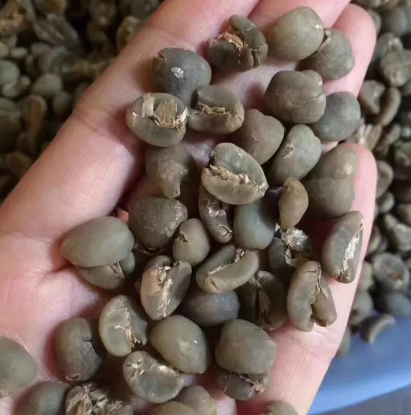
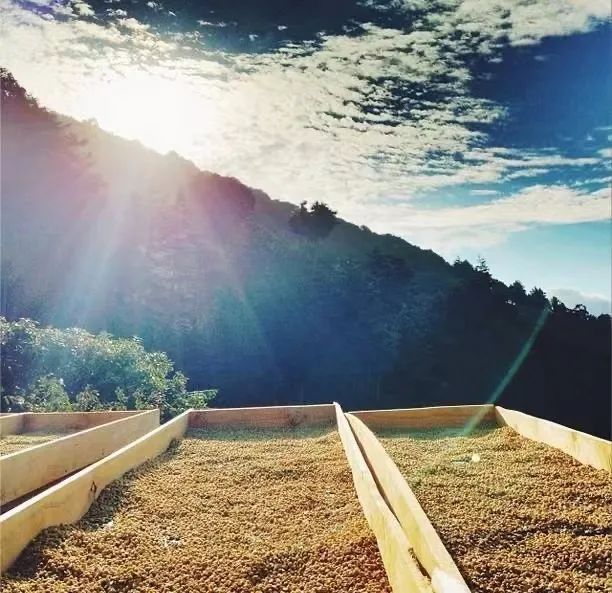
Washed processing begins by placing the sorted coffee cherries into a depulper to initially remove the skin and pulp; the green coffee beans with residual pulp and mucilage are placed in water to ferment for about 24 hours; after fermentation, the green coffee beans with parchment are placed in a flowing water channel to be washed, removing the pulp and mucilage; after washing, the coffee beans are sun-dried or dried with a dryer to reduce the moisture content to about 12%. Finally, the parchment of the green coffee beans is removed.

Washed processing, as one of the most traditional green bean processing methods, not only makes coffee production quality more stable but also allows Geisha to present a flavor profile with higher cleanliness and a fresher taste. After roasting, Qianjie sensed Geisha's elegant white floral aroma, rising citrus and lemon acidity, with a slight green tea character, like drinking a cup of gentle Tieguanyin tea. How should such a rich Geisha coffee be brewed so as not to waste it?
The flavor of Geisha coffee is renowned worldwide for its rich floral aroma and complex fruity profile. The Qianjie roaster hopes to retain more of Geisha's high-quality acidity, so a medium-light roast is chosen (slight adjustments are made for different lots). This roast level does not change much of the high hardness of the bean quality from high altitude, so brewing requires increasing the extraction rate somewhat to present a fuller flavor layering, making it suitable for fine grinding and high-temperature hot water.

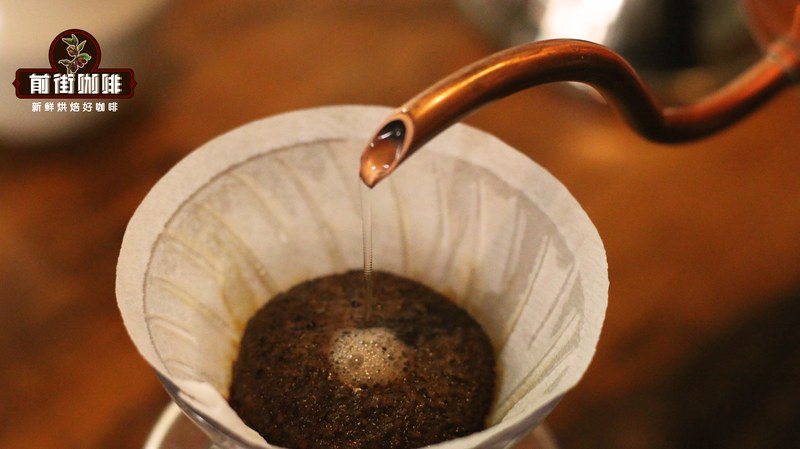
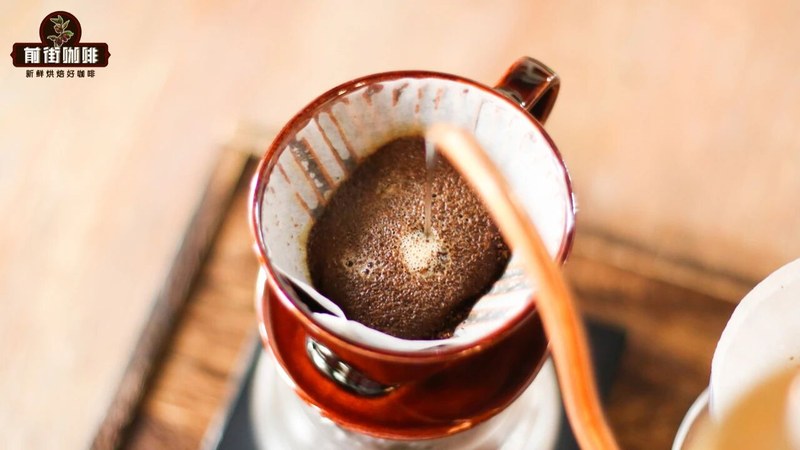
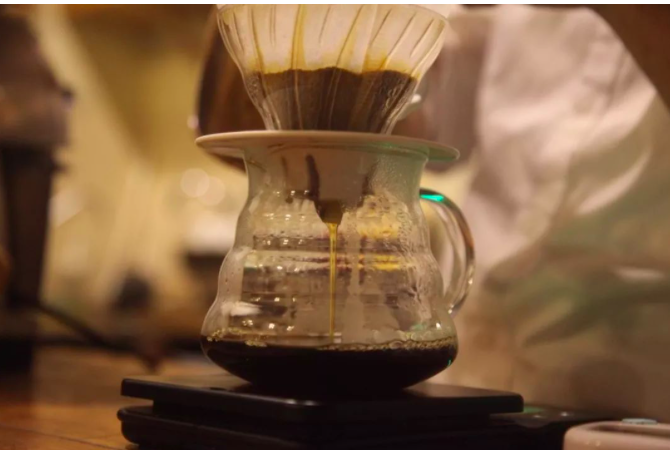
To improve the extraction yield of Geisha coffee and avoid over-extraction while highlighting the layered sweet and sour flavors, the baristas at FrontStreet Coffee use a V60 dripper. The V60 dripper body has spiral ribs connecting the top and bottom and a large round hole in the center to speed up the flow of water, while the spiral-shaped vent groove design lengthens the water flow path, increasing the contact time between the coffee grounds and hot water. Each stream of water converges along the grooves toward the center of the dripper, concentrating the pressure on the coffee grounds and resulting in a richer, more layered extraction.
Below, FrontStreet demonstrates the brewing steps for the Esmeralda Red Label Natural Geisha served in-store, which you can use as a reference and compare with your own brewing approach.
The pour-over parameters for Red Label Geisha coffee are:
Dripper: V60
Water temperature: 91-92°C
Dose: 15g
Coffee-to-water ratio: 1:15
Grind size: caster sugar size (80% passing through a No. 20 sieve)

Three-stage extraction: First, pour 15g of coffee grounds into the dripper and tare the scale. For the first stage, pour 30g of water to bloom for 30 seconds while starting the timer, using a slow, small stream at the center point and then spiraling outward, making sure to saturate the entire coffee bed. For the second stage, pour 120g of water using a slightly larger stream to raise the entire coffee bed, keeping the water column vertical and even; the scale should read 150g at this point, and the pour should finish in about 55 seconds.
When the water level drops to the halfway point, begin the third stage, pouring 90g in a small spiral with a slow stream, trying to keep the pour from spiraling too wide, as this can easily disturb the coffee bed and cause under-extraction. The total water poured is 240g, and the drip should finish in about 2 minutes 10 seconds. Remove the dripper, swirl the coffee in the server to mix it evenly, and it is ready to taste.

A pour-over Panama washed Boquete Geisha coffee has a clear acidity of citrus, lemon and bergamot, a creamy smooth mouthfeel when swallowed, and a sweet finish of green tea and honey.
Related Reading

Comments (0)
Loading comments...
You May Be Interested


Trending Reviews
Popular Videos

With you, wherever you are! We provide useful features to help you find new things you'll love






