Source:Best Coffee > News Author:qjroot Published:2025-12-15 11:02:16
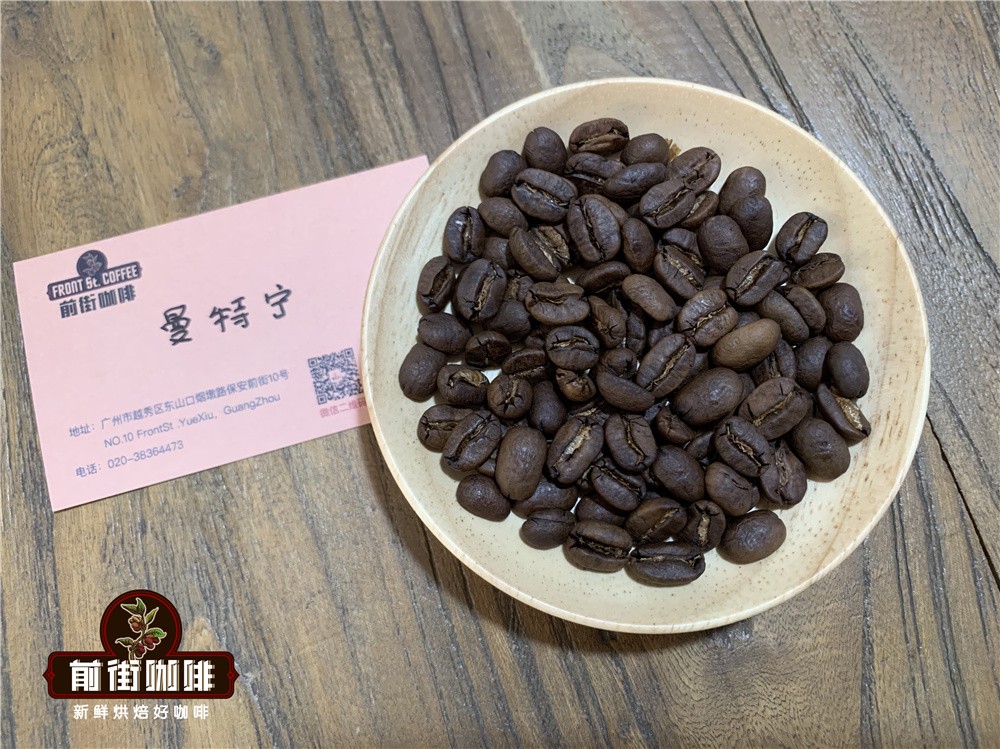
Among Indonesian coffee beans, Mandheling coffee beans are the most famous. Mandheling coffee beans are the representative of Indonesian specialty coffee, and Mandheling coffee beans are also the representative of Asian coffee, with a distinctly Asian coffee style: pine, herbal, nutty and caramel notes, an extremely full body and a solid, substantial mouthfeel. Precisely because of this, not everyone will like this coffee flavor, but for those who are captivated by it, Mandheling is a taste that leaves an endless aftertaste. Below, Qianjie will give you a proper introduction to this coffee.
Coffee beans are mostly named after their producing country, producing region, estate name or variety name, yet the Mandheling coffee beans from the Sumatra region of Indonesia alone refuse to follow the usual path! Mandheling could be called the synonym of Indonesian specialty coffee, but in fact Mandheling is not a producing region name, a place name, a port name, nor a coffee variety name; it is a mispronunciation of Mandailing, the ethnic group that originally lived in Sumatra. Why would this ethnic group be mixed up with coffee? There is a legendary tale of a lucky accident behind it. It is said that during World War II, Japan occupied Indonesia. A Japanese soldier went into a certain cafe and drank a cup of rich, full-bodied coffee, so he asked the shopkeeper for the name of the coffee beans. The shopkeeper thought he was asking where he was from, and answered "Mandailing." After the defeat, he returned to Japan and hoped to drink that coffee again, so he asked the local Indonesians to find it, but mispronounced it as "Mandheling." Since then, the name Mandheling has been used continuously.
The development of coffee in Indonesia
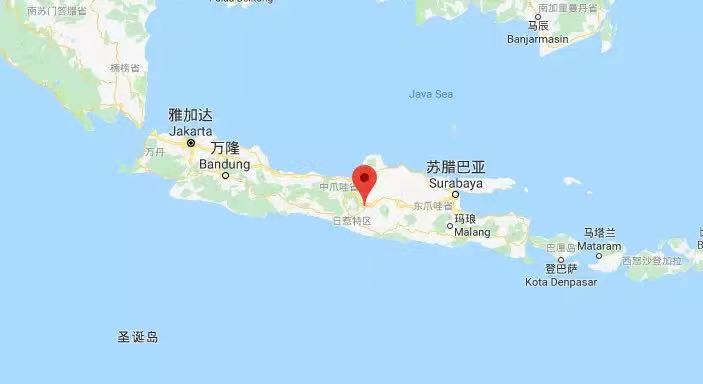
Indonesia has a long history of coffee cultivation. Coffee growing in Indonesia mainly originated during the colonial period and has played an important role in the world coffee industry; coffee has also played an important role in Indonesia's national growth. Indonesia is an excellent coffee-growing origin, located on the equator and home to many high mountains. Coffee was first brought to Indonesia by the Dutch in 1969 AD. However, because Batavia (present-day Jakarta) was heavily flooded, the planting was not successful. It was then brought to Indonesia a second time in 1699, and the first batch was exported to Europe in 1711. Coffee was introduced by the Dutch colonizers at the time and began to be planted on the island of Java, then spread widely to the island of Sumatra, where large-scale cultivation began. After nearly two hundred years, Indonesia's coffee industry was severely hit by leaf rust disease, and large areas of coffee trees were infected and withered, seriously affecting production.
Mandheling coffee comes from the island of Sumatra
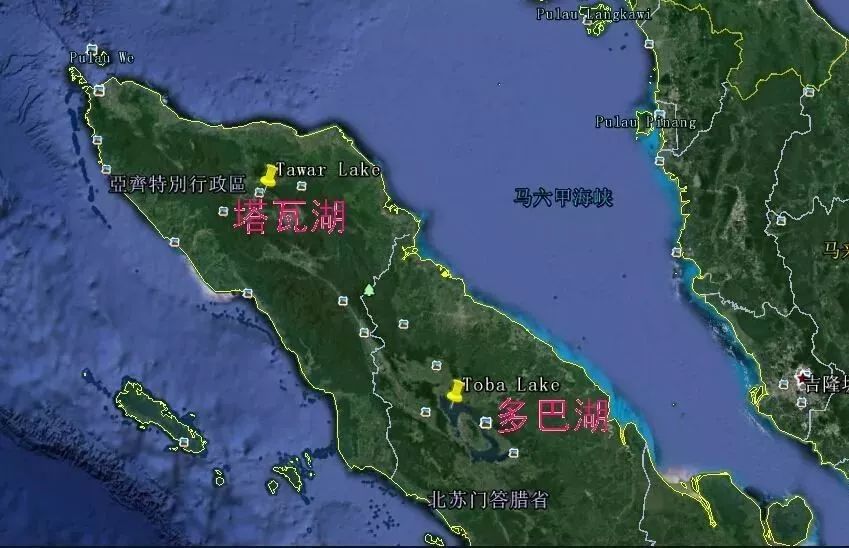
Indonesia is made up of more than 17,000 islands, scattered along the equatorial volcanic belt, with fertile soil. Famous producing regions include Sumatra in the west, Sulawesi in the center, and Java in the south. Mandheling comes from the island of Sumatra in Indonesia. The island of Sumatra is located in western Indonesia and comprises eight provinces in total; the high-quality coffee-growing areas are all in the north of the island, namely Aceh (ACEH) at the northernmost tip and the neighboring North Sumatra province (Sumetera Utara). Each of the two provinces has a relatively large lake: in Aceh it is Tawar Lake, and in North Sumatra it is Lake Toba. The important coffee-growing areas in the provinces are also all centered around these two lakes.
Lake Toba is the largest volcanic lake in the world and also the largest freshwater lake in Indonesia. The average annual temperature here is around 22°C, with a tropical rainforest climate. The rainy and humid environment, combined with an altitude of around 1,400 m, provides conditions highly suitable for coffee tree growth. To the south of the lake is the well-known local Lintong region, where Best Coffee's everyday Indonesian Mandheling coffee comes from.
The other lake, Lake Tawar, benefits from the surrounding Gayo Mountain, which brings altitudes above 1,500 m to coffee cultivation in the Aceh region. Because of the unstable political situation in Aceh Province at the time, armed conflicts occurred frequently, greatly affecting the development of the local coffee trade. In 2005, a major tsunami broke out centered on Aceh. Under this natural disaster, the civil war also came to an end, and the Aceh coffee industry gradually returned to the specialty coffee scene from then on.
Lintong Mandheling
Mandheling coffee is produced in the Lintong mountain area in northern Sumatra. Lintong is near the southwestern side of Lake Toba, at an altitude between 1,000-1,500 m. There are multiple volcanoes and volcanic lakes here. The fertile volcanic soil, combined with the local tropical rainforest climate and abundant rainfall year-round, allows coffee to grow vigorously.
The Lintong region, which has a certain reputation in the coffee trade, also switched to planting many new varieties in order to increase yield, making the local coffee quality less excellent than before. The Lake Tawar region in Aceh Province has consistently insisted on cultivating the old Typica variety, maintaining relatively high coffee quality, and some large exporters such as Pwani Coffee Company have also invested more resources here.
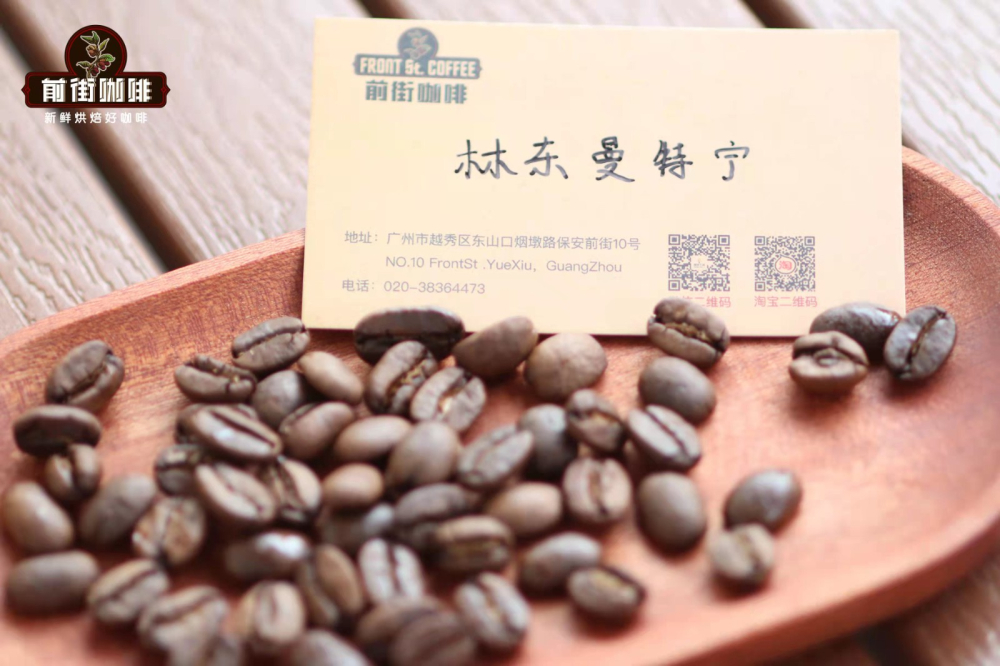
Lintong Mandheling green beans that have not been sorted sometimes produce inconsistent results, but they also largely retain the flavor characteristics of Sumatra coffee: a strong, intense mouthfeel and a distinctive spicy, herbal aroma. That is why Front Street also lists Lintong Mandheling in its high-value everyday beans series, so everyone can try the unique taste of Indonesian coffee.
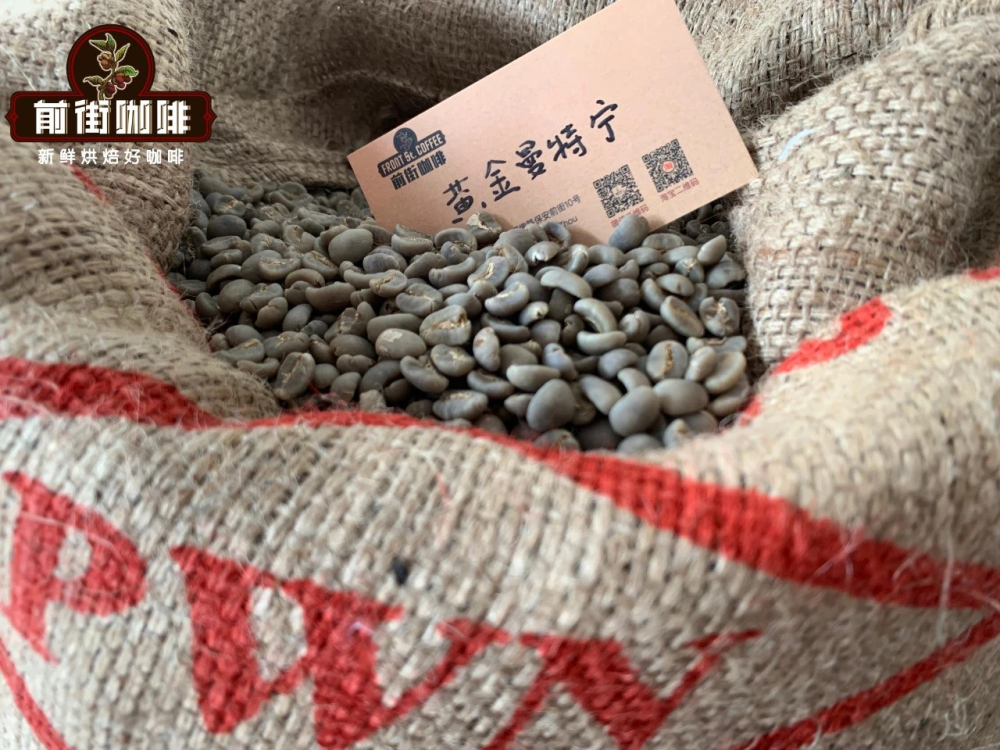
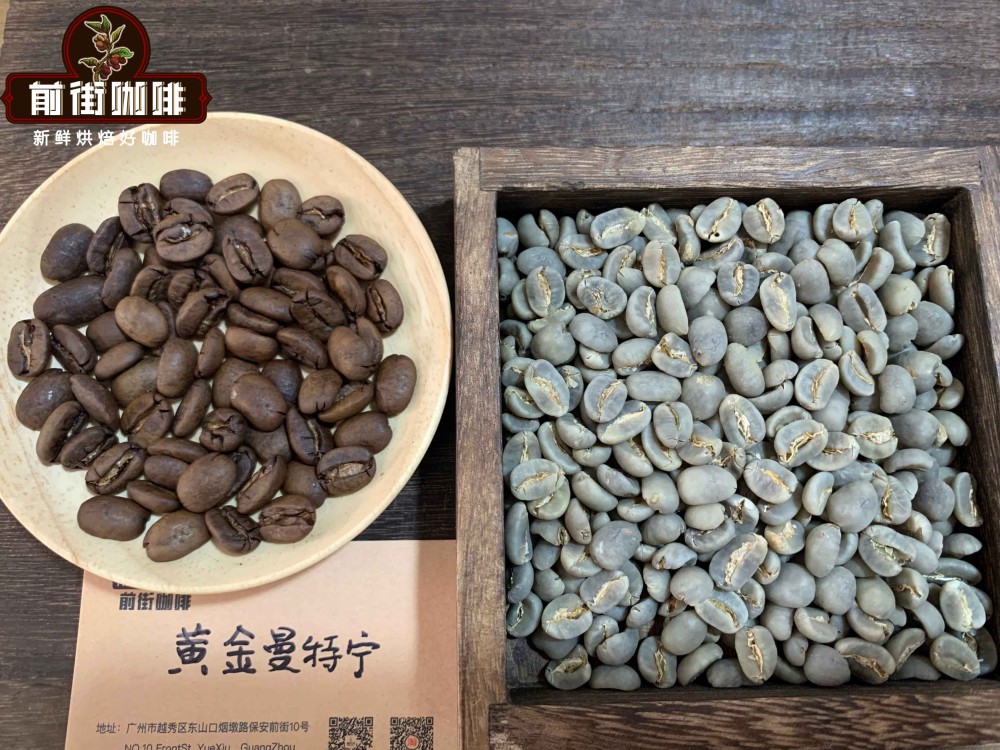
Front Street's Golden Mandheling coffee beans come from PWN Pwani Coffee Company. On the basis of Indonesia's G1 green bean grade, they undergo four rounds of hand sorting to ensure the Mandheling coffee beans are uniform in color, shape and size, producing a cleaner-tasting Mandheling coffee with a brighter flavor. Golden Mandheling is the upgraded version of Mandheling coffee, along with another entry-level Mandheling, Lintong Mandheling coffee beans. Both coffees have a low-acid, full-bodied taste, stemming from the wet-hulled method widely used locally.
After strict sorting, FrontStreet Coffee found that Golden Mandheling not only loses the earthy, muddy off-flavors typical of ordinary Mandheling, but also drinks cleaner and more transparent.
Mandheling Coffee Variety
The Mandheling coffee variety was originally Typica, an old Arabica variety, but later, because of leaf rust, it was replanted with Catimor. As early as 1658, the Dutch transplanted descendants of the "European Typica mother plant" to Sri Lanka, but unfortunately the planting failed. Later, in 1699, the Dutch transplanted coffee trees from Malabar in eastern India to Java; this trial planting succeeded, and Typica grew steadily in Java. In 1718, the Dutch transplanted the successfully trialed Typica from Java to Sumatra and Sulawesi. After more than a century of propagation, just as Indonesian Typica was at its peak, a leaf rust epidemic at the end of the 19th century swept through most of Indonesia's Typica, and later the more disease-resistant Robusta had to be introduced.

Typica has distinctive characteristics and may be the easiest variety to identify. These plants are conical in shape with a main vertical trunk that can reach up to 5 m in height. This height means that, compared with other varieties, Typica has longer distances between branches and between nodes on the same branch. One of its features is that the top leaves of Typica are bronze-colored, and the beans are larger, forming a pointed oval or thin pointed shape; some people also call it "red-top coffee." Typica coffee has its own uniquely serene, clean flavor and balanced characteristics, with a high degree of cleanliness in the mouth, but its shortcoming is insufficient yield, it has requirements for altitude, and it is also susceptible to leaf rust, with weak resistance to pests and diseases.
The Indonesian government successively introduced multiple disease-resistant varieties including Robusta, such as Tim, Catimor and the Indian variety S795, which locals call Tim Tim, Ateng and Jember. Typica is also the variety with the longest planting history in Indonesia, initially introduced from Java to the broader island of Sumatra for cultivation, and after a long period of adaptation to the local terroir, it formed the unique herbal-spice, low-acid, full-bodied flavor of Sumatra Typica. At present, it is mainly distributed in the Lake Toba area and the Lintong producing region.
Tim Tim is a natural hybrid of Typica and Robusta, and it inherits Robusta's high yield and disease resistance. Another variety, Ateng (Catimor), is a mixed descendant of the Bourbon variant Caturra and Tim Tim; because of its strong vitality it can maintain high coffee yields, so it is favored by many local coffee farmers. In many countries, Catimor is often criticized by industry people because of flaws in flavor. Grown in Sumatra's unique flavor environment, Catimor instead performs better in cupping, with rich woody notes and a full-bodied mouthfeel.
Wet-hulling
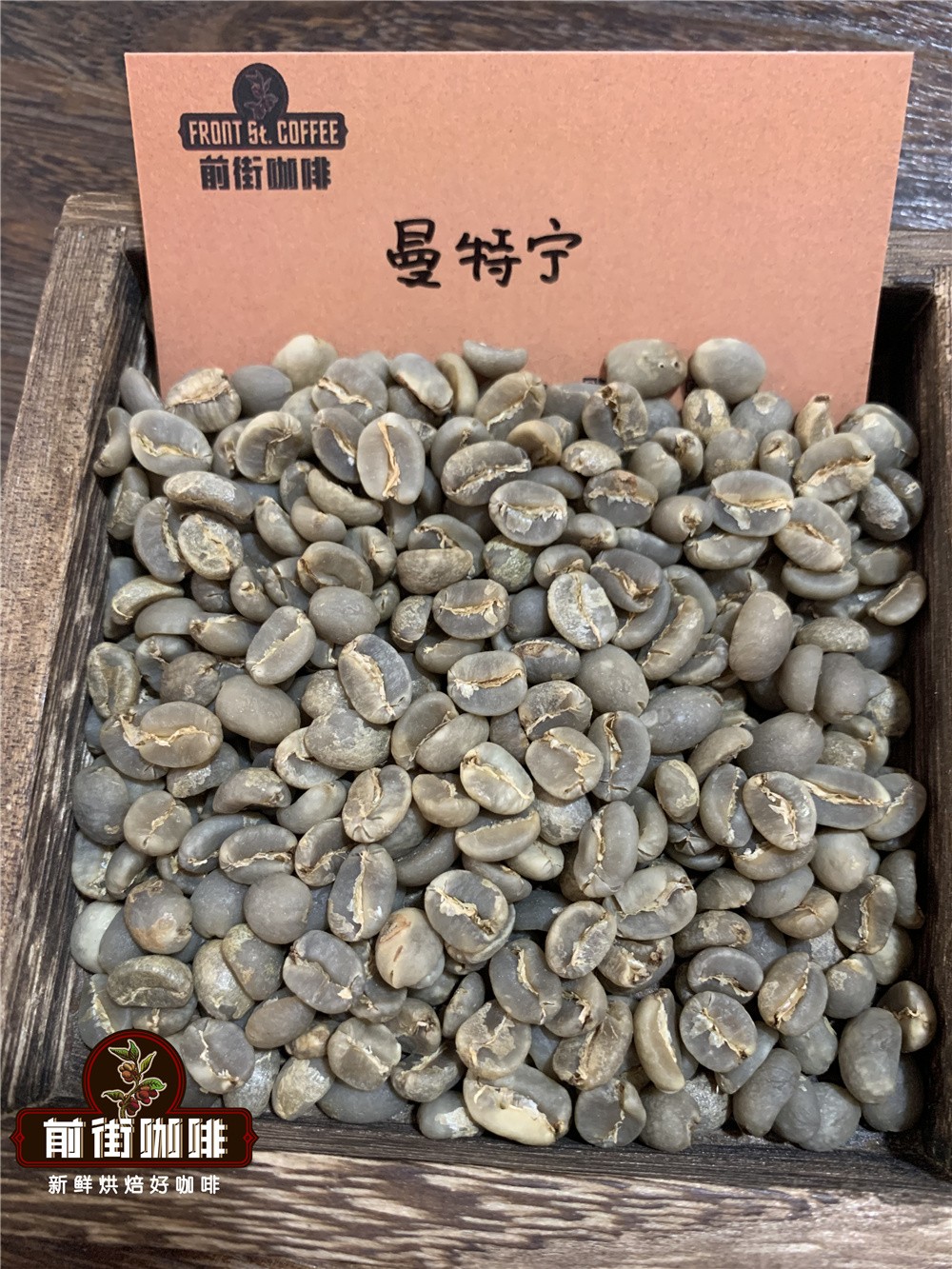
Indonesia's year-round rainy and humid environment makes it impossible to use sun-drying processing like African countries, so Indonesians invented the unique wet-hulling method. After the coffee green beans are depulped with a pulping machine, the mucilage layer still feels slippery to the touch. After a night of fermentation, the mucilage layer comes off more easily under flowing clean water, and at this point the surface of the parchment beans becomes rough. Then the green beans begin to be dried, and this step also "depends on the weather"; if there are two consecutive sunny days, the coffee beans are sun-dried for two days, and the moisture content of the parchment beans is then 30-50%, at which point a specially made hulling machine can be used, relying on friction to strip off the still relatively hard parchment layer, with considerable force, so we can see that the surface of the green beans appears slightly deformed. Finally, drying continues for another two days; under the sun the coffee beans easily burst open, which is what we call. When the moisture content reaches 12%, they can be packed and stored.

However, coffee beans processed with the wet-hulling method can crack and become deformed, which is what we commonly call "goat hoof beans." These are not defective beans; this is what happens to Mandheling coffee beans after wet-hulling.
Wet-hulled Mandheling coffee has low acidity and high body. The wet-hulling method greatly shortens the processing time for green beans and is widely used in rainy, humid Indonesia. Removing the parchment layer midway through drying makes the coffee's acidity even lower, and after roasting it further highlights the coffee's rich, full-bodied mouthfeel.
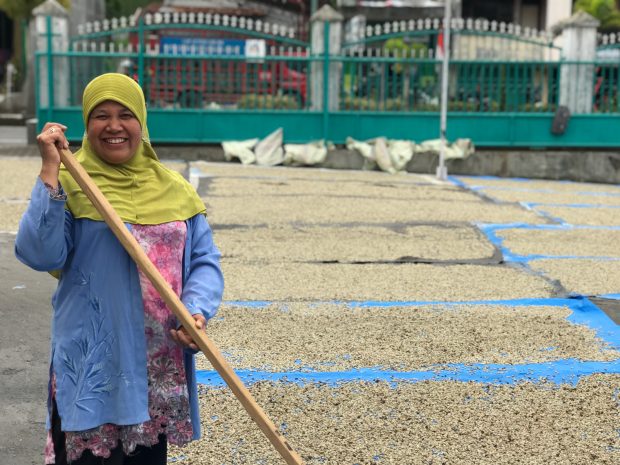
The difference between wet hulling and the washed method is that after the coffee beans are fermented, the parchment is removed while they are still in a semi-dry, semi-wet state. This processing method was developed because the local high temperature and high humidity make it impossible to maintain the more than ten days of sun-drying used to dry green beans in coffee-producing countries like Brazil and Ethiopia, so this unique method was created.
Qianjie's brewing parameters for Mandheling coffee:
Qianjie's Mandheling coffee is dark-roasted, and the beans have a loose texture and absorb water more readily, making them prone to over-extraction during the extraction stage. Qianjie grinds a little coarser, which speeds up the flow of water, while also lowering the water temperature to avoid extracting too much bitterness.
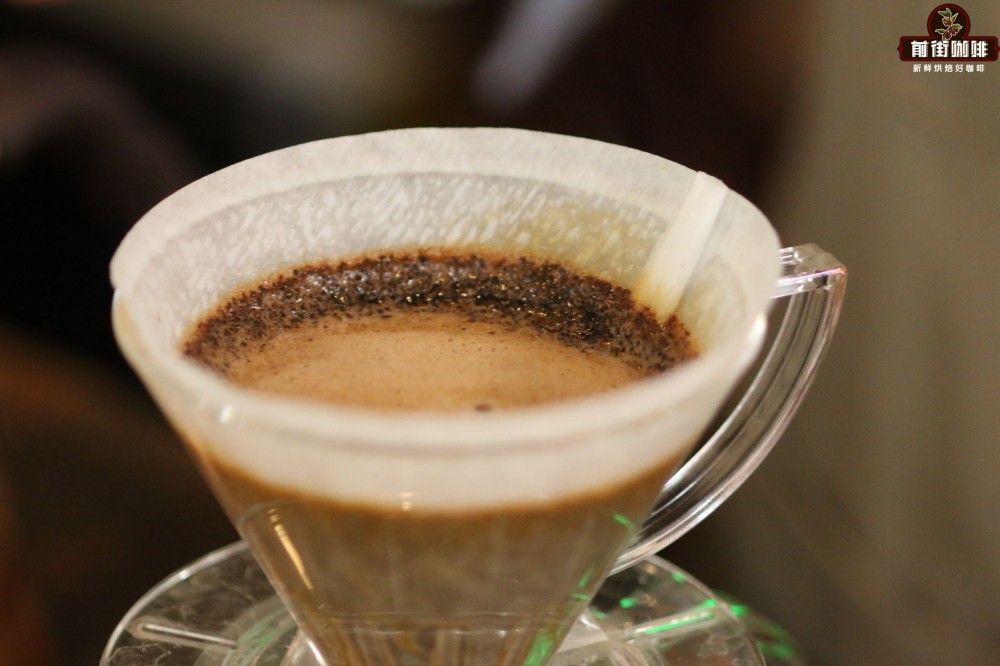
The biggest characteristic of Mandheling coffee is its full body, so Qianjie uses a KONO dripper. The smooth curved surface of the upper part of the KONO dripper allows the filter paper to fit better, blocking moisture from rising upward, while the guiding ribs in the lower part speed up the water flow, which extends the extraction time between water and coffee grounds, thereby increasing the strength.

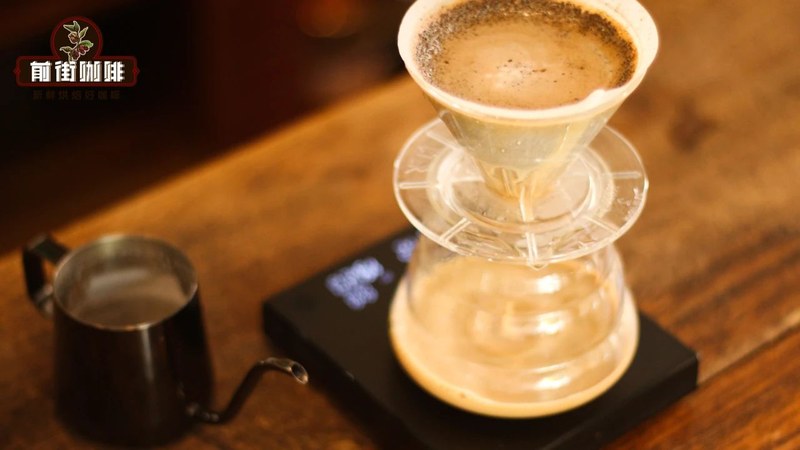
Dripper: KONO dripper, water temperature: 88°C, coffee dose: 15 g, coffee-to-water ratio: 1:15, grind size: medium-coarse grind (75% passing through a China standard No. 20 sieve).
Use staged extraction, blooming with 2 times the coffee dose in water, that is, 30 g of water for a 30-second bloom. The reason a bloom is needed is to allow the coffee grounds to release the carbon dioxide inside them, which makes the extraction in the later stages more stable. Pour in a small stream in circles until 125 g, then pause; continue pouring until 225 g and stop. Once the water in the dripper has finished dripping, remove the dripper. Start timing from the beginning of the pour; the extraction time is 2'00". Next, pick up the whole cup of coffee and swirl it to mix evenly, then pour it into a cup to taste.
[Front Street Lindong Mandheling coffee flavor profile]Herbal, chocolate, caramel, relatively balanced overall.
[Front Street Golden Mandheling coffee flavor profile]Nuts, spices, herbs, licorice, chocolate, caramel.
Related Reading
Comments (0)
Loading comments...
You May Be Interested

Trending Reviews
Popular Videos

With you, wherever you are! We provide useful features to help you find new things you'll love






