Source:Best Coffee > News Author:qjroot Published:2024-11-29 18:24:05
According to local Brazilian media reports, since November, domestic Brazilian arabica coffee spot prices have risen wildly, with a 60 kg bag currently priced at 1,805.68 Brazilian real (about 311 US dollars), a cumulative increase of 18.3% for the month, and this price is the highest in nearly 26 years.
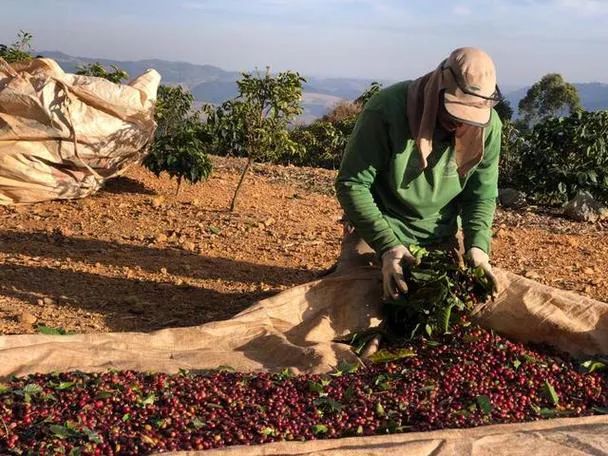
In early November, the spot price of arabica coffee remained at around 1,500 Brazilian real per bag, but it was subsequently driven higher by the reduction in coffee inventories, the decline in Brazil's 2024/25 coffee production, uncertainty over the future 2025/26 crop season and the sharp appreciation of the US dollar against the Brazilian real.
After experiencing severe drought in August and September, Brazil began to see rainfall return in October, but the rainfall was unstable, with some areas experiencing heavy rain while others received only a small amount, a situation that has continued to affect the growth of coffee plants.
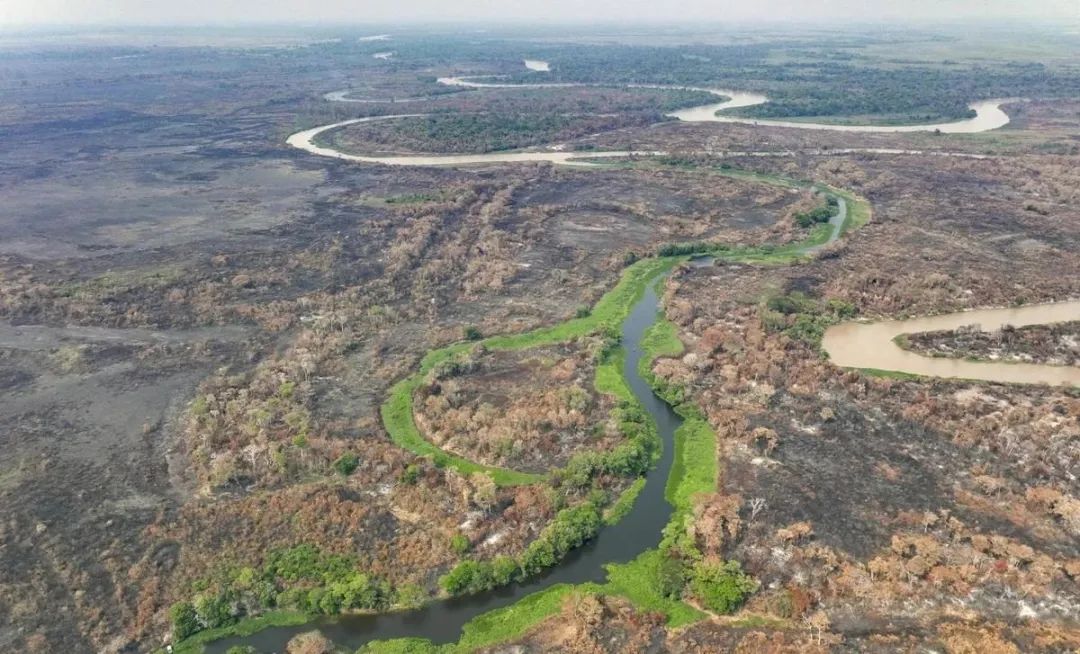
At present, rainfall in Minas Gerais, the main producing state for Brazilian arabica coffee, remains unstable, rainfall has consistently been below average, soil moisture is still very low, and temperatures are on the high side. Even though the coffee crop is currently flowering well, this cannot guarantee good production. As a result, many producers worry that there will be a more severe crop failure during the harvest season.
As for robusta coffee, spot prices have also risen, though by a smaller margin, up 8.27% compared with the end of October, at 1,570.79 Brazilian real per bag. This is because in Brazil, robusta coffee is cultivated in better conditions than arabica and is more adaptable to harsh climates, so production is expected to increase; however, as international coffee prices remain high, Brazilian robusta spot prices have risen along with them.
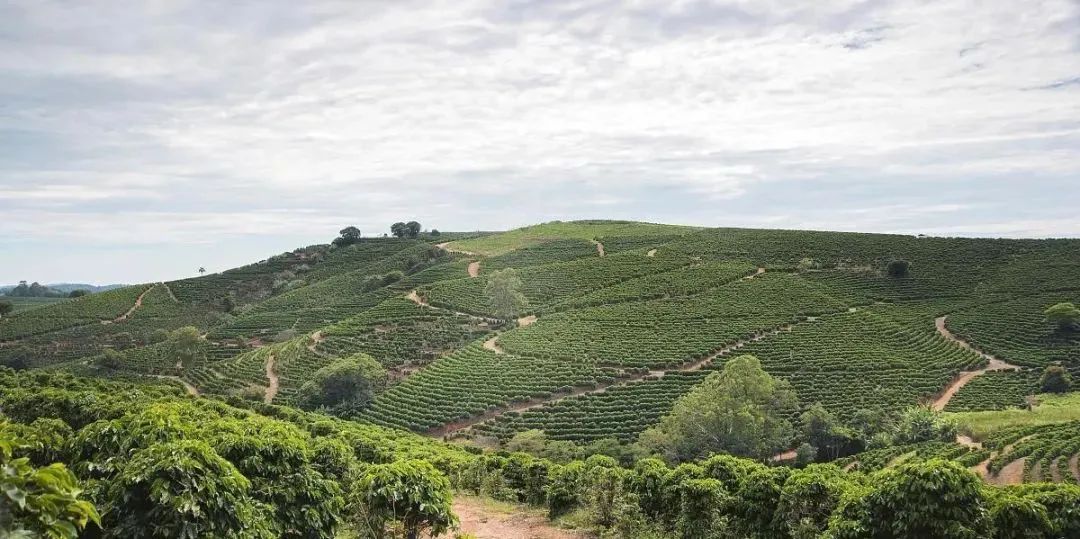
However, the port delay problem in Brazil remains severe at present. Earlier in September, it was reported that 2.15 million bags of coffee were stranded at ports and could not be exported. By October, according to a report from the Brazil Specialty Coffee Association (Cecafe), coffee exports in October hit a historic record of 4.926 million bags. Although the port delay situation improved somewhat, 1.7 million bags of coffee were still stranded at ports.
Cecafe stated that due to repeated ship delays, Brazil has accumulated a total of 1.717 million bags (5,203 containers) of coffee products. Based on the October average FOB export price of 285.21 USD per bag (green coffee beans), this amounts to a cumulative shortfall of 489.72 million USD in foreign exchange earnings. Coffee exporters lost 6.986 million reais due to additional costs such as extra storage, detention and pre-stacking.
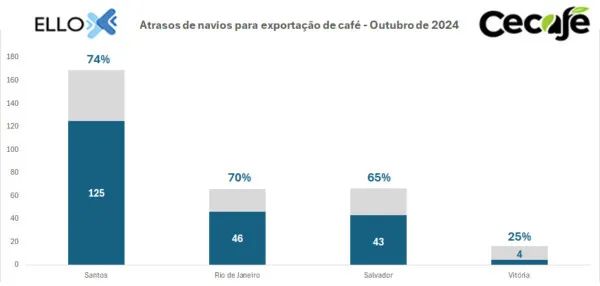
Among Brazil's ports, the Port of Santos is Brazil's most important coffee export port, but it has the highest ship delay rate, reaching 74%, followed by Rio de Janeiro, the second-largest coffee export port, with a delay rate of 70%.
In addition, Brazilian growers have recently encountered rising costs, mainly because the Brazilian currency, the real, plunged to a historic low while the US dollar strengthened. On November 28, the commercial dollar closed at 5.989 reais, up 1.3% for the day, and the intraday high once broke through the 6 reais level.
Coffee is mainly traded in US dollars. Although the depreciation of the real can make Brazilian coffee more price-competitive on the international market, growers face rising import costs and the pressure of exchange rate fluctuations, and this situation will ultimately lead to continued increases in coffee prices.
To learn more news and information about coffee origins, please scan the QR code to follow: Kaping
Long-press the QR code to follow:

Related Reading



Comments (0)
Loading comments...
You May Be Interested




Trending Reviews
Popular Videos

With you, wherever you are! We provide useful features to help you find new things you'll love






