Source:Best Coffee > News Author:qjroot Published:2026-10-09 14:18:56
The flat white, a milk coffee, arrived in this world much later than the latte and the americano. Whether its original home is Australia or New Zealand is still debated by both sides to this day, but for those of us making coffee at home, it is enough to remember that it is a milk coffee that traveled across the ocean from the Southern Hemisphere. A flat white and a latte look alike, but they taste like two different things. Some people call it an upgraded latte, and that comparison is quite apt - it uses less milk and thinner milk foam to push the flavor of the coffee beans themselves to the front, and the mouthfeel is also more solid and full.
To make a decent flat white, just grasp three key points: less milk, thin milk foam, strong coffee flavor. A latte pursues a balance between coffee and milk, and with one sip I find the two share the stage equally; a flat white, by contrast, lets the milk retreat backstage and play a supporting role for the espresso.
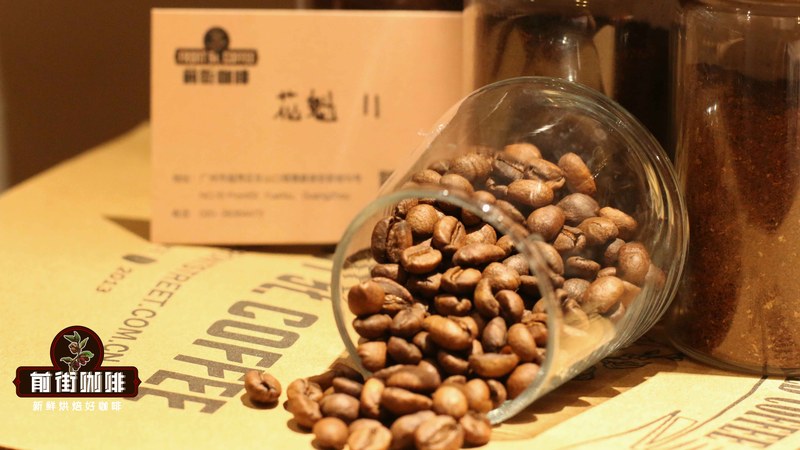
So when choosing beans, it is especially recommended to pick espresso beans with memorable flavor. For example, Qianjie Queen Estate, this bean from Brazil is medium-dark roasted, with notes of nuts, cream and cocoa, soft acidity, and after being made into a milk coffee the chocolate flavor stands out particularly, with a balanced mouthfeel that does not steal the show. If I want to try a cleaner route, Qianjie Blue Mountain No. 1 comes from the Jamaican region, is also medium-dark roasted, with a beautifully balanced sweet, sour and bitter profile, clean flavor, and both body and soft acidity. Made into a flat white it is round and easy to drink, suitable for people who like a delicate mouthfeel.
In autumn and winter I can also consider Qianjie Autumn Chestnut Blend, a medium-dark roasted espresso blend with a warmer profile. The sweet aroma of roasted chestnuts, caramel and cocoa blends with milk to become round and smooth, and drinking it feels like being wrapped in a thick blanket.

The choice of milk is equally important. Milk that is too thin will make a flat white taste light and lacking in texture, while milk with too strong a dairy flavor will cover up the coffee aroma. If making it at home, prioritize chilled fresh milk. After steaming it with an espresso machine, the milk aroma and sweetness can better support the espresso. A flat white uses less milk than a latte. A latte is generally at a 1 to 5 or 1 to 6 ratio of coffee liquid to milk, while a flat white needs to hold back a bit so the coffee flavor is more concentrated. The cappuccino goes in another direction, with thicker milk foam and less milk, and a fluffy mouthfeel, forming a contrast with the silky, solid flat white.
The espresso extraction parameters need to be stabilized. At home with an espresso machine, use 18 to 19 g of grounds, extract 36 to 38 g of coffee liquid, and control the time at 25 to 28 seconds. To highlight the flavor more in a flat white, I can take only the front and middle sections, that is, the ristretto approach, making the mouthfeel richer. Steam the milk to 60 to 65°C. This temperature range preserves sweetness without scalding the mouth.
The thickness of the milk foam is the soul of a flat white. A latte's milk foam can be slightly thicker, and a cappuccino must be steamed to a fluffy thickness, while a flat white must be thin, about 0.3 cm thick, like a light gauze covering the surface of the liquid. When steaming, the air intake time should be short. When the steam wand first enters the milk it makes two short chirps, about 1 to 2 seconds, and then I should bury the steam wand down, let the milk spin, and roll the large bubbles into fine microfoam.
When there is little air intake, the sound will be relatively sharp. Swirl the pitcher a little, and when I see an even glossy surface, that means the milk foam is ready.
The pouring technique emphasizes gentleness and stability. First slowly pour the hot milk into the espresso, then raise the pitcher so the milk forms a thin stream, using gravity to draw circles and stir on the crema, letting the two meet evenly, and finally lower the pitcher and steadily push out white lines. The whole process is done in one smooth motion, and the flat white brought to the table has a surface as smooth as satin, at just the right temperature, so I can take a big first sip. A flat white made with Qianjie Queen Estate enters with the sweet fragrance of cream and hazelnut, and the chocolate flavor slowly unfolds; Qianjie Blue Mountain No. 1 is cleaner and rounder, with sweet and sour balanced just right; Qianjie Autumn Chestnut Blend carries the warm sweetness of roasted chestnuts, especially comforting for a cup on an autumn or winter morning.

A flat white is a milk coffee that lets people touch the true flavor of coffee more directly. Unlike a latte, which gently wraps me in the embrace of milk, it takes me by the hand to get to know the beans themselves. When practicing at home, I do not have to pursue complicated latte art. First steam the milk foam thin, control the ratio accurately, and make the pouring stable. Once these three things are done well, a proper flat white is already in my hands.
Related Reading




Comments (0)
Loading comments...
You May Be Interested


Trending Reviews
Popular Videos

With you, wherever you are! We provide useful features to help you find new things you'll love






