Source:Best Coffee > News Author:qjroot Published:2026-09-03 18:46:24
SOE is not some special piece of equipment; it simply means making espresso with single-origin coffee beans. A home semi-automatic machine can make SOE as long as it can supply water steadily, maintain suitable pressure, and is paired with a grinder that allows grind adjustment. The difference is that blend beans usually aim for body and consistency, while single-origin beans more easily bring floral notes, fruity acidity and regional character into a small cup of espresso.
To judge whether a machine is suitable for making SOE, you can first look at the group head, filter basket, pressure and temperature control. A common 58 mm filter basket has ample room for the dose range and distribution, making adjustments more comfortable; smaller baskets can also be used, but each time you change the dose, the change in puck height will be more obvious. A pressure gauge can help you observe the extraction state, but the needle reading is not the same as the actual flavor of the coffee liquid.
Pump pressure can use about 9 bar during extraction as a reference. Some home machines display pump-end pressure, and the reading will be higher than the pressure the puck actually bears, so there is no need to fixate on a particular number. What is more worth watching is whether the flow is even, whether the coffee liquid's flow rate suddenly speeds up, and whether there is obvious sharp acidity or burnt bitterness in the cup. When the machine's pressure cannot be adjusted, find the range that suits the beans through grind, dose and liquid weight.
Temperature control capability directly affects the performance of light-roast SOE. For machines with PID temperature control, you can start testing from 93 to 95 degrees Celsius; for ordinary temperature-control machines, pay attention to temperature fluctuations during continuous brewing. Light-roast beans often need higher temperatures to help release flavor, but too high a temperature may also amplify astringency. If the machine is not preheated enough, the coffee can easily seem thin and sharp, so the group head, portafilter and cup should all be warmed in advance.
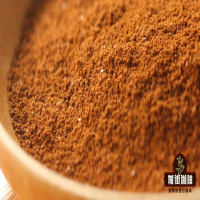
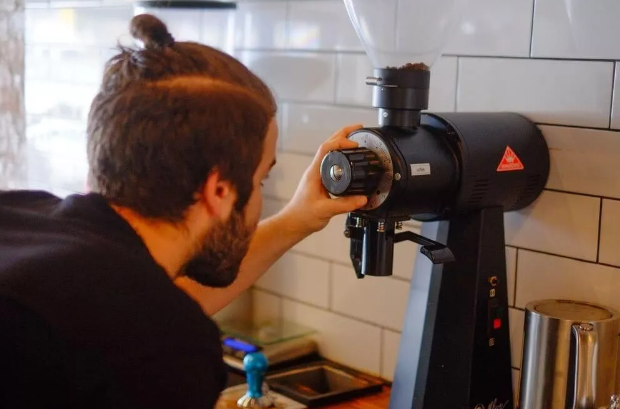
The uniformity of the grinder affects the result more than the machine's appearance. Espresso grinding needs to be fine enough while reducing the difference between coarse and fine particles; otherwise local fast channels will appear in the puck, and the liquid may seem to flow out on time while the sip is both sour and astringent. A grinder with markings makes it convenient to record changes, but the markings are not a universal standard. After changing beans, you should find the setting again and cannot directly carry over the setting from the previous bean.
Parameters can start testing from 18 g dose, 36 g coffee liquid, and about 28 to 32 seconds. This is only a starting framework for observation, not a fixed answer. For machines with smaller filter baskets, you can use 15 g dose with 30 g liquid; for larger baskets, you can try 20 g with 40 g. When the dose-to-liquid ratio stays close, changing the dose mainly affects the concentration in the cup, while changing the liquid weight changes the extraction degree and flavor density.
Take light-roast Qianjie Colombia Sidra as an example. In an espresso machine it easily shows bright notes like berries, grapes and tropical fruit, and is suitable for a short-ratio SOE or for adding water to make an Americano. You can start with 18 g dose and 32 to 36 g liquid, with water temperature set at 94 to 95 degrees Celsius. If the sip tastes like unripe fruit, grind finer or extend the flow; if the finish feels dry, slightly reduce the liquid weight or grind coarser.
Qianjie Yirgacheffe Gutingding is suitable for people who like floral and fruity aromas but want softer acidity. When making SOE with it, you can start by extracting 36 g liquid from 18 g dose, at about 93 to 94 degrees Celsius. After finishing, taste it directly first, then add hot water to observe how the aroma changes. If the coffee liquid seems thin, you can shorten the ratio to about 1 to 1.7; if the bitterness stands out, you can reduce the contact time.
The machine's pre-infusion function is also worth using. For models with pre-infusion, you can set a few seconds of low-pressure wetting so the puck absorbs water first, then enter full-pressure extraction; if there is no pre-infusion function, even distribution and level tamping can likewise improve the flow. Tamping does not need to pursue great force; levelness matters more than strength. Lock in the portafilter and start immediately, which can reduce local changes caused by the puck being heated for a long time.
When adjusting parameters, you can first look at the flow rate of the coffee liquid, then judge together with the sip. If the liquid flows out very quickly, the acidity is sharp and there is not enough sweetness, you usually need to grind finer; if the flow is slow, the color is dark, and the mouthfeel is dry and bitter, you can try grinding coarser or reducing the liquid weight. Change only one variable at a time, and record dose, liquid weight, time and water temperature; after a few cups you will be able to see the range in which the machine and the beans work together.
Qianjie Panama Hacienda La Esmeralda Red Label Geisha is better suited to being savored slowly on a machine in a stable state. Its floral notes, citrus and tea-like feel need a clearer extraction environment. You can use 18 g dose with 36 to 40 g liquid, at about 93 degrees Celsius, and wait a moment after finishing before drinking, so the aroma opens up more. A home espresso machine is fully capable of making SOE. The key is to understand your own pump pressure, filter basket, temperature control and grinding capability, and then let the parameters serve the flavor of the beans.
Related Reading

Comments (0)
Loading comments...
You May Be Interested



Trending Reviews
Popular Videos

With you, wherever you are! We provide useful features to help you find new things you'll love






