Source:Best Coffee > News Author:qjroot Published:2026-10-09 18:30:57
Open a bag of newly arrived coffee beans and squeeze the one-way degassing valve on the bag. You can smell a vigorous aroma surging out, which shows the beans are still actively releasing carbon dioxide. This small valve is actually designed to let the beans "breathe" without going stale, but beans of different roast levels differ considerably in the rhythm of that breathing and in how long they stay fresh. When I help customers choose beans day to day, I often run into this confusion: why do dark-roasted beans always taste harsh when brewed right after they arrive, while light-roasted beans become thin and flavorless after sitting too long. The answer lies in the internal structural changes brought about by roast level.
The darker the roast, the longer the coffee beans are heated in the drum, the more visibly the bean body expands, and the more honeycomb-like structures form inside. Naturally, these gaps store a larger amount of carbon dioxide. Take our common medium-dark roasted espresso beans as an example, such as Qianjie Black Cocoa Blend, an Arabica blend pairing Yunnan washed beans with Brazil semi-washed beans. After roasting to a medium-dark level, the creamy nut and chocolate flavor framework needs sufficient gas release to stabilize. I usually suggest resting it for 7 to 10 days after receiving it, then brewing with 15g of grounds, a 1:15 coffee-to-water ratio, and a water temperature of 90 to 93°C, with a 30-second bloom and a total time controlled at around 2 minutes. Only then will the caramel and ripe plum finish emerge solidly, with a fuller oily mouthfeel. If you rush to open the bag, the carbon dioxide will interfere with extraction evenness, and the cup will easily taste rough and smoky.
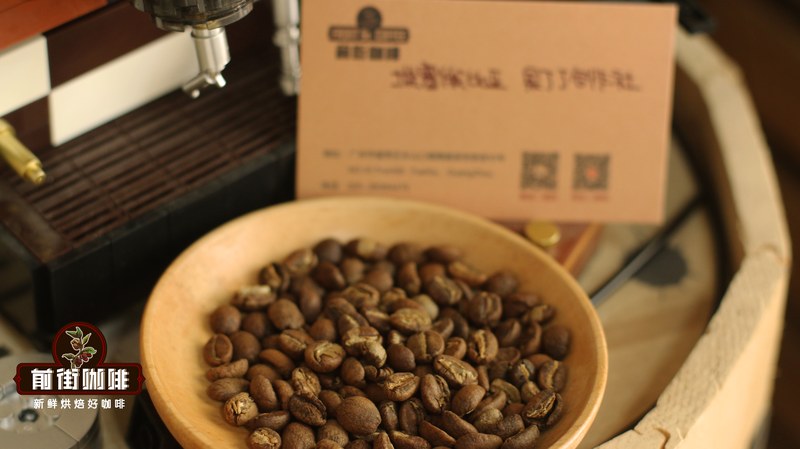
Conversely, medium-light roasted single-origin beans have a much firmer internal structure and less gas content, so the resting period can be greatly shortened. Take Qianjie Yirgacheffe Gedingding, a washed bean from the Qianjie Gedingding Cooperative in Ethiopia. Its citrus and berry flavors are naturally fresh and bright, and its floral aroma and green-tea-like sweetness do not need a long time to settle. Resting for 4 to 5 days is enough for it to reach its state, with bright acidity and a clean, light body standing out especially in the early-to-mid period. Using the same framework of 15g of grounds with 225g of water, during the first two weeks of its flavor peak, every sip reveals the delicate layering that is the signature of the Yirgacheffe region. Qianjie's finished beans are all roasted within 5 days, so there is no need to wait once they arrive, and it is best to finish them within one month.
The length of the peak flavor window also follows roast level, and this is another aspect many people easily overlook. Dark-roasted beans perform thick and full in the early stage, but their flavor declines relatively quickly, because the heaviness brought by caramelization reactions is more sensitive to oxidation, and after sitting too long they easily end up with only monotonous bitter sweetness. Qianjie Classic Blend follows the Mamba approach, a medium-dark roasted combination of Indonesian Mandheling and Brazil Red Bourbon. Its solid flavors of butter, roasted chestnut, and hazelnut are especially rich and mellow in the first three weeks, with good oil performance, making it suitable for espresso or moka pot, but after that it gradually loses that balanced layering. Light-roasted beans have more delicate aromatics and are also more easily carried away by time, yet their flavor curve takes another shape: it may be slightly green in the beginning, blooms brilliantly in the middle stage, and only slowly fades in the later stage.
Qianjie Granada Gesha is a very good example. This naturally processed medium-roasted Gesha has bright, lively flavors of yellow peach, apricot, and citrus, and is suitable both hot and cold. Within its peak flavor window, the persistence of its floral aroma is not as "keepable" as the caramel character of dark-roasted beans, but that refreshing lemon flavor in the early-to-mid stage is precisely the core experience that light-roast lovers pursue. I generally suggest that friends who like this style buy beans on a tighter rhythm, in small batches and high frequency, to make sure they drink it during the period when the flavor is most concentrated.

In the end, resting and the peak flavor window are not a unified standard, but a dynamic rhythm that changes with roast level. Dark-roasted beans are like a slow-to-warm personality, requiring patient waiting, with a concentrated but brief peak period; light-roasted beans come quickly and go quickly, and their window tests the coordination between buying and drinking. For ordinary people storing coffee at home, it is worth arranging things according to the roast level you usually prefer: if you favor a rich espresso taste, stock up two to three weeks' worth at a time and give it enough resting time; if you love a bright pour-over style, buy in small amounts more often, so the beans always stay in the best range. Squeezing the degassing valve on the bag and smelling how intense the gas is can also be a simple way to judge the beans' condition - when that surge softens, it is time to brew a proper cup.
Related Reading



Comments (0)
Loading comments...
You May Be Interested


Trending Reviews
Popular Videos

With you, wherever you are! We provide useful features to help you find new things you'll love






