Source:Best Coffee > News Author:qjroot Published:2026-08-15 10:45:29
If you have ever had Mandheling, you will surely remember that rich, heavy body with a hint of herbal character. Even today, when specialty coffee is all about "bright fruit acidity", Mandheling still firmly holds the hearts of a group of seasoned coffee lovers. Among them, the most famous is Golden Mandheling. What exactly makes it special? Why is its price different from ordinary Mandheling? This article starts with its origin and processing method.
Coffee originated in Ethiopia. At the end of the 17th century, the Dutch transplanted coffee seedlings to the island of Java in Indonesia, and the coffee industry then spread to the island of Sumatra. In the early 20th century, a coffee leaf rust epidemic swept across Java, and Indonesia's coffee-growing industry moved north to Sumatra. Today, Sumatra is an important producing region for Indonesian arabica and robusta beans, accounting for more than 60% of output.
People habitually call arabica beans produced in Sumatra Mandheling coffee beans, mainly grown in the Aceh Special Region and North Sumatra Province in northwestern Sumatra. Among them, the Gayo Mountains near Lake Tawar are an emerging producing area, with delicate aroma and a bright mouthfeel; the traditional Mandheling producing area is located in the Lintong region around Lake Toba in North Sumatra Province, where diverse plant varieties, a suitable growing altitude, plus the special wet-hulling process and the local microbial fermentation aroma-generating mechanism, together create the typical Mandheling coffee flavor: rich aroma, full body and intense taste.
Indonesia's rainy season overlaps with the coffee cherry ripening season, making it very difficult to dry coffee beans by the natural process, which led to the development of a regionally distinctive Sumatra-style processing method: wet-hulling.
Because it rains frequently in Sumatra, in order to dry the green coffee beans as quickly as possible, growers first remove the skin and pulp, rinse briefly and then dry; when the coffee fruit reaches a half-dry, half-wet state, the parchment layer is removed by machine, exposing the green beans directly to the air and speeding up the entire drying process. It is precisely this craft that creates Mandheling's full body and unique earthy, herbal flavors. This "taste of Mother Nature" intoxicates many seasoned coffee lovers.
Wet-hulling also has a "side effect": because the green beans are dried directly exposed to the air, they easily pick up microorganisms and impurities from the environment, which is also the reason Mandheling beans often have the problem of "more than the usual number of defective beans". That is why quality control for Mandheling is especially important, and the gap between good and poor lots is larger than in other producing regions. This also explains why Golden Mandheling, which undergoes strict hand sorting, costs noticeably more than ordinary Mandheling: what you pay extra for is the investment in the quality control stage.
Among the many Mandheling coffee beans, Golden Mandheling is known for its higher quality control standards. Qianjie Golden Mandheling comes from Indonesia's PWN company, and its production follows very strict standards: it uses coffee beans of screen size 18 and above as the base, requires fewer than 3 defective beans per 300 g green bean sample, meeting the G1 grade standard; on this basis, it then undergoes three rounds of manual hand sorting, completely removing defective beans, thereby improving the cleanliness of Golden Mandheling's taste and the intensity of its sweetness. Such strict production standards determine the high quality and limited output of Qianjie PWN Golden Mandheling.
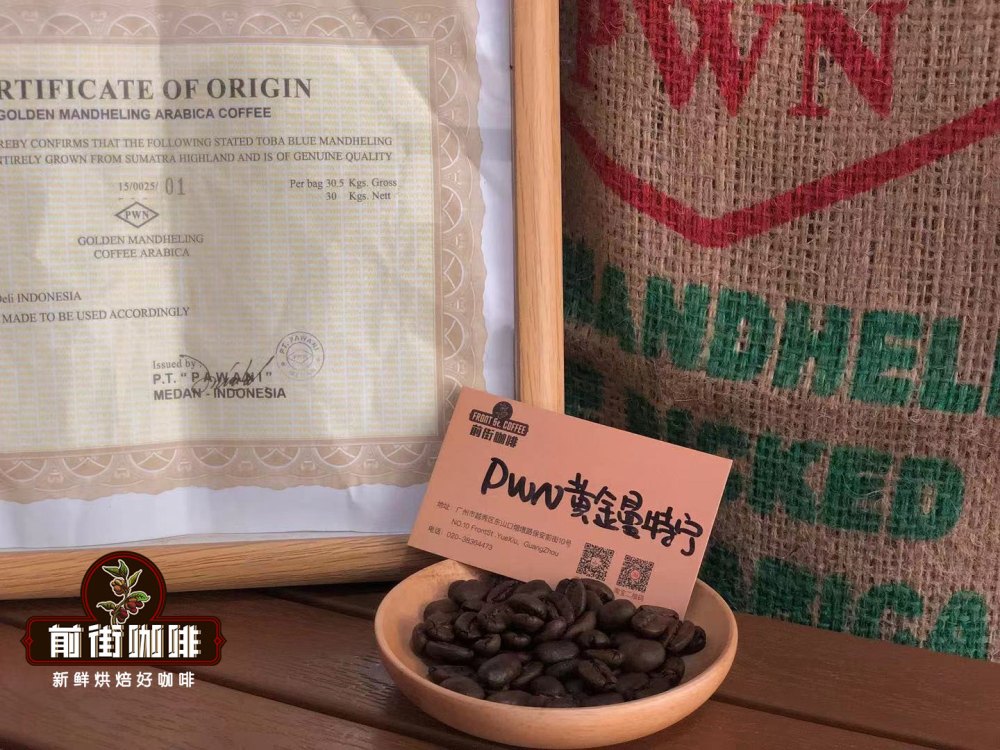
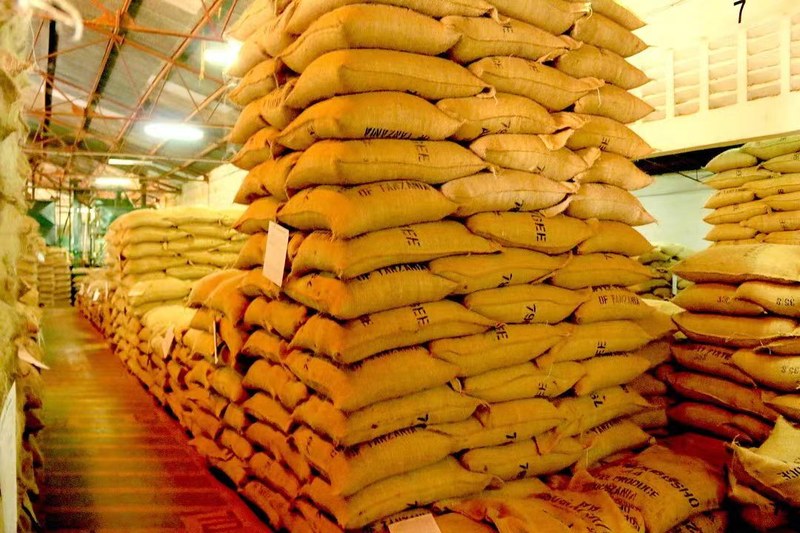
Golden Mandheling is famous, but it is mainly supplied to the Japanese and American markets, and the amount of genuine Golden Mandheling imported into the country each year is very limited. In Qianjie Coffee's product introduction, you can see Golden Mandheling's certificate as well as many bags bearing the PWN mark, which is where Qianjie PWN Golden Mandheling differs from other Golden Mandheling.
Qianjie PWN Indonesian Golden Mandheling uses a dark roast, with very low acidity, a mellow and lingering body, and a mouthful full of herbal and dark chocolate aromas, mixed with a faint earthy note. The layers are rich, making it suitable for friends who like bold flavors and dislike acidity.
If you prefer the classic Lintong flavor, you can choose Qianjie Lintong Mandheling: fragrant, mellow and rich, sweet-bitter in nature, with an intense and stimulating mouthfeel on entry, carrying clove and woody aromas. The medium-dark roast brings low acidity, a spicy note and a minty mouthfeel, as well as a strong, lasting, full-bodied sweet taste.
Mandheling's full body and dark-roast flavors make it very suitable for pour-over, espresso and moka pot:
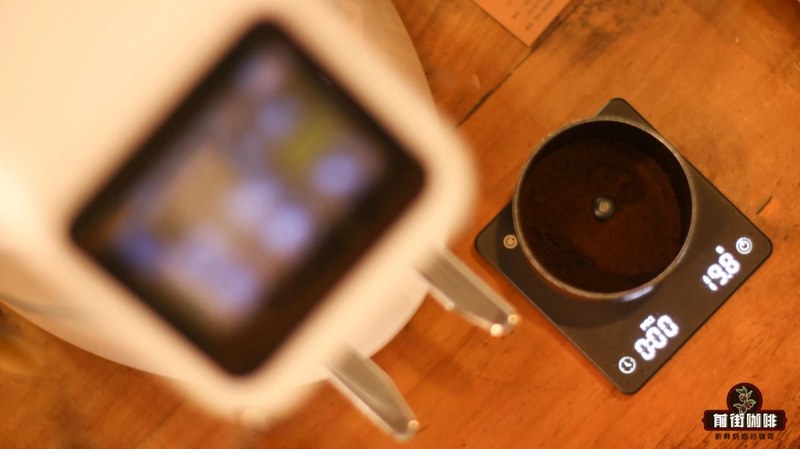
Pour-over: coffee-to-water ratio 1:14 to 1:15, water temperature 88 to 90°C, medium-fine grind, letting you taste a solid body and clear herbal dark chocolate flavors.
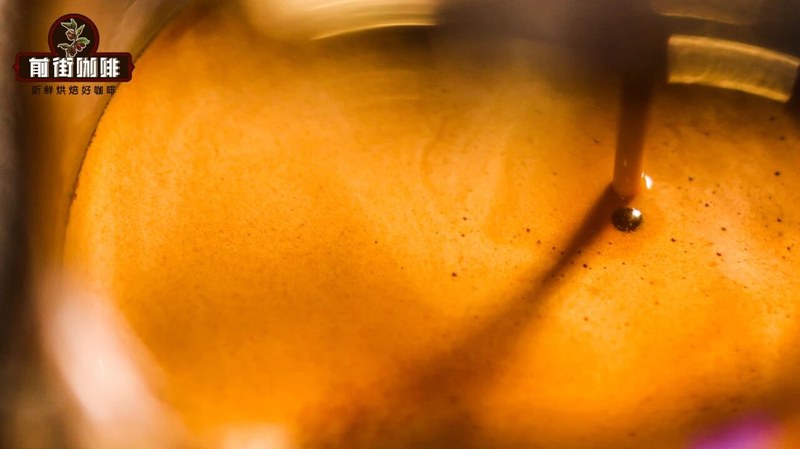
Espresso: the extracted crema is thick, and it is very stable whether made into an americano or served with milk.
Moka pot: grind slightly coarser than for espresso, and the brewed result is rich and full.
Mandheling is also worth trying as an iced pour-over. Use a 1:14 coffee-to-water ratio, bloom for 30 seconds first, then switch to ice water and pour slowly, finally placing ice cubes in the sharing pot. The low-temperature extraction of iced pour-over weakens Mandheling's bitterness while concentrating the herbal and dark chocolate flavors. On entry it is like drinking a glass of iced dark chocolate beverage, rich but not dull, especially satisfying to drink in summer.
Friends who are used to floral and fruity coffees may find Mandheling "heavy" on the first sip, but after a few more mouthfuls, that layered sense of fullness slowly becomes addictive. If you want to experience authentic Golden Mandheling, look for the PWN certificate and the dedicated burlap sack, and you will not go wrong.
Related Reading
Comments (0)
Loading comments...
You May Be Interested

Trending Reviews
Popular Videos

With you, wherever you are! We provide useful features to help you find new things you'll love






