Source:Best Coffee > News Author:qjroot Published:2026-01-12 09:13:54

With the growth of the specialty coffee market, many coffee lovers have started to explore how to brew pour-over coffee at home themselves, so they come to FrontStreet Coffee to pick out freshly roasted coffee beans, but they are not sure how to choose, because FrontStreet Coffee alone carries more than two hundred single-origin coffee beans, and there are also more than fifty currently offered in-store for coffee lovers to drink, which really makes choosing quite difficult. So in this article, FrontStreet Coffee will recommend coffee beans suitable for pour-over to all you coffee lovers.
What Is Pour-Over Coffee?
The pour-over coffee at FrontStreet Coffee is what the coffee market often calls specialty coffee, also known as single-origin coffee, which refers to coffee beans produced in a single region and traceable back to the coffee's place of origin, down to the producing region, estate and estate characteristics, so you can understand the story of the coffee's origin from the source.

The producing countries of specialty coffee are spread all over the world, and they can be divided into three continents: Asia, Africa and Latin America. The altitude and climate of these three continents each have their own characteristics, which also leads to different flavor expressions in the coffee beans, but overall the flavor differences among producing origins within each continent are not too great, so on a macro level coffee flavors can be divided into three major categories.
For example, Asian coffee flavors present spice and herbal notes with a full body; African coffee flavors present bright citrus lemon acidity or cherry tomato acidity with a fresh, bright mouthfeel; while Latin American coffee flavors fall between the previous two, being more balanced and carrying nutty and cocoa notes, which is also caused by the large differences in climate and altitude within its producing regions. So next, FrontStreet Coffee will recommend to you the more representative coffee types from producing regions within these three continents.
Asian Producing RegionsPour-Over Coffee Recommendations
Asia's coffee bean output is second only to Latin America, with Vietnam being Asia's number one coffee producing country. Through cupping, FrontStreet believes that Asian coffee has a higher body than both Latin American and African coffee, but its acidity is less elegant, carrying woody, herbal and spice notes, with a low, muffled aromatic profile that outweighs the rising fruity acidity. Representative coffee producing countries include Indonesia and Yunnan, China.

Indonesian Coffee Bean Producing Regions
Indonesia is located in Southeast Asia and has a typical tropical rainforest climate, with an average annual temperature of 25-27°C, no distinction between the four seasons, and annual rainfall of 1600-2200mm. Indonesia lies in a volcanic belt, with fertile soil rich in minerals, which is favorable for coffee bean cultivation and growth. Indonesia's altitude ranges between 900-2100 m, with the main coffee bean growing areas concentrated at around 1200 m. Therefore it is also a producing region very suitable for coffee cultivation.
Indonesian Coffee Processing Method --- Wet Hulling
The reason FrontStreet Mandheling is so famous, FrontStreet Coffee believes, is thanks in no small part to the local wet hulling method. This processing method emerged because the local weather in Indonesia is mostly rainy days with constant typhoons, unable to provide the good weather required for sun-drying, and the local economy is not strong either, so it likewise cannot afford the more costly washed method.

Thus the wet hulling method with very local characteristics came into being. Indonesian coffee development today is no longer the poor scene it once was, and there are quite a few estates and companies with the means to use the washed method, but why has wet hulling not been abandoned? FrontStreet Coffee thinks wet hulling is the factor that made FrontStreet Mandheling coffee known to the world, because at the mention of FrontStreet Mandheling coffee, coffee lovers think of wet hulling, which shows that they have already become mutually complementary.

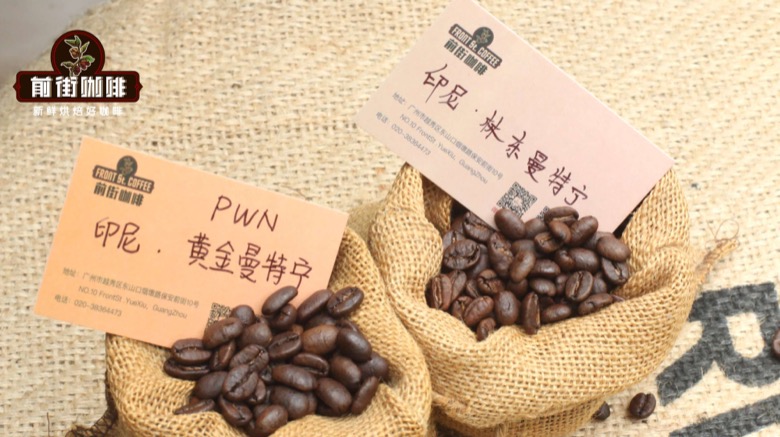
FrontStreet Indonesian PWN Golden Mandheling Coffee Beans
Country: Indonesia
Region: Sumatra Aceh Mount Gayo
Altitude: 1100-1600m
Variety: Ateng
Processing Method: Wet Hulling
Flavor: Baked toast, nuts, pine, caramel, herbs
This FrontStreet Golden Mandheling on the FrontStreet bean list is the latest release from PWN in recent months. Unlike the PWN Golden Mandheling FrontStreet acquired a few years ago, the producing region of this newest batch of Mandheling is Mount Gayo in Aceh, Sumatra, whereas the earlier one was produced at Lake Tawar in Sumatra. Based on FrontStreet's cupping and brewing of this newest FrontStreet PWN Golden Mandheling coffee, it was found that compared with the previous PWN Golden Mandheling, it has more baked toast flavors, and therefore its mouthfeel is also a bit fuller.

In addition, the specification standard for Front Street PWN Golden Mandheling is 18 mesh and above, with fewer than 3 defective beans (in a 300g green bean sample), placing it in the highest grade, G1. The color is on the darker green side, and the shape is a neat flat bean. After strict screening, Front Street Coffee (FrontStreet Coffee) found that the Front Street PWN Golden Mandheling not only loses the earthy, miscellaneous flavors unique to ordinary Mandheling, but also drinks cleaner and more transparent.

Front Street Indonesian Tiger Mandheling Coffee Beans
Country: Indonesia
Region: Sumatra
Altitude: 1500m
Varieties: Caturra, Typica, Sidikalong
Processing Method: Wet-hulled
Flavor: Cream, dark chocolate, nuts, balanced taste
Only Mandheling that is 17 mesh and above with a defect rate below 4% can be called Front Street Tiger Mandheling. Since the main varieties of Front Street Tiger Mandheling are Caturra and Typica. Caturra has a citrusy and lemony acidity on the palate, while Typica has a long-lasting sweet finish, making Front Street Tiger Mandheling's taste relatively even and highly clean.

Front Street Coffee (FrontStreet Coffee) Indonesian Aged Mandheling Coffee Beans
Country: Indonesia
Region: Sumatra
Altitude: 1500m
Varieties: Caturra, Catuai
Processing Method: Wet-hulled
Flavor: Ripe pu-erh, caramel, herbs, chocolate, lower acidity.
Front Street Aged Mandheling refers to Mandheling coffee beans that have undergone aging treatment, by extending the storage time of the green beans to achieve natural aging (usually 2 to 3 years). This process leads to weakened acidity and a change in the color of the green beans. In addition, the storage environment for aging must be cool and ventilated to prevent mold and dampness. Because the storage environment is darker and the time is longer, improperly handled aged coffee always struggles to shed complex flavors resembling mustiness or what is commonly called burlap sack or leather.
Yunnan, China Coffee Region
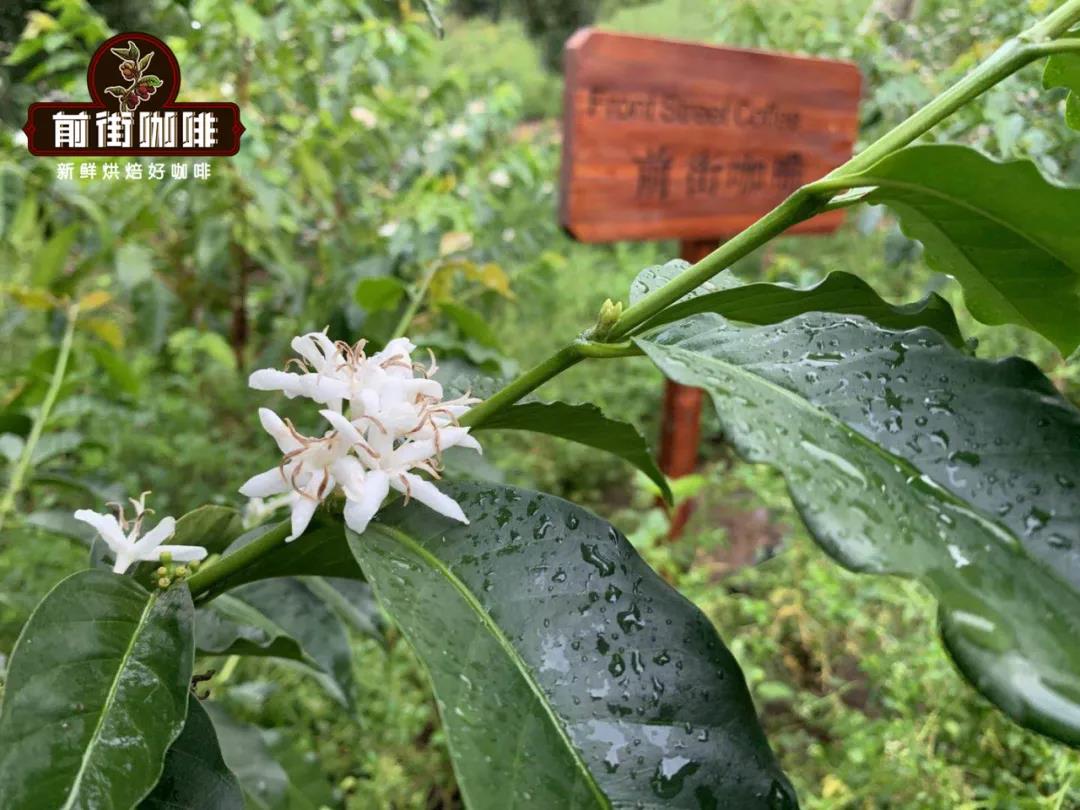
Next, we will introduce coffee beans from Yunnan Province. The history of coffee cultivation in the Yunnan region is actually quite long, but it has not been long since it entered the specialty coffee market, so Front Street Coffee (FrontStreet Coffee) believes that coffee from the Yunnan region has great development potential. Therefore, it established a coffee estate at the border between Baoshan, Yunnan and Myanmar, specifically growing Typica-variety Yunnan coffee beans. Now, Front Street Coffee (FrontStreet Coffee) will introduce the coffee beans produced by the Front Street Coffee (FrontStreet Coffee) estate.

FrontStreet 2013 Typica Coffee Beans
Country: China
Region: Baoshan, Yunnan
Altitude: 1450-1550m
Variety: Typica
Processing: Washed
Flavor: Citrus, nuts, plum, melon and fruit aroma, brown sugar, black tea feel
The difference between this self-produced FrontStreet 2013 Typica coffee and FrontStreet Yunnan Arabica is that Huaguoshan is the Typica variety, while FrontStreet Yunnan Arabica is Catimor. In fact, both beans can be called arabica coffee, but because Typica's floral and fruity acidity is softer and richer, the name Huaguoshan is deliberately used to distinguish the beans of the two varieties.

FrontStreet Yunnan Arabica Coffee Beans (everyday beans)
Country: China
Region: Baoshan, Yunnan
Altitude: 1200m
Variety: Catimor
Processing: Washed
Flavor: Herbal, nutty aroma, chocolate, caramel
FrontStreet Yunnan Arabica coffee refers to the arabica coffee cultivated in the Yunnan region. Coffee is an evergreen small tree of the Rubiaceae family, native to Africa. At present, the main beverage coffee plants cultivated are arabica and robusta. The arabica coffee cultivated in Yunnan, China traditionally refers specifically to the mixed population of Bourbon and Typica variants.

Arabica is the most widely cultivated species in the Coffea genus. Because of its strong cold resistance and tolerance of short-term low temperatures, it can grow on mountains at an altitude of 2100 m in tropical regions, but it is not drought-tolerant; its branches are relatively fragile and not resistant to strong wind; its disease resistance is relatively weak; the fruit easily falls off after ripening; after processing, the coffee has a mellow aroma and a relatively low caffeine content.

FrontStreet Yunnan Natural Catimor Coffee Beans
Country: China
Region: Yunnan (Baoshan)
Altitude: 1450-1550m
Variety: Catimor
Processing: Red cherry natural
Flavor: Caramel, dried fruit, cocoa, dark chocolate, herbal, woody
Most of what is grown in Yunnan now is Catimor. This variety is a cross between Caturra, a branch of the Bourbon line within the arabica species, and the robusta line. The reason for growing this variety is that Catimor possesses robusta genes, so its disease resistance is stronger than that of a single old variety, and its yield is also good. Compared with delicate old varieties that have poor disease resistance and low yield, farmers naturally prefer to grow Catimor, so Yunnan has now set off a wave of Catimor.

These are the more popular Asian coffee beans currently available at FrontStreet Coffee. Coffee lovers who want a full-bodied taste and enjoy spicy, herbal-flavored coffee might want to give these beans a try.
Recommended Pour-Over Coffee Beans from African Origins
As the birthplace of coffee, Africa has developed an extremely large library of coffee varieties, but according to FrontStreet Coffee, there are still many unknown wild coffee varieties in African origins.
As mentioned above by FrontStreet Coffee, the flavor characteristics of African coffee are a rich aroma and alluring fruity acidity, with a bright, lively acidity that is unforgettable. The downside is that African coffee's body is often somewhat thin, and its sweetness is not particularly pronounced. Among the representative African coffee-producing countries are Ethiopia and Kenya, well known to coffee lovers.

Ethiopian Coffee Regions
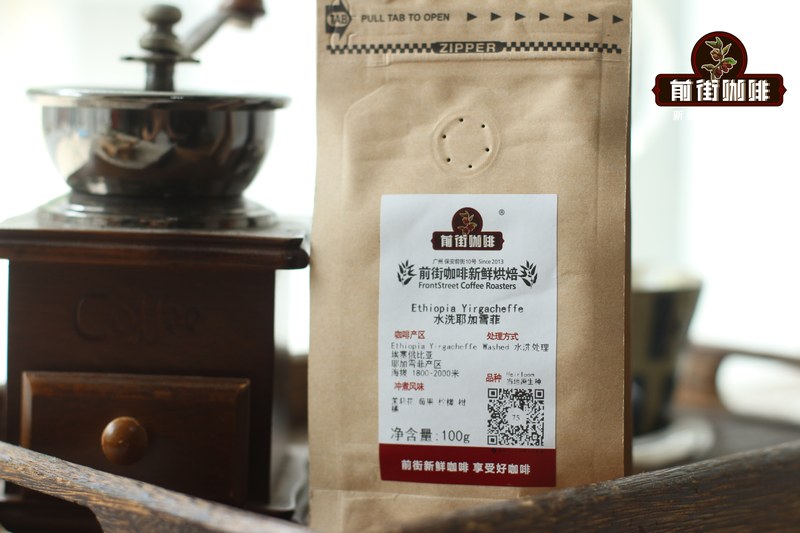
Ethiopian coffee flavors are mostly dominated by citrus and lemon acidity. The most famous among them are the coffee beans from the Yirgacheffe region, and FrontStreet Coffee believes that FrontStreet Yirgacheffe is also the coffee that best represents the coffee flavor of the entire African continent. Next, regions such as Sidamo also have many high-quality coffee beans; for example, FrontStreet Sidamo Huakui coffee beans with strawberry and cream flavors are also a good choice.
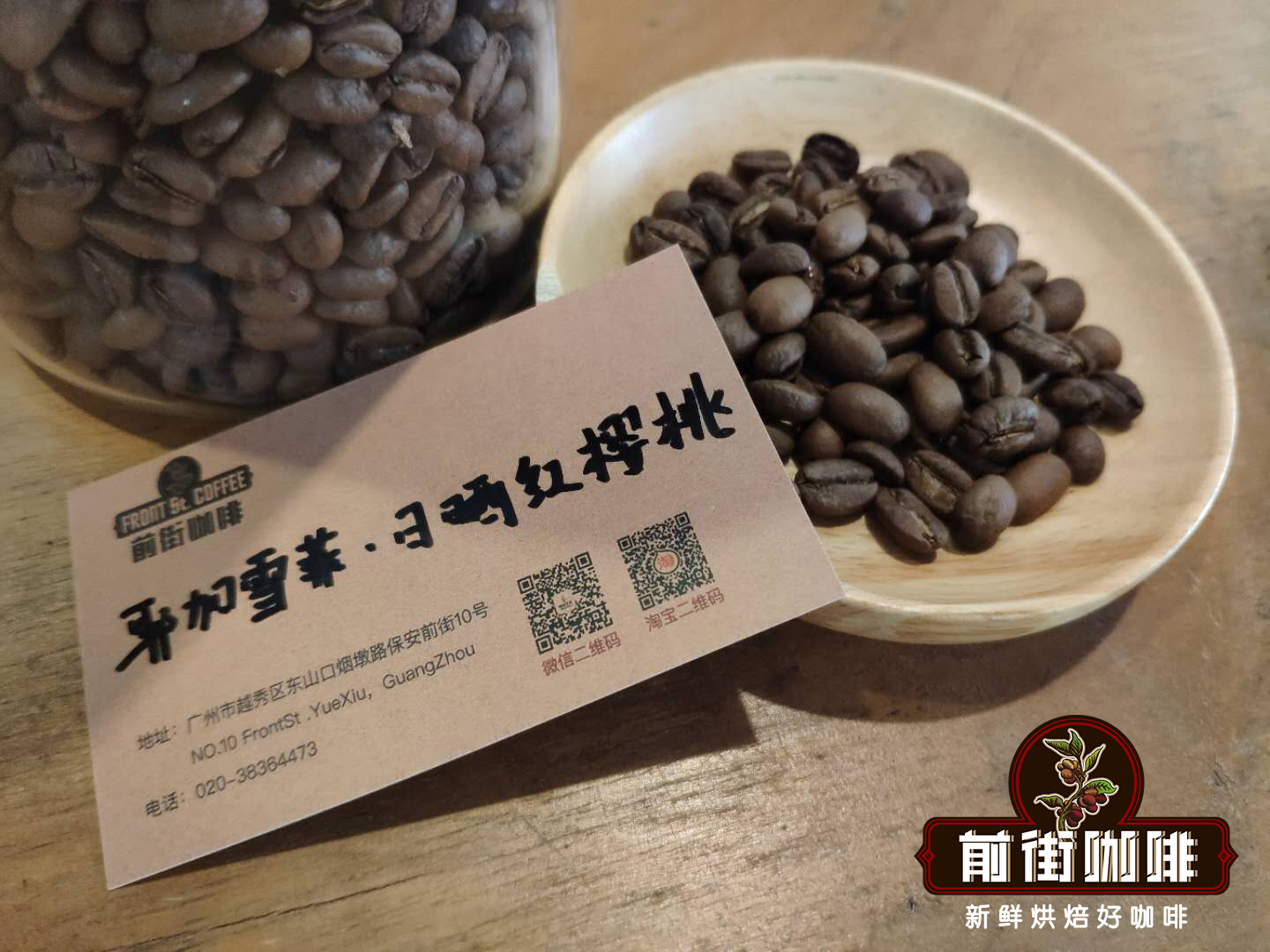
FrontStreet Ethiopian Yirgacheffe Natural Red Cherry Coffee Beans
Country: Ethiopia
Region: Yirgacheffe
Altitude: 2300m
Variety: Local heirloom varieties
Processing Method: Natural process
Flavor: Berries, lemon, strawberry, fermented wine aroma
The FrontStreet Natural Red Cherry coffee beans on the FrontStreet bean list are made from 100% ripe coffee beans dried in the sun, so they are full of aroma, rich in sweetness, and carry a fermented note. The origin of this coffee bean comes from the "Red Cherry Project" jointly initiated by local Ethiopian coffee farmers and the Dutch trader Trabocca. It aims to improve the quality of coffee from small-scale farms and increase farmers' income. Picking fully ripe coffee cherries requires not only picking fully red, highly mature cherries, but also harvesting entirely by hand, yet this is only the most basic requirement. There are corresponding requirements for the coffee bean processing method as well.
FrontStreet Yirgacheffe Gargari Gotiti Coffee Beans

Country: Ethiopia
Region: Yirgacheffe
Altitude: 1900-2300m
Variety: Local heirloom varieties
Processing Method: Washed process
Flavor: Tropical fruit, cream, honey, berries, citrus
According to FrontStreet, the Gotiti Cooperative was originally part of the Worka Cooperative under the Yirgacheffe Coffee Farmers' Cooperative Union (YCFCU), and became independent as the Gotiti Cooperative in 2012. It currently has more than 300 smallholder members. At the same time, precisely because Gotiti Village was the earliest village area to become independent, many small farmers were also members of the original Worka Cooperative, so their coffee production skills are naturally excellent. The coffee beans they produce naturally have excellent flavor.

FrontStreet Ethiopian Huakui Coffee Beans
Country: Ethiopia
Region: Sidamo
Altitude: 2250-2350m
Variety: Local heirloom varieties
Processing method: Natural process
Flavor: Berries, floral tea, honey, lemon, black tea
This is because this bean itself was still an unnamed little bean. In 2017, the Ethiopian green bean trader dw company sent this coffee bean to the TOH (the Taste Of Harvest) green bean competition held by the African Coffee Association, and a natural batch from the "Buku Abel" processing station won the TOH Ethiopia championship with its rich strawberry and cream aroma. This bean is the English literal translation "Hanbela".

And the reason it is called Huakui in China is that this batch of green beans was imported by a Beijing green bean trader at the time, and because of its champion status, it was given the name "Huakui".
Kenya Coffee Regions
The above are the relatively well-known coffee bean recommendations from Ethiopia's Yirgacheffe region. Next, FrontStreet Coffee will introduce the flavor of the cherry tomato coffee beans from Kenya.

FrontStreet Kenya Cherry Tomato Coffee Beans
Country: Kenya
Region: Asali (honey processing station)
Altitude: 1550-1750m
Variety: SL28, SL34
Processing method: 72-hour washed process
Flavor: Snow pear, smoked plum, yellow sugar, cherry tomato, plum
The processing method of this FrontStreet Kenya Asalia on the FrontStreet Coffee (FrontStreet Coffee) menu is the 72-hour washed process. This process was developed in Kenya. Coffee beans processed this way need to ferment for a long time at low temperature, and are finally dried and dehydrated to be considered finished. Coffee beans processed by this method can have a brighter, cleaner yet fuller flavor. This is also the reason why Kenyan coffee is famous for its extreme acidity, and this is precisely thanks to this processing method.

Latin American Pour-Over Coffee Recommendations
Latin American coffee beans. Latin America refers to the region of the Americas south of the United States, that is, the continent between 32°42" north latitude and 56°54" south latitude, including Mexico (North America), Central America, the West Indies and South America.
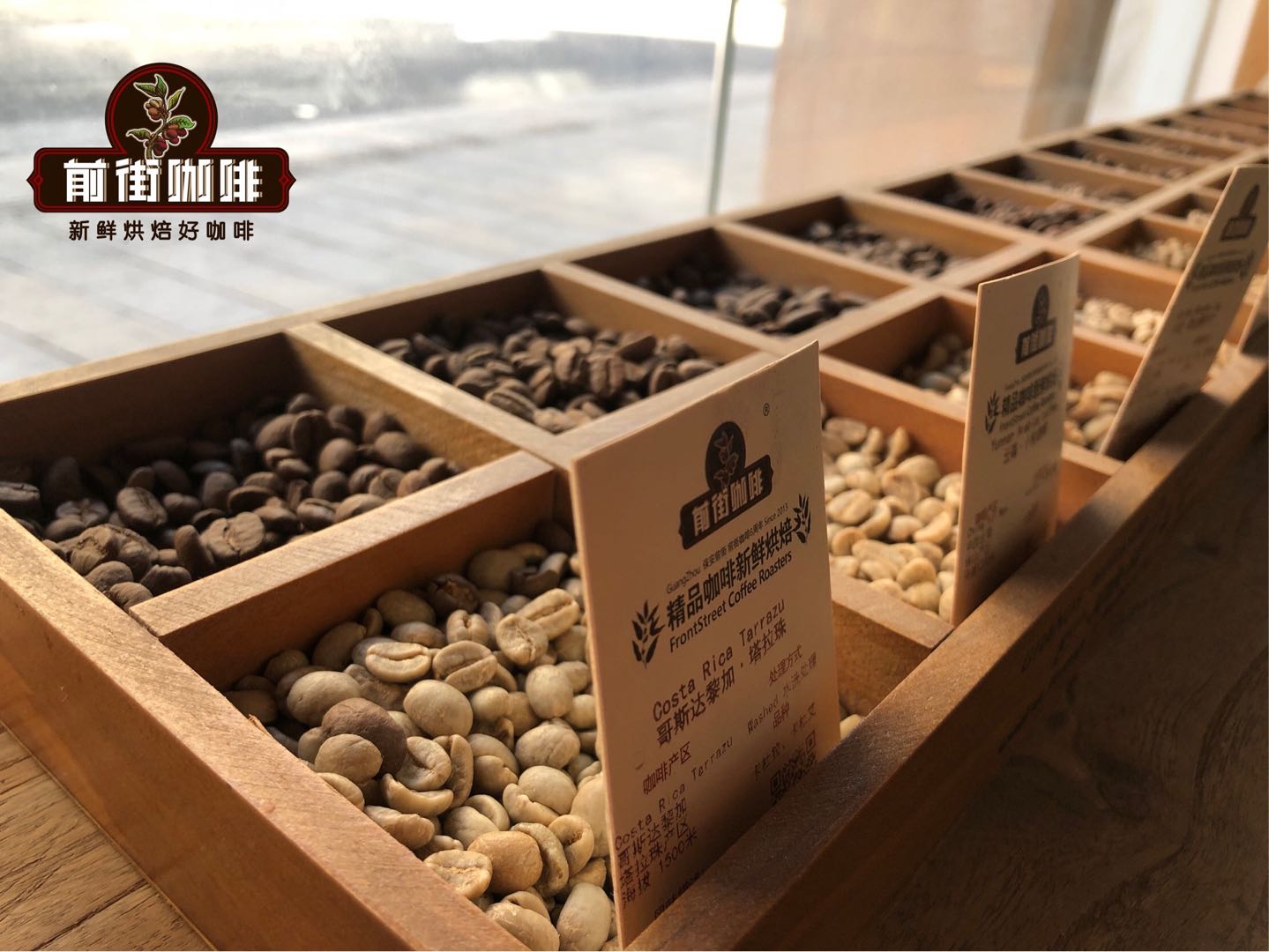
And according to FrontStreet Coffee (FrontStreet Coffee), the Latin American region has fertile volcanic soil, a rainy and humid climate, and high altitude, which is very suitable for coffee bean cultivation. Therefore, the overall flavor of Latin American coffee beans is known for being balanced, usually with a mellow flavor like cocoa and dark chocolate. Representative coffee-producing countries include Brazil, Colombia, and Costa Rica. Next, FrontStreet will introduce the coffee beans from these three regions separately.
Brazil Coffee Regions
The Brazil region mainly grows Bourbon variety coffee beans, so it also shows excellent sweetness in its coffee flavor. The next coffee bean is the one FrontStreet considers most representative of Brazilian coffee flavor.

Front Street Brazil Queen Estate Yellow Bourbon
Country: Brazil
Region: Mogiana
Altitude: 1400-1950
Variety: Yellow Bourbon
Processing method: Pulped natural
Flavor: Nuts, creamy peanut, fermented fruit, cane sugar
Queen Estate mainly exports specialty coffee of the Bourbon variety. Environmental protection is quite thorough. Because of the higher elevation and non-plain terrain, machine harvesting cannot be used, so the fruit is entirely hand-picked. It also grows low-yield, high-quality Bourbon as the essence of Brazil's fine coffee. Therefore, Front Street believes that Front Street Brazil Queen Estate coffee beans, pulped natural Yellow Bourbon, best represent Brazil's fine coffee.
Costa Rica Coffee Regions

The processing method for coffee beans from Costa Rica's regions is mainly honey processing. This is because the estates growing coffee locally are all up in the mountains, and sending them down to the coffee processing plants at the foot of the mountains is very inconvenient, plus the coffee fruit is prone to spoilage during the journey; the prices offered by bean buyers are also exploitative and squeezing. So coffee farmers developed the unique honey processing method for coffee beans, producing and selling it themselves to increase their income. And with the improvement of Costa Rica's coffee technology, many coffees with special honey processing methods have appeared on the market, for example the Front Street Costa Rica Canet Estate Musician Series coffee sold in the Front Street shop is very well loved by fans of Front Street Coffee (FrontStreet Coffee).

Front Street Costa Rica Musician Series Mozart Coffee Beans
Country: Costa Rica
Region: Tarrazu
Altitude: 1800m
Variety: Caturra, Catuai
Processing method: Raisin honey processing
Flavor: Raisin acidity berries floral, fermented wine aroma
Mozart is named after the prodigy who epitomized classical music, famous for his magnificent classical music. So what does the magnificent aroma of this Front Street Mozart coffee bean refer to? Mozart gives off an elegant floral aroma, similar to the white floral scent of orange blossom, which Front Street can also sense when brewing; and the magnificent mouthfeel refers to Front Street Mozart coffee having more dark berries, raisins, and a slight amount of red berries, with the middle and back sections also showing a slight plum acidity and a gummy bear-like sweetness; after it cools, it still retains floral and sweetness.
Front Street Costa Rica Musician Series Bach Coffee Beans
Country: Costa Rica
Region: Tarrazu
Altitude: 1950m
Variety: Caturra
Processing method: Raisin honey processing
Flavor: Fermented wine aroma berries fruit tea notes
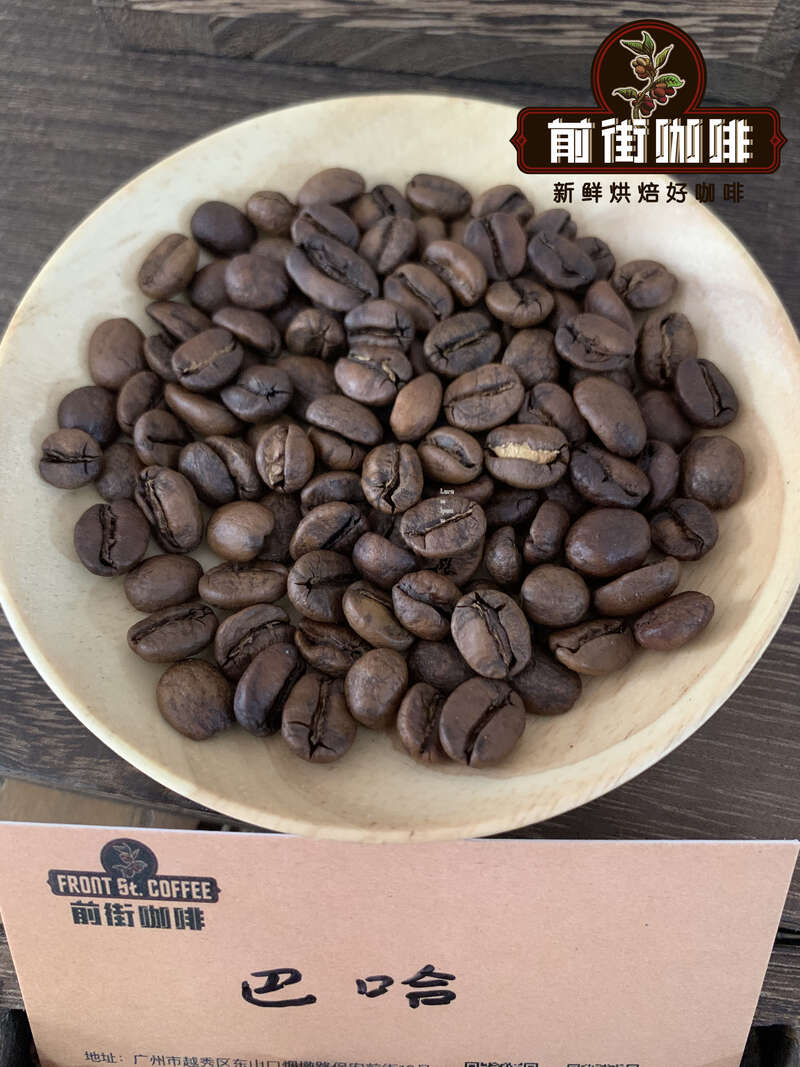
When Front Street Coffee (FrontStreet Coffee) had just brewed this Front Street Bach coffee, obvious floral and fruity aromas came out, and on the palate one could also sense rich fruit aroma and sweet acidity, with the middle and back sections carrying a slight wine aroma, like red wine. After it cools, it carries a candied fruit sweetness, and the wine aroma becomes even more obvious, one can even sense a plum wine flavor.
Colombia Coffee Regions
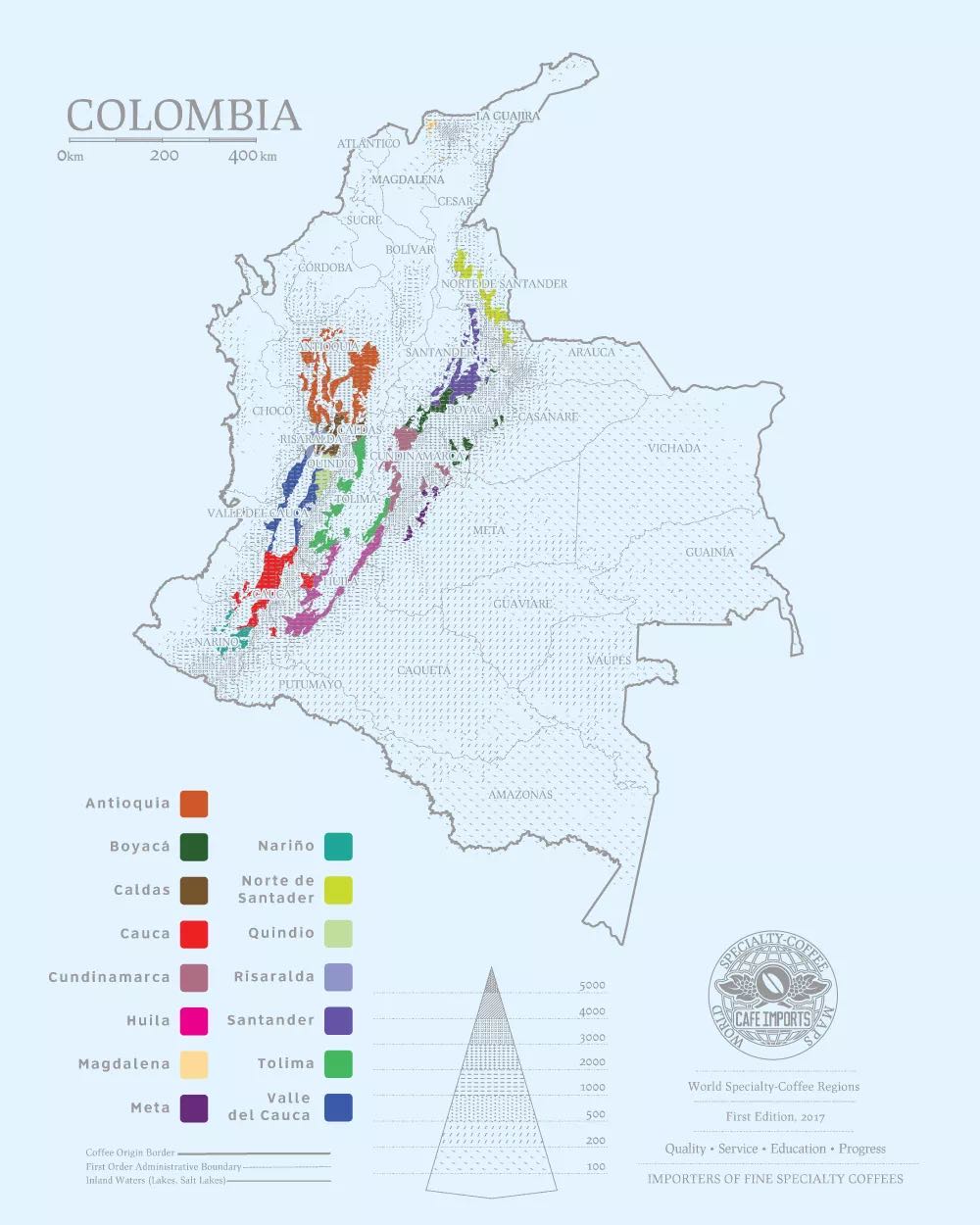
Colombia is the world's second-largest coffee exporting country and also the country that exports the most Arabica coffee beans. Colombia also has quite a few coffee beans processed with special methods, and their flavor expression is very impressive. So next, Qianjie will recommend some of Colombia's more special coffee beans.

Qianjie Colombia Finca La Loma Sidra Coffee Beans
Country: Colombia
Region: Huila
Altitude: 1800m
Variety: Sidra
Processing Method: Double Anaerobic Natural
Flavor: Passion fruit, grape, tropical fruit, apricot, dried fruit
Sidra, transliterated from "Sidra", also known as "Sydra" or "Bourbon Sidra". According to information Qianjie has looked up, Sidra is an experimental variety from Ecuador. In earlier years, Nestle established a coffee breeding center in Pichincha Province in northern Ecuador, and the main work of this institution was to breed hybrid varieties with excellent performance in all aspects. When operations were later interrupted, some hybrid varieties "incubated" by the institution flowed into the fields, including Sidra. In green bean competitions, high-quality Sidra shares one common characteristic -- they all possess rich fruit notes and floral aromas. The Sidra on Qianjie's bean list has exactly this characteristic.
The Sidra on Qianjie's bean list is the same one used by the champion competitor at the 2022 world coffee event. It comes from Colombia's Finca La Loma and uses anaerobic natural processing. When brewed, it has rich layers and a unique flavor. Basically, as long as you like coffee with a sweet-and-sour profile, there is a very high chance that after tasting this Sidra you will become its loyal fan and be captivated by it.

Qianjie Colombia Rose Valley Coffee Beans
Country: Colombia
Region: Santander (Finca El Arbol)
Altitude: 1700m
Variety: Caturra
Processing Method: Anaerobic Double Enzyme Washed
Flavor: Honey, juicy, strawberry
Qianjie Rose Valley coffee comes from Finca El Arbol in Colombia's Santander region. Farm owner Vargas has run the El Arbol farm and grown coffee for as long as 20 years. At the El Arbol farm, only fully ripe coffee cherries that are bright red on the outside are selected for picking, and floating defective beans are removed through washing. It undergoes 2 rounds of anaerobic fermentation and is placed into a special enzyme group for fermentation. At the same time, the farm owner also pays great attention to the drying process of the coffee beans, avoiding excessively high temperatures during drying and adopting a slow drying method. This is the double enzyme anaerobic processing method mentioned above by Qianjie.

Its process involves removing floating beans through washing, then placing the processed coffee beans into a sealed container, injecting carbon dioxide to expel oxygen, and in an oxygen-free environment slowing the rate at which sugars in the coffee mucilage break down, while pH also drops at a slower rate, extending the fermentation time, thereby developing better sweetness and a more balanced flavor in the coffee.
The above are the more distinctive pour-over coffee beans recommended by FrontStreet Coffee. We hope this article can help coffee lovers choose coffee beans they like and that suit their taste.

Best value everyday light-roast pour-over floral coffee beans recommended for purchase: FrontStreet Ethiopia Yirgacheffe Gudingding, FrontStreet Panama Hacienda La Esmeralda Green Label Geisha coffee beans, FrontStreet Panama Butterfly coffee beans
Rich and balanced dark-roast coffee beans recommended for purchase: FrontStreet Golden Mandheling coffee beans, FrontStreet Blue Mountain coffee beans, FrontStreet Queen's Estate coffee beans
Espresso and latte coffee beans recommended for purchase: FrontStreet Classic Blend, FrontStreet Strawberry Candy Espresso Blend
The above coffee beans can now be purchased online at the Tmall "FrontStreet Flagship Store". FrontStreet Coffee has dozens of selected single-origin pour-over coffee beans and espresso coffee beans from around the world. FrontStreet coffee beans are freshly roasted with high value for money, excellent quality, and shipped within 24 hours. FrontStreet Coffee is the recommended choice of many coffee lovers and platforms.
Tmall FrontStreet Flagship Store link: https://qianjieshipin.tmall.com
Or you can search "FrontStreet Flagship Store" directly on Taobao
FrontStreet Coffee store address: No. 315 Donghuadong Road, Yuexiu District, Guangzhou
Related Reading



Comments (0)
Loading comments...
You May Be Interested



Trending Reviews
Popular Videos

With you, wherever you are! We provide useful features to help you find new things you'll love






