Source:Best Coffee > News Author:qjroot Published:2026-09-07 12:36:44
Home-style American coffee is not a single recipe that works for every coffee bean. Light roasts need water temperature and contact time to release floral and fruity aromas, while darker beans require controlled extraction strength so bitterness does not overpower sweetness. Pour-over American coffee focuses on the coffee-to-water ratio, grind and pouring, while espresso-based American coffee requires attention to pressure, dose, yield and dilution water at the same time.
When choosing beans, you can translate the flavor notes on the package into brewing direction. Beans with pronounced floral, citrus and berry notes suit higher water temperatures and a finer grind, allowing the aroma to open fully; beans with nutty, cocoa and caramel notes do not need a very long extraction, and lowering the temperature slightly or shortening the time will make the cup smoother. Parameters serve flavor, not restrict it.
To make pour-over American coffee with a dripper, you can start with 15 g of ground coffee and 240 g of water, a ratio of about 1:16. For light roasts, the water temperature can be 92 to 95°C, the grind medium-fine, and the total pouring time controlled at around 2 minutes 40 seconds. At higher water temperatures, floral and fruity aromas appear more easily; if the cup becomes sharp on the palate, lower the water temperature by 1 to 2 degrees.
If a light roast tastes thin, you can usually first grind a little finer, or extend the flow rate after the final pour, rather than greatly raising the water temperature at the same time. If astringency appears in the finish, it means the fines are causing extraction that is too heavy, so you can grind slightly coarser and reduce circular agitation. Pouring in 2 to 3 stages with a steady stream is often easier for reproducing flavor than frequently changing technique.
Qianjie Panama Hacienda La Esmeralda Red Label Geisha has notes of white flowers, citrus peel and tea, and is suited to being made into a clear pour-over American coffee. You can take 15 g of grounds and 250 g of water, at 93°C, pour in three stages, with a target time of about 3 minutes. If you want the bergamot-like brightness to stand out more, grind slightly finer; if you want to enhance the black tea texture, keep the water temperature slightly lower and the flow slightly slower.
Qianjie Yirgacheffe Gudingding is suited to a lighter technique to present berries and floral aromas. Use 15 g of grounds with 245 g of water, at about 92°C, and use staged pouring with less agitation to keep the citrus acidity clear. For iced pour-over, you can replace 60 g of the water with ice cubes, reduce the total hot water, and grind slightly finer, so the aroma still has support after cooling.
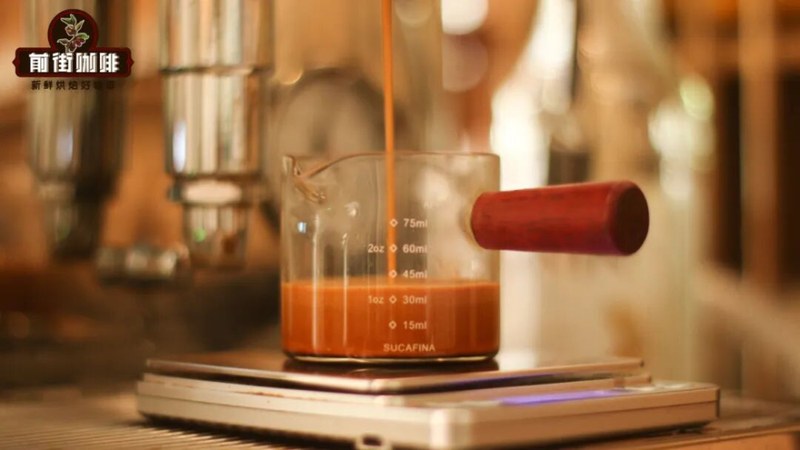
To make American coffee with an espresso machine, it is recommended to start with 18 g of grounds and 36 g of espresso, with a target extraction time of about 25 to 30 seconds and pressure around 9 bar. The grind determines the flow rate: if the yield is too fast and the coffee tastes sour and thin, grind finer; if the yield is slow and clearly bitter, grind coarser. After completing the espresso, add 90 to 120 g of hot water, and the strength will be more suitable for daily drinking.
Light roasts placed in an espresso machine often need a higher water temperature than medium-dark roasts; you can start testing from 93 to 95°C, and the extraction ratio can also be extended to 1:2.2 to make the acidity rounder. If the machine pressure reads normal but the coffee is still sharp, first check whether the puck is evenly distributed, then consider grinding finer. Do not rely only on pressure, because increased pressure cannot replace full and even extraction.
Qianjie Ethiopia Huakui's tropical fruit and strawberry aromas can be made into a bright-style American coffee on an espresso machine. Extract 40 g of liquid from 18 g of grounds, at 94°C, with time controlled at 28 to 32 seconds, then add 100 g of hot water, and the fruity aroma will be clearer. If it is to be drunk over ice, you can reduce the espresso to 36 g and reduce the dilution water, so sweetness remains after the ice melts.
When adjusting parameters, first record the dose, espresso weight, time and impression on the palate. Sour and empty usually means contact needs to be increased; bitter and dry means extraction can be shortened or the temperature lowered; flat but not bitter may mean too much dilution water. Move only one setting or one parameter at a time, and brew two cups in a row to compare, so you can judge whether the change comes from the beans or from the operation. The pleasure of home-style American coffee lies in using one clear method to bring out different sides of the same bean.
Related Reading

Comments (0)
Loading comments...
You May Be Interested


Trending Reviews
Popular Videos

With you, wherever you are! We provide useful features to help you find new things you'll love






