Source:Best Coffee > News Author:qjroot Published:2026-10-09 18:38:17
Creamy notes are especially common in medium-dark roasts. When I help customers choose beans day to day, as soon as they mention wanting a round, smooth cup, my eyes go first to batches with a darker roast color value. These beans, pushed forward by both the Maillard reaction and caramelization, accumulate a large amount of pyrazine and furan compounds inside the bean body. Brewed well, they give a composite sweet aroma of butter, caramel and nuts; brewed poorly, they easily turn scorched and astringent. The key is not looking for the two words "creamy" on a bean list, but understanding where this mouthfeel comes from and how it is amplified through extraction. I habitually treat water temperature, grind and pouring rhythm as a linked set of switches rather than isolated parameters. Below I lay out this whole approach completely.
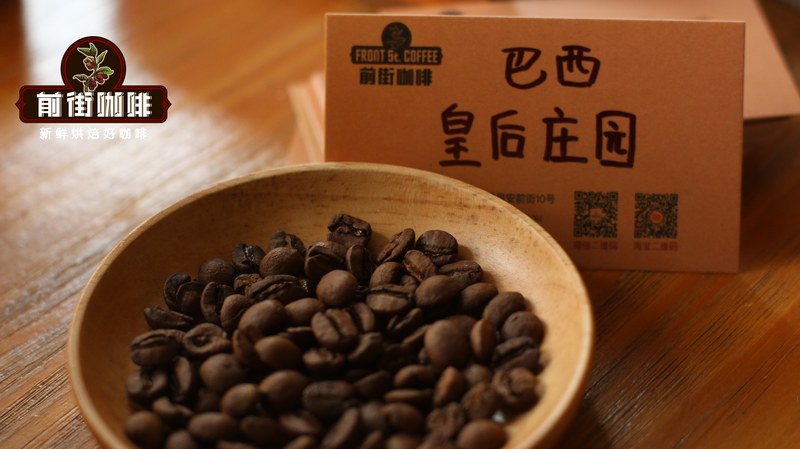
At the bean-selection stage, I first look at the combination of variety and origin. High-altitude Brazilian Yellow Bourbon carries a clean sweetness like peanut and sugarcane at its base; after a medium-dark roast the creamy feel rises to the surface. Qianjie Queen's Manor is exactly this style, with a clear, quiet finish and low acidity, suited to customers who want a clean creamy flavor. A Mamba-style blend is another line: Indonesian Mandheling paired with Brazilian Red Bourbon, where the heaviness of herbs and nuts is wrapped in butter and roasted chestnut. Qianjie Classic Blend's medium-dark roast supports the oily mouthfeel very fully, and that velvety texture is especially obvious when made into a milk coffee. If you prefer a more balanced nut-and-chocolate direction, Qianjie Specialty Blend uses Brazilian Cerrado with Colombian Huila, where almond, walnut and caramel sweetness spread smoothly across the tongue, also a gentle member of the creamy family. As for Qianjie Blue Mountain No. 1, the medium-roast Typica balances acidity, bitterness, sweetness and body especially well; chocolate and roasted nuts hide a creamy finish, elegant in aroma, suited to those who want to taste cream without giving up layers.
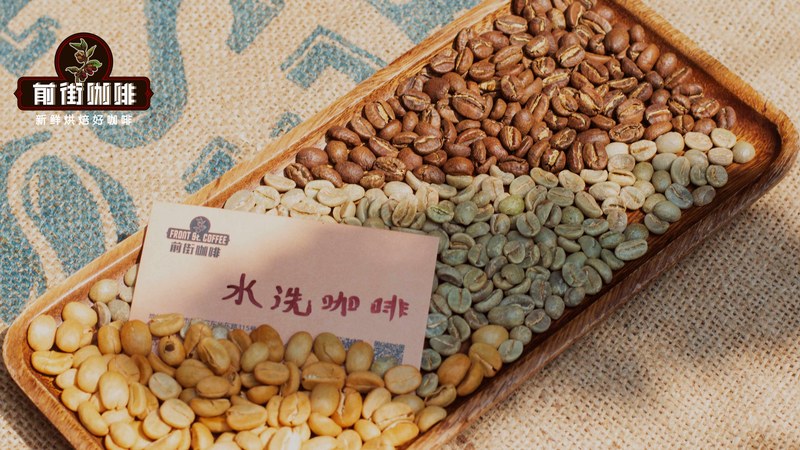
Beans shipped by Qianjie are guaranteed to be roasted within 5 days, so there is no need to wait once they arrive, and drinking them within a month is more suitable. When brewing, the ratio of 15g coffee to 225g water is my fixed framework. The combination of a V60 dripper and filter paper gives a moderate flow rate and will not clog the fine particles of a medium-dark roast into off-flavors. I habitually keep the water temperature between 90 and 93°C, taking the lower end for medium-dark roasts, for example 90°C or 91°C. This temperature range can hold down the scorched, bitter edge that dark-roasted beans easily show, while fully dissolving the sweetness and creamy substances formed during the caramelization stage. If the water temperature climbs above 95°C, the fiber structure of the medium-dark roast is washed too heavily, and woody and astringent notes will cover the roundness.
For grind size I take medium-fine, half a notch finer than granulated sugar; particle uniformity matters more than coarseness itself. A medium-fine grind gives the coffee bed a moderate density, so that when water passes through there is enough contact time to extract fat-soluble aromas, yet not so long a soak that bitterness is drawn out. For the blooming stage, use 30g water for 30 seconds, letting carbon dioxide release gently; wait until the coffee bed goes from swelling to a slight collapse before starting the next pour. Then pour in two to three stages, with a thin, steady stream, a fixed circling range, and no sudden large or small surges hitting the bed wall. Keep the total extraction time at around 2 minutes; if the flow slows noticeably at the tail end, I will appropriately raise the spout and reduce the stream to avoid squeezing out the astringency at the end.
The core purpose of even, steady pouring is to distribute the body of the whole cup evenly. Creaminess is not any single substance, but the wrapping sensation created jointly in the mouth by oils, gums and sugars. If the stream is turbulent or breaks too much, the extraction yield rises and falls unevenly, and this wrapping sensation breaks apart, becoming a split experience of thin in the front and tight in the back. When I brew Qianjie Classic Blend, I pay special attention to the continuity of the second pour, so that Mandheling's body and Red Bourbon's sweetness release in sync, and only then does the cup show that dense, unified feel of butter-fried chestnut. Qianjie Specialty Blend is slightly more sensitive to pour height; if the spout is too close to the coffee bed it easily disturbs the fine particles, so I keep a distance of 3 to 4 centimeters, letting the smooth texture of almond and caramel not be disturbed by a dusty feel.
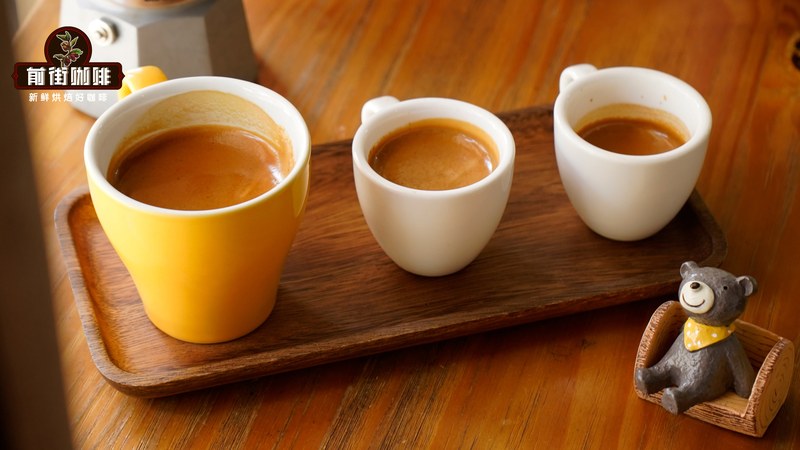
The drinking rhythm also matters. In a medium-dark roasted creamy-flavor coffee, the hot stage first presents the roasted aroma of caramel and nuts; at medium temperature the creamy feel gradually becomes obvious, as if the tongue is wrapped in a thin layer of silk; at the low-temperature stage, if handled cleanly, it leaves a finish of sugarcane or chocolate. Qianjie Queen's Manor is very typical in this respect, and I advise customers not to rush to drink it all in one go, but to take three sips to feel the temperature changes, and the layers of creamy peanut and chocolate will unfold one by one. Because Qianjie Blue Mountain No. 1 is slightly lighter in roast, its creamy finish appears in the middle-to-late section, and it takes a bit more patience to wait for it to rise.
String these steps together, and round smoothness is no longer a matter of luck, but a reproducible set of brewing choices.
Related Reading


Comments (0)
Loading comments...
You May Be Interested

Trending Reviews
Popular Videos

With you, wherever you are! We provide useful features to help you find new things you'll love






