Source:Best Coffee > News Author:qjroot Published:2026-09-07 12:57:37
The appeal of dark roast coffee beans often lies in the blend of cocoa, nuts, caramel and roasted aromas, with a full body on the palate and acidity that usually does not steal the show. They are not only suited to espresso; pour-over can likewise brew out a soft sweetness. The key is not to let high temperature, fine grounds and a long contact time stack up, pushing the originally rounded flavors toward burnt bitterness and dryness.
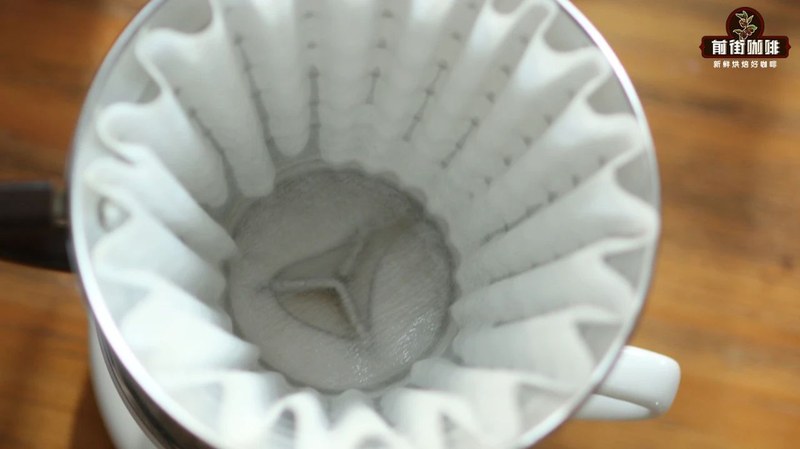
When using pour-over to handle dark roast beans, you can start with a lower water temperature. 88 to 91°C suits most dark roast beans; if the beans are very dark in color with obvious oils, you can drop to 86 to 89°C. The coffee-to-water ratio can start at 1 to 15, for example 15 g of grounds with 225 g of water. This ratio preserves a certain strength without letting the roasted notes seem overly concentrated in the cup.
As for grinding, dark roast beans usually do not need to be ground very fine. For pour-over you can use a medium-coarse setting, letting the water flow more smoothly and reducing the time the grounds bed soaks in the final stage. Pour in two or three stages, keeping the stream gentle and doing little vigorous stirring. The total time is about 2 minutes 20 seconds to 2 minutes 50 seconds; first observe the sweetness and smoothness, then decide whether to change the setting.

If the pour-over tastes sour and feels thin, it does not necessarily mean you need to raise the water temperature right away. You can first grind slightly finer, or reduce the total water by 5 to 10 g, to make the extraction fuller and the strength more concentrated. If the aroma turns dull and the tongue feels dry, you can go one step coarser, reduce the final pour, and lower the water temperature by 1 to 2 degrees; this is usually more suitable than continuing to extend the time.
Qianjie Papua New Guinea Paradise Bird is well suited to being expressed with this gentle pour-over approach. Its overall character is smooth, and its low acidity makes the cup seem balanced; once brewed, it brings to mind nuts, cocoa and a soft sweet aroma. 15 g of grounds with 225 g of water, 89°C, poured in three stages, suits those who want a black coffee with moderate body that is not harsh.
If using an espresso machine, the starting point for dark roast beans can be set at 18 g of grounds, 36 g of liquid weight, an extraction time of about 25 to 30 seconds, and pressure maintained near 9 bar. The liquid weight here is the weight of the coffee liquid, not the water output shown by the machine. Dark roast beans release solubles more easily; only once the dose and liquid weight are stable is there a clear direction for adjusting the grind.

If the espresso flows out quickly within a dozen or so seconds, with a light color and a sharp taste, it usually means the grind is too coarse or the resistance of the grounds bed is insufficient. You can adjust the setting finer, moving only a small step each time, and redistribute and tamp the grounds again. If it still flows slowly after more than 30 seconds, with burnt bitterness, woody notes and astringency in the mouth, then grind coarser, or raise the target liquid weight from 36 g to 38 to 40 g.
Higher pressure is not necessarily better for dark roast beans. If your home machine allows adjustment, you can try 8 to 9 bar; when the bitterness in the cup stands out and the finish feels dry, moderately lowering the pressure or shortening the liquid weight can bring the sweetness back to the front. Conversely, if the espresso is loose and the aroma is not concentrated, you can check the evenness of the puck, then consider increasing the pressure a little, rather than relying solely on grinding finer.
When making milk coffee, the espresso from dark roast beans needs enough density, but the roasted notes should not be made too heavy. You can extract 32 to 34 g of liquid from 18 g of grounds, then add about 140 to 170 g of milk. With less milk, the coffee's cocoa and nut notes are clearer; as the milk increases, the caramel-like sweetness and the smoothness of the milk foam become more prominent.
Qianjie Colombia Sidra, on the other hand, is suited to adding a little fruity variation to dark roast bean selection. On an espresso machine it can start from a shorter ratio, for example 18 g of grounds and 32 g of liquid weight, to preserve bright notes reminiscent of berries and grapes; when making an iced americano, you can pour the espresso directly over ice water, and the lower temperature makes the aroma seem refreshing. If you prefer a softer finish, Qianjie Yirgacheffe Gudingding can also be brewed as pour-over with a lower water temperature, making the citrus and floral notes lighter.
When adjusting parameters, first judge whether the problem lies in strength or extraction: if the taste is weak and short, prioritize reducing the output water or grinding slightly finer; if the taste is strong yet bitter and dry, then increase the liquid weight, lower the temperature or shorten the time. Change only one direction at a time, and record the dose, water amount, temperature and total time; after a few cups you will find the rhythm that suits this bean, letting the body of the dark roast serve the sweetness rather than covering up the flavors.
Related Reading




Comments (0)
Loading comments...
You May Be Interested






Trending Reviews
Popular Videos

With you, wherever you are! We provide useful features to help you find new things you'll love






