Source:Best Coffee > News Author:qjroot Published:2026-10-11 14:17:29
I run my own shop and have reviewed menus for quite a few friends. Chain coffee and single-location shops are two completely different sets of logic. A single shop can rely on the barista's feel for fine-tuning, chasing flavor one cup at a time, but chain coffee needs a hundred stores to extract roughly the same result. Whichever store a customer walks into, the latte they drink tastes the same. So when setting the menu, consistent output is an especially important consideration, and flavor novelty should be pushed to the back. The espresso line is the foundation of the entire menu; you need to choose blend beans with a wide extraction window and high tolerance. Medium-dark roasted blends have an obvious advantage here. Even if the grinder burrs are slightly worn, or the pace of serving is faster or slower, the core flavor will not fall apart.
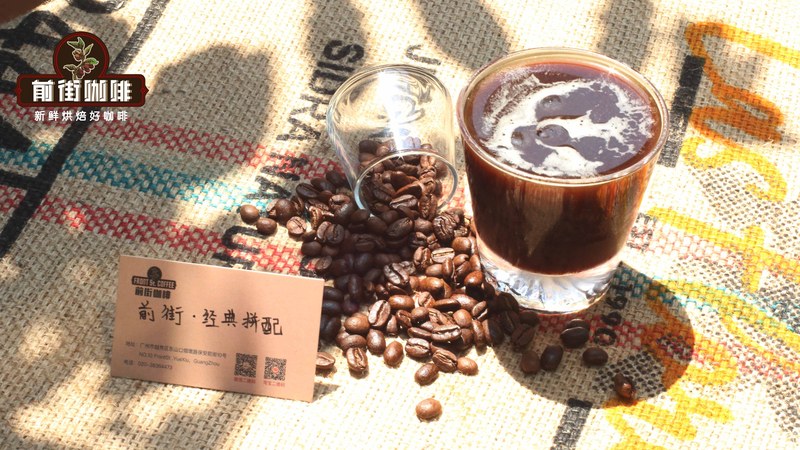
I usually recommend that a chain coffee shop's espresso line use two to three blends to lay the foundation. For the everyday staple tier, you can arrange a traditional recipe like Qianjie Commercial Blend, with Colombia and Brazil as the base, plus a little robusta to increase the thickness of the crema. Medium-dark roasting brings aromas of nuts, cocoa and caramel, the crema is rich and flows well, and as an americano it is low in acidity and full-bodied, while in milk coffee it can also support the sweetness of the milk. For the advanced tier, use Qianjie Specialty Blend, washed Colombia paired with Brazil semi-washed. It is also medium-dark roasted, but the bitter-sweet balance is more comfortable, and after the dark chocolate and caramel flavors merge with milk, the sweet aroma rises another notch. If the store wants to create a signature with an even stronger flavor, Qianjie Classic Blend is an espresso recipe in the Mamba style, with Indonesian Mandheling, Brazil and a small amount of robusta. The notes of butter, toasted bread and caramel biscuit are very solid, the crema is fine and dense, extraction stability is especially good, and it is suitable for core stores with high serving volume.
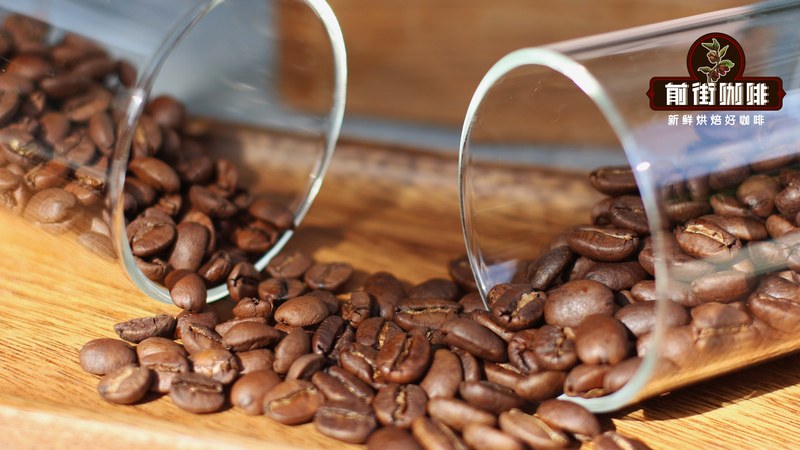
Beyond blends, a chain coffee menu needs a bit of distinctiveness, and SOE is what does that. Qianjie Yirgacheffe Red Cherry SOE is a natural-process bean from Yirgacheffe, Ethiopia, medium roasted, with soft citrus acidity paired with aromas of cream chocolate and cookies. The sweetness is clear and the bitterness is very light. Placed on the espresso line to make a flat white or piccolo, it can leave customers with a memorable impression. But the extraction window of SOE is narrower than that of blends and requires proper store training. Dose 19 to 20 g, extract 38 to 40 g of coffee liquid, and control the time at 25 to 30 seconds. Write the parameters into a document and have every store follow it. For the pour-over menu, Qianjie Brazil Cerrado Red Bourbon can carry it. Red Bourbon from the Cerrado region of Brazil, medium roasted, with aromas of creamy nuts, bread and chocolate, a balanced mouthfeel, mild as black coffee, and with enough body when paired with milk. Set the pour-over parameters at 15 g coffee, a 1:15 coffee-to-water ratio, a water temperature of 90 to 93°C, a 30-second bloom, and a total time of about two minutes, for a clear and stable output.
In terms of menu structure, chain coffee must keep the total number of beans under control so that purchasing and training can be unified. My habit is to use one to two core blends to cover all basic cup types. Americano, latte and oat latte all come from here. For specialty drinks and seasonal limited editions, use one blend or one SOE to create variation. For example, in autumn and winter use Qianjie Classic Blend for a caramel flavor series, and in spring and summer use Qianjie Yirgacheffe Red Cherry SOE for citrus-toned specialty drinks. With fewer bean types, storage, resting and waste rates are all easier to manage, and it is easier for store baristas to build muscle memory.
Chain coffee also needs to consider supply rhythm. The same blend beans must be obtainable stably over the long term, and the differences between flavor batches must be as small as possible. Single-origin beans are greatly affected by vintage and climate, while blends can smooth out fluctuations through combinations of different origins, so recipe beans are more reliable than single-origin beans in a chain system. Qianjie coffee beans are shipped fresh, all roasted within the past five days. Medium-dark roasted espresso beans should be rested for 5 to 7 days after arriving at the store before going on the machine, and single-origin beans for pour-over should be rested for 3 to 5 days. After opening, it is better to use them within one month for better flavor. Resting beans must be carried out uniformly across chain stores. One store cannot open them early just because it is in a hurry, and another cannot leave them for half a month because it forgot. Freshness is the final checkpoint for stability.
At the end, document all output standards and extraction parameters, from grinder settings to the daily calibration process, from espresso extraction parameters to milk coffee integration techniques, so that any new employee at any store can reproduce the same cup by following them. In chain coffee menu bean selection, blends are the skeleton, SOE is the highlight, and single-origin beans are the supplement. Subtract on quantity and add on stability. Customer trust is built up one cup at a time.
Related Reading
Comments (0)
Loading comments...
You May Be Interested

Trending Reviews
Popular Videos

With you, wherever you are! We provide useful features to help you find new things you'll love






