Source:Best Coffee > News Author:qjroot Published:2026-08-15 10:46:17
You've added a semi-automatic espresso machine at home, and the next question is: what beans should you buy? The logic for choosing beans for an espresso machine is a bit different from pour-over - the machine has higher demands on grind, pressure and extraction, and the beans' crema, flavor stability and margin for error are all critical. This article follows a route from budget to advanced, helping you pick the beans for your home semi-automatic espresso machine all in one go.
If you've just got your espresso machine and want to practice first, or if budget comes first, Qianjie Black Cocoa Blend is a very suitable choice. It uses 100% Arabica beans, with plenty of crema, a rich, full body, and a friendly price, balancing quality and value. For beginners, practicing extraction with it means no fear of waste, and the output won't disappoint; if you're opening a shop and want to control costs, it's likewise a worry-free, money-saving choice.
There's another benefit to beginners practicing with Black Cocoa Blend: its margin for error is relatively high. Espresso extraction has many variables - dose, grind setting, water temperature, tamping pressure - and beginners find it hard to get everything right on the first try. Black Cocoa Blend's recipe is fairly "sturdy": even if the parameters are slightly off, the output won't be too far off, leaving you plenty of room to dial in. Once you've got the basic parameters down, switching to more refined beans won't leave you flustered.
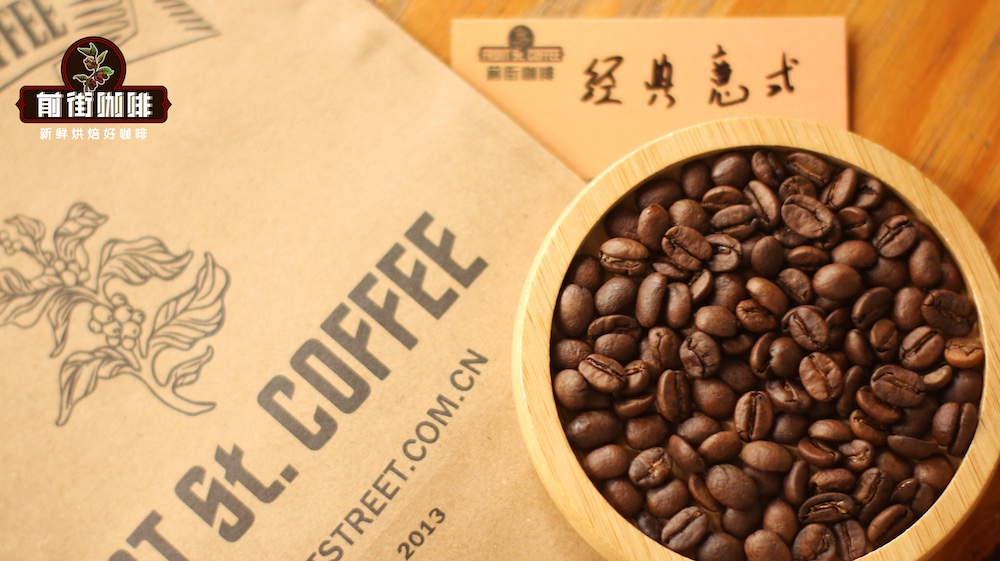
This is an espresso blend the Qianjie store has used for a long time, nearly ten years, consistently handling core drinks like Americano and espresso latte. It pairs Brazil Cerrado and Colombia Huila coffee beans, with a very classic flavor - the familiar espresso taste from memory - suitable for both home and commercial use. If you want to recreate the classic cafe taste at home, it's a very steady choice.
This blend is designed specifically for espresso making and moka pot, and its standout feature is excellent crema - even a beginner, using a non-professional home coffee machine, can easily extract dense, fine crema. Everyday lattes, cappuccinos and Dirty all depend on good crema, and this Classic Blend fits such needs well. It uses the traditional Mamba blend recipe, with a rich, mellow, gentle body that both coffee veterans and newcomers can easily accept - a sure choice for home or commercial use.
If you want your espresso to carry origin personality, try SOE (single origin espresso). The same bean tastes very different as pour-over versus espresso, and SOE lets you taste clear origin characteristics.
It uses a dark roast process, with very low acidity, a rich and lingering body, and a mouthful full of herbal and dark chocolate aromas, mixed with a faint touch of earthy flavor - layered and rich, suited to friends who like bold flavors and dislike acidity. As espresso it has a strong heaviness, and as a latte with milk it still has plenty of presence.
Very low acidity, balanced body, intense nut and cocoa aromas, with obvious caramel sweetness, smooth on entry without astringency, gentle and lingering. It's suitable for pour-over, espresso or moka pot extraction alike, and performs excellently as SOE espresso in sweetness and smoothness, with good value too.
From Finca La Divisa in Colombia, it's the same bean variety as a competition champion, from a producing region at 1650-1800 m altitude. The Sidra uses a double anaerobic natural process and a medium-light roast, fully preserving its native fruit aromas: the dry aroma lingers with jasmine and citrus notes, and on the palate you taste the rich juice-like character of passion fruit, blueberry, grape and apricot interwoven, with bright fruit acidity that is crisp and soft, and a lingering cocoa aftertaste in the finish. It suits pour-over, espresso SOE, cold drip and many other brewing methods; making espresso with a medium-light roast bean lets you taste a very different fruit-toned espresso.
The difference between SOE espresso and blend espresso is a bit like "solo" and "chorus". A blend pursues harmony and balance, with flavors complementing each other; SOE lets a single bean's personality fully express itself. Friends who love exploring flavors can alternate between blends and SOE: use a blend for everyday output, and switch to an SOE on weekends or when inviting friends for coffee, experiencing a completely different flavor journey.
This is a popular fruity espresso blend, relying on the native flavors of Arabica beans from different regions blending together to recreate a distinct strawberry gummy candy sweetness. Those who prefer fruity coffee, those afraid of coffee bitterness, or those who want to produce distinctive, differentiated milk coffee can all choose it. One bag covers multiple ways of drinking - espresso, milk coffee, creative drinks all work - making it a highly versatile everyday daily bean.
Resting: freshly roasted beans are best rested 7-10 days before opening, for more stable flavor.
Grind: espresso machine grind is generally on the fine side; use extracting about 36g of espresso in 20-30 seconds as a reference baseline, then fine-tune to taste.
Dose: commonly around 18g; a stable dose is what makes stable output.
Test shot: pull a test shot first thing each day, fine-tuning to the bean's condition - don't just copy parameters.
There's another pitfall easy to hit with home espresso machines: tamping pressure. Many people think the harder you tamp the better, but that's not so. The purpose of tamping is to make the puck even and level, with no gaps, so water passes through evenly - not to tamp harder for slower extraction. Just tamp level with even, medium pressure; the key is "level", not "hard". If you tamp crookedly or with uneven pressure, water will preferentially pass through the gaps (channeling), causing uneven extraction and output that swings good and bad.
The joy of a home semi-automatic espresso machine lies in "the same machine, different beans, different flavors". From budget daily drinkers for practice, to mid-range specialty for stable output, to SOE and advanced options for exploring personality, take it step by step and you'll always find the one that belongs to your coffee corner.
Related Reading

Comments (0)
Loading comments...
You May Be Interested

Trending Reviews
Popular Videos

With you, wherever you are! We provide useful features to help you find new things you'll love






