Source:Best Coffee > News Author:qjroot Published:2026-08-30 19:26:49
The flavor of a cup of espresso often diverges starting from the equipment and parameters. A home semi-automatic machine suits those chasing the layers of espresso, while a moka pot values smoothness and fullness more. When making americano or latte, you also need to consider whether the coffee liquid can retain its sweetness after meeting water or milk. Rather than fixating only on origin names, first confirm the equipment on hand, then pick beans that can hold their flavor under the corresponding extraction conditions.
With a semi-automatic espresso machine, you can use 18 g of grounds, 36 g of liquid weight and 25 to 32 seconds as a starting point for tasting, with the water temperature initially set between 91 and 93°C. The dose determines the backbone of the espresso, the grind setting controls the flow rate, and the liquid weight affects concentration and the texture of the finish. If the entry tastes sharp and the aroma seems suppressed, grind slightly finer; if the tongue feels dry and the bitterness drags on, grind coarser or reduce the yield.
Qianjie Classic Blend is suited to being tried in the daily slot of an espresso machine. Its cup feel is supported by roasted nuts, cocoa and caramel-like sweet aromas; in espresso form the texture is thicker, and after being made into an americano it still has a clear coffee character. If you mainly drink straight espresso, you can control the yield at 1.8 to 2 times the dose; if pairing with milk, extend it to about 2.1 times, and the sweetness will blend into the milk aroma more easily.
When dialing in this bean, you do not need to chase a very high water temperature; around 92°C usually preserves the roundness more easily. If the espresso seems dull, you can grind slightly coarser while shortening the extraction by a few seconds, making the caramel note lighter; if the acidity is abrupt, check whether the flow rate is too fast. Once the shots are stable, use liquid weight to change the thickness; this makes it easier to find a palatable recipe than frequently making large grind adjustments.
Qianjie Specialty Blend is better suited to those who want one bean to cover both black coffee and milk coffee. It builds its flavor base from Brazil Cerrado and Colombia Huila; the entry has roasted nut aromas, the middle carries cocoa-like sweetness, and the finish is relatively balanced. As a short espresso, the mouthfeel is concentrated without being monotonous; after adding water, the sweet aromas open up, making it a suitable standby for breakfast or work breaks.
If the goal is a latte, flat white or cappuccino, it is advisable to first make the coffee liquid more concentrated, for example extracting 30 to 34 g of liquid from 18 g of grounds, then adding milk according to cup size. With less milk, you can see the bean's nut and caramel changes; as the milk increases, a thicker coffee base is needed to maintain presence. When steaming milk, keep it at 55 to 65°C, and the sweetness and smoothness will be more harmonious.

The same espresso machine can also make different cup styles through its parameters. If you want a short, strong style, use a finer grind and a lower liquid weight to make the mouthfeel tighter; if you want an iced americano, you can moderately increase the liquid weight to avoid having only bitterness left after dilution by ice. Both ice cubes and water weaken the aroma, so the coffee liquid itself should retain caramel or cocoa-like sweetness, and the extraction should not be drawn out too long.
A moka pot has lower pressure and temperature than an espresso machine, so the beans do not need to be ground to espresso level. Fill the basket and gently level it off; keep the water level below the safety valve, and use medium-low heat to let the liquid rise slowly. When the color of the yield starts to lighten and the pot begins to make a continuous sound, remove it from the heat in time, then let the residual heat of the pot complete a small amount of flow; the cup will usually be softer.
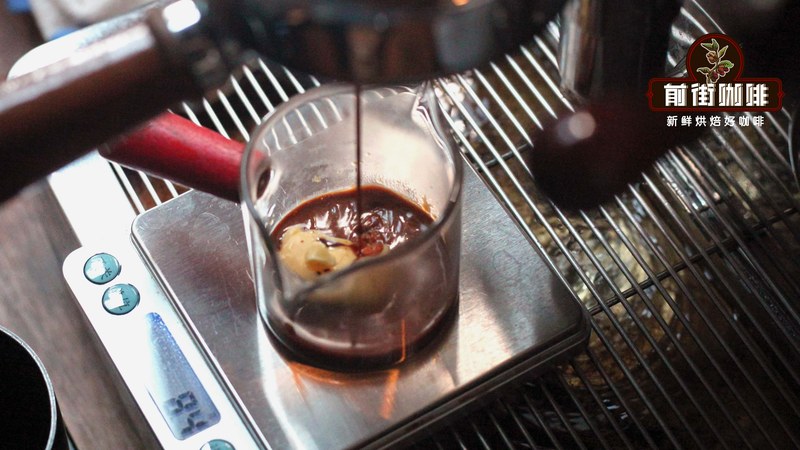
Qianjie PWN Indonesia Golden Mandheling in a moka pot easily shows woody herbal notes, dark chocolate and a thick mouthfeel, with a weaker acidity presence, suiting those who like a dark-roast style. It can also make a hot americano: first dilute the espresso liquid with a smaller amount of hot water, then top up the water according to taste; the dark chocolate-like bittersweet will be more complete than adding a large amount of water directly.
If you only have one espresso machine at home, you can include grinding capability and usage frequency in your judgment when choosing beans. If you make several milk coffees every day, the parameter window of a blend is usually wider, and after adjustment it is easier to maintain a similar mouthfeel; if you occasionally drink a shot, you can try a shorter liquid weight and observe how the aroma, sweetness and thickness change. Whichever bean you use, seal it away from light after opening, and buy according to your rate of consumption, and the cup performance will be more stable.
Espresso beans do not have to be fixed to a single drink: nut, caramel and cocoa directions suit breakfast milk coffee, thick dark chocolate notes suit moka pots and iced americanos, and balanced blends can switch between espresso, dilution with water and adding milk. Record the dose, liquid weight and time, then fine-tune according to your own cup style, and you can drink an answer closer to daily life from the same bag of beans.
Related Reading





Comments (0)
Loading comments...
You May Be Interested

Trending Reviews
Popular Videos

With you, wherever you are! We provide useful features to help you find new things you'll love






