Source:Best Coffee > News Author:qjroot Published:2021-12-30 18:25:43
Coffee is the second most popular and heavily traded commodity in the world, after crude oil. It’s clear that coffee consumption is enormous, making coffee freedom incredibly important.
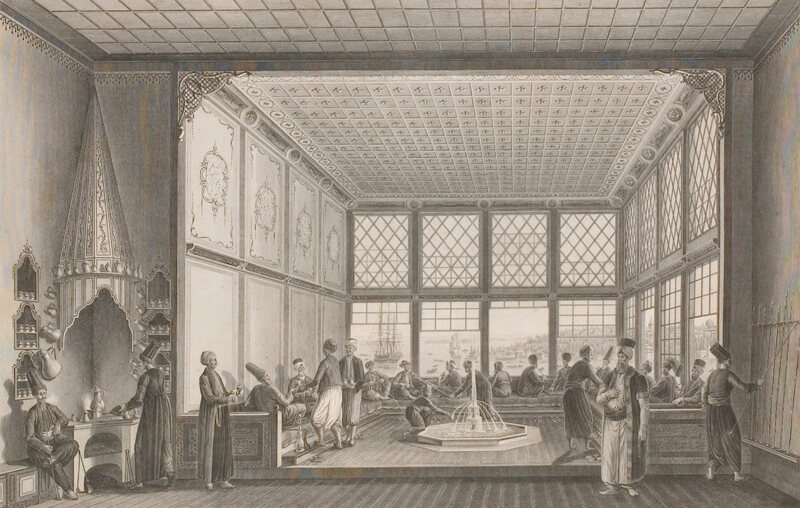
In the fifteenth century, coffee became one of the common beverages in the Middle East, and coffeehouses sprouted up all around Constantinople. Although coffee was also foreign to the Ottoman Empire, they quickly mastered the art of making it. Finely ground coffee powder, as fine as flour, was often brewed with spices such as cinnamon—a method still widely seen in Turkey today.
"https://v3.coffeecdn.cn/uploadfile/ueditor/image/202112/164085998782e089.jpeg" title="istockphoto-1219543615-170667a" alt="istockphoto-1219543615-170667a" width="500" height="333"/>
Since the Ottoman Empire was an Islamic state, devout Muslims were not allowed to go to bars or consume alcohol. As a result, coffeehouses became a secular social space outside the home in the Islamic world. People often gathered in coffeehouses to engage in lively discussions on topics such as politics, business, and religion. Coffee had such a profound influence on Turkish culture that, at the time, if a husband failed to provide his wife with enough coffee, she could file for divorce. It sounds absolutely crazy by today’s standards.
Because people frequently gathered in coffeehouses to share and discuss a wide range of topics, some rulers grew concerned that citizens were enjoying the coffeehouse experience too much. Political discussions in coffeehouses made politicians uneasy. As a result, some countries took action, attempting to impose coffee bans, while some religious leaders even equated coffee with moral decay. In the eyes of the Catholic Church in Europe, coffee was the devil’s drink.
That is, until a pope who couldn’t resist the allure of coffee came along—Pope Clement VIII. In Europe, where divine authority was considered more important than royal power, the pope was a highly sacred and revered figure. How could such a holy person indulge so frequently in drinking the devil’s beverage?
So the clever Pope Clement said, “This devil’s drink is so delicious, it would be a pity to let only the infidels enjoy it.” He then baptized and blessed the coffee beans, purging them of their evil origins. After that, the first coffeehouse in Europe opened in 1645.
But in the Ottoman Empire, things didn’t take a turn for the better—in fact, they got much worse. Murad IV, the 17th Sultan of the Ottoman Empire, was a notorious tyrant with an unusual hatred for coffee. His older brother, Osman II, had been brutally murdered by rebellious Janissaries, and Murad IV ascended to the throne at a young age.
In the 17th century, the Janissaries became increasingly independent and even participated in several minor rebellions. Murad IV grew more and more disgusted with them and sought every opportunity to weaken their power. No ruler wants tension and uprisings in their society. Eventually, Murad IV set his sights on the coffeehouses where the Janissaries gathered and conspired.
In the 1630s, Murad IV declared war on coffee. He decreed that operating a coffeehouse or drinking coffee in public was illegal, with the punishment being death. It is said that Murad IV would disguise himself as a commoner, wear a 100-pound sword at his waist, and patrol the streets. If he caught anyone engaging in illegal activities, he would behead them on the spot. He acted as judge, jury, and executioner all in one.
“Be lenient with yourself but harsh with others”—this kind of double standard could happen to anyone, and Murad IV was no exception. Even though he banned the operation of coffeehouses and public coffee drinking, he never banned coffee wholesale. He himself continued to drink coffee and alcohol, and he eventually died of severe liver cirrhosis caused by excessive drinking at the age of 27.
Even more than ten years after Murad IV’s death, drinking coffee could still cost you your life, though there was a slight shift. In the mid-to-late 17th century, the punishment for a first-time coffee drinker was a beating, while the second offense meant being sewn into a sack and thrown into a river to drown slowly.
It wasn’t until the late 20th century, when rulers no longer cared about the policy, that coffee was able to re-emerge in the region. That such an uplifting beverage as coffee was once deemed evil—and that drinking it could cost you your life—is truly absurd.
Fortunately, today coffee is more popular than ever, with more and more people drinking it and more coffeehouses opening. No country bans coffee consumption. As long as you have enough money, you can easily enjoy coffee freedom without any cost or consequence.
Related Reading




Comments (0)
Loading comments...
You May Be Interested





Trending Reviews
Popular Videos

With you, wherever you are! We provide useful features to help you find new things you'll love






