Source:Best Coffee > News Author:qjroot Published:2024-09-14 18:47:31
Globally, not all places are suitable for growing coffee. Coffee trees are suited to tropical or subtropical regions and require a humid, warm climate, plenty of sunlight and appropriate rainfall. The equatorial zone between the Tropic of Cancer and the Tropic of Capricorn is very suitable for coffee cultivation, so this region is called the "Coffee Belt."
Among them, 3/4 of Africa's area lies between the Tropic of Cancer and the Tropic of Capricorn, so the average annual climate in most parts of Africa is above 20°C, and the climate is generally warm and hot, earning it the name "Tropical Continent." In addition, the African continent is rich in natural resources, vast in land and abundant in resources, mainly composed of plateaus, with an average altitude of 750 m, and it has numerous volcanoes, rivers and lakes. Therefore, Africa's agriculture is developed, and quite a few countries are known for exporting coffee, including Ethiopia, which is Africa's largest Arabica coffee producer. At the same time, Ethiopia is recognized as the birthplace of coffee and has very high visibility in the global coffee market.
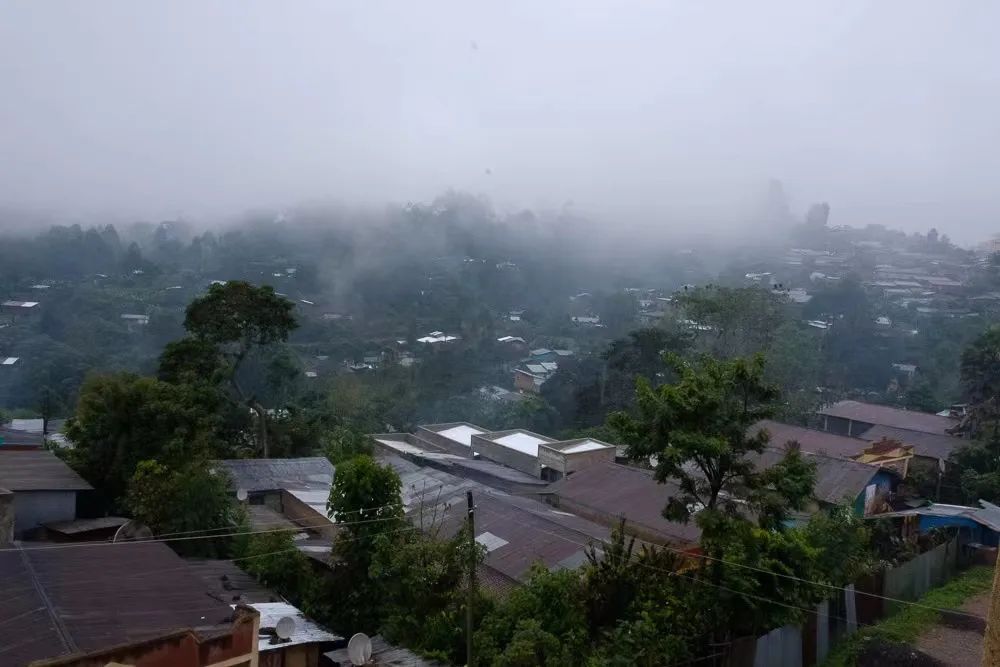
Ethiopia is located in East Africa and is dominated by mountains and plateaus, most of which belong to the Ethiopian Highlands, and is bisected across its entire territory by the East African Rift. Along both sides of the rift are numerous mountain ranges, volcanoes and rivers, and these mountain ranges have an average altitude of nearly 3000 m. Thanks to the relatively high altitude, even though it lies in the tropics, the climate is comfortable and pleasant, with an average annual temperature of 16°C, a large temperature difference between day and night, and the year is roughly divided into a dry season and a rainy season. With multiple volcanoes, abundant water resources and a relatively high altitude, it is very suitable for coffee cultivation and growth.
At present, Ethiopia is divided into 12 states and 2 autonomous new administrative regions, and is divided into 10 coffee-producing regions, including quite a few globally renowned coffee-producing regions, such as Sidamo, Jima, Harrar, Kaffa, Guji and Yirgacheffe. Among them, Guji and Yirgacheffe originally both belonged to the Sidamo producing region, but due to their unique flavors they became independent coffee-producing regions.
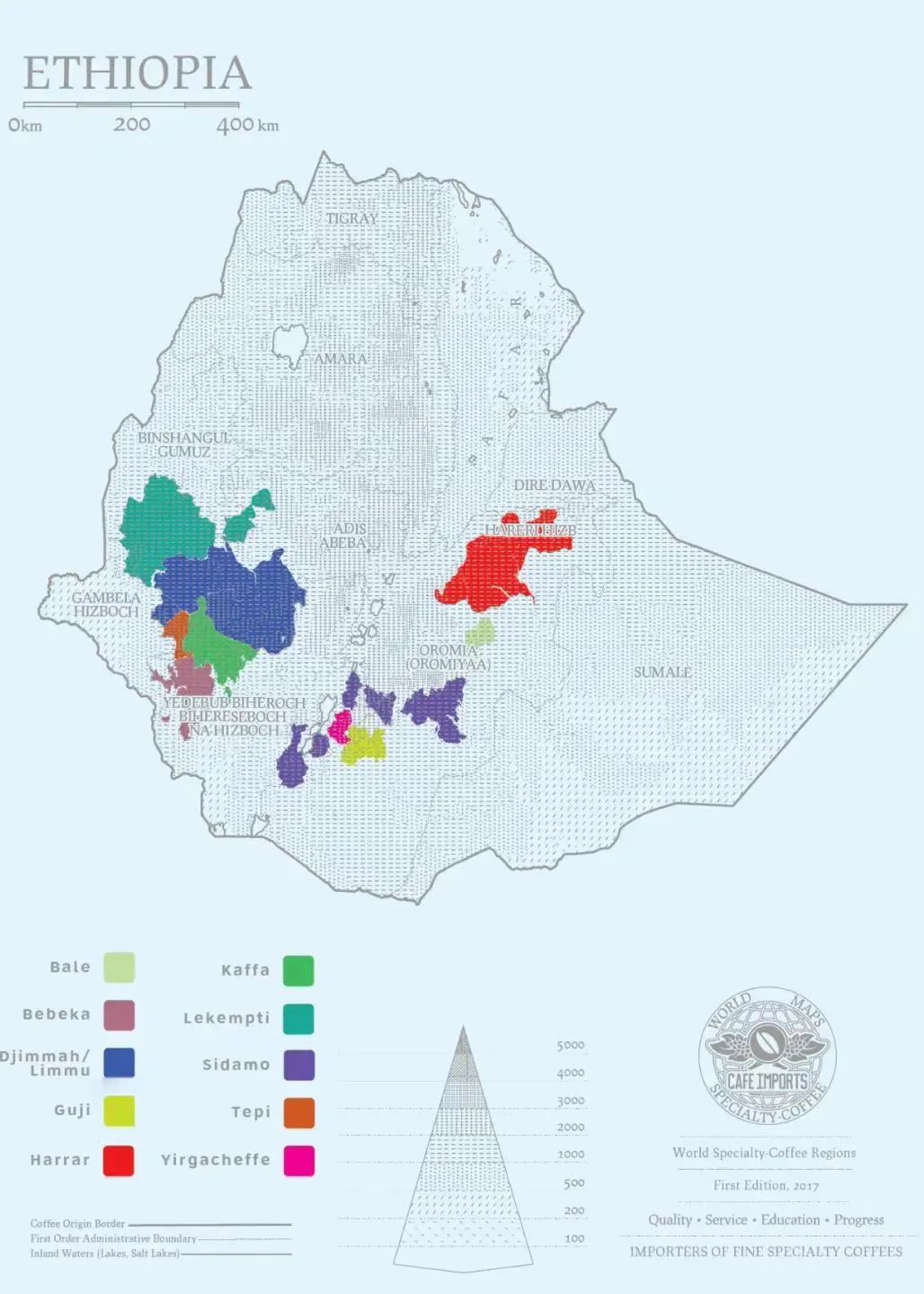
Yirgacheffe is a small town under the Sidama Region, and the Yirgacheffe coffee-producing region, in addition to the small town of Yirgacheffe, also includes Wenago town about 26 km north of Yirgacheffe town, and sub-regions such as Kochere town and Gedeb town to the south of Yirgacheffe town. The terrain in this area is rugged and complex, and to the west there is Lake Abaya, so water resources are abundant, the climate is humid and mild, and rainfall is plentiful. Coffee is grown at an altitude of 1750-2200 m, and the fertile soil and ample sunlight make this area very suitable for coffee cultivation.
In the FrontStreet Coffee daily beans series, there is also a Yirgacheffe coffee bean from this well-known Ethiopian producing region, using Heirloom, processed with the washed method. After brewing, it has floral aromas, citrus and berry flavors, lemon-like acidity, and a refreshing mouthfeel.

In addition, Ethiopia is widely recognized as the birthplace of coffee. Coffee was first discovered in the Kaffa Zone in southwestern Ethiopia, and countless mother Arabica coffee trees still grow here today.
According to historical records, the name Kaffa comes from an ancient kingdom that existed in the region, the Kingdom of Kaffa, though some areas now spell it "Kafa" or "Kefa." The Kingdom of Kaffa was annexed by the Ethiopian Empire at the end of the 19th century and is now part of Ethiopia.
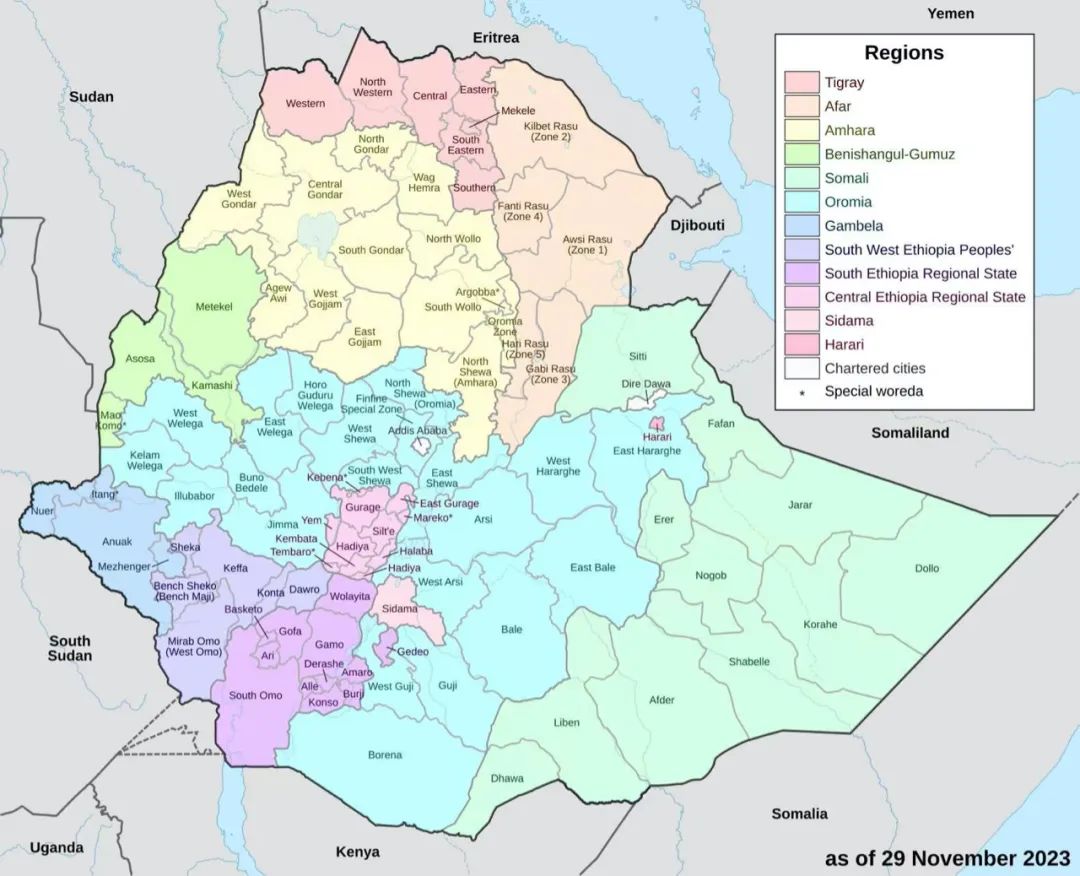
Today, the Kaffa Zone belongs to the South West Ethiopia Peoples' Region (the region was formerly part of the Southern Nations, Nationalities, and Peoples' Region and became separate through a referendum in 2021), located in the northern part of that region. The Kaffa Zone is mainly a humid, mild rainforest area, and its best-known feature is the Kafa Biosphere Reserve.
The southern part of the Kafa Biosphere Reserve is surrounded by the Bonga National Forest Priority Area, it extends east to Adiyo Woreda and the Gojeb River, to the north it is surrounded by the Gewata-Yeba (Boginda) National Forest Priority Area, and to the west lies the Gesha National Forest Priority Area, which is where the Gesha variety originated.
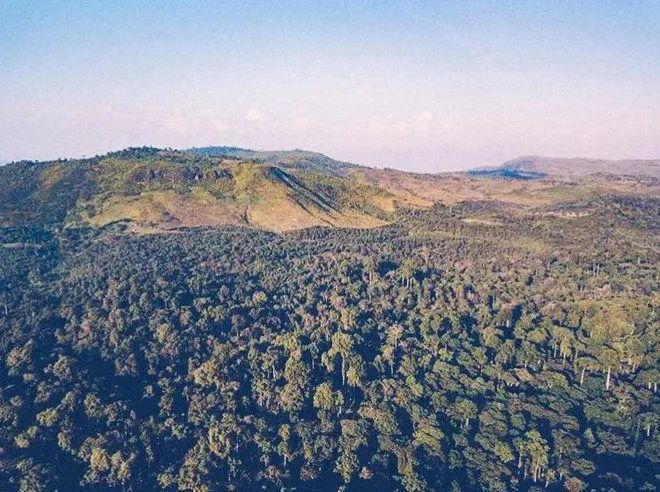
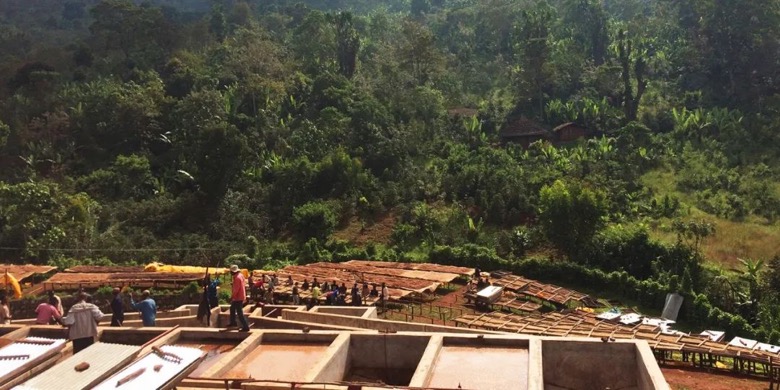
The Kafa Biosphere Reserve covers about 760,144 hectares, contains more than 50% of Ethiopia's montane forest area, and is home to more than about 5,000 coffee tree species. It is the origin and center of genetic diversity of wild Arabica coffee. Coffee here is mainly produced as wild coffee, growing on hillsides at altitudes of 1,400-2,100 m, with many trees providing shade. The pristine ecological environment, microclimate and abundant rainfall provide a good growing environment for coffee. At present, about 30 coffee production cooperatives have been established around the Kafa reserve, harvesting coffee cherries from the forest area at maturity and selling them after processing.
At present, FrontStreet Coffee offers a washed coffee bean from the Ethiopian Kaffa forest, using a medium-light roast. After brewing, it has a faint white floral aroma, bright citric acidity on entry, sweet orange and bergamot flavors, a subtle melon and nutty note in the aftertaste, and a mouthfeel reminiscent of green tea.

For more information on coffee origins, please scan the QR code to follow: Kapin
Long-press the QR code to follow:

Related Reading



Comments (0)
Loading comments...
You May Be Interested



Trending Reviews
Popular Videos

With you, wherever you are! We provide useful features to help you find new things you'll love






