Source:Best Coffee > News Author:qjroot Published:2026-10-08 14:57:01
Once summer arrives, many friends want to enjoy iced coffee at home, yet always feel that iced pour-over is too much trouble, and cold drip equipment takes up too much space. Actually there is a more effortless way: just drop the coffee grounds into cold water and let time slowly draw out the flavor. This is cold brew coffee. No electricity, no watching over it. Put it in before bed, and it is ready to drink when you wake up the next morning.
Its essential difference from hot extraction lies in temperature. Cold water is like a gentle visitor: it does not rudely knock open the door of the coffee cells, but waits patiently and invites out only those mild-tempered sweet and sour substances, leaving the bitter large molecules outside the door. The actual process is far simpler than you might imagine. Prepare a sealable container, such as a glass jar with a lid or a food storage box. Take 60 g of coffee grounds, ground slightly coarser than for pour-over, with about 85% passing through a Chinese standard No. 20 sieve, so it will not clog easily during filtering. Use a coffee-to-water ratio of 1 to 12, pour in 720 g of room-temperature water, stir gently twice to wet the grounds, then put it in the refrigerator to chill.

The steeping time is very flexible, anywhere from 8 to 24 hours, but generally it is not recommended to exceed 24 hours, otherwise off-flavors are likely to develop. When the time is up, take it out and filter it through filter paper or a fine mesh strainer. The resulting coffee liquid should then be sealed and refrigerated for 12 hours, which makes the flavor rounder. If you want to drink it stronger, you can dilute it with ice afterward; if you want to drink it straight, loosen the coffee-to-water ratio to 1 to 10.
The mouthfeel of cold brew coffee is somewhat similar to smooth silk. During hot water extraction, high temperature is like a sharp knife, quickly cutting out caffeine and various substances, and the bitterness often comes directly. Cold water is like slow simmering over low heat: tannins and burnt-bitter substances dissolve less, while fruit acids and sugars are fully released instead. So you will taste bright sweetness and acidity, a clean finish, and almost no tongue-coating sensation. This characteristic determines the direction for bean selection: medium-light roasts, beans with good acidity or high flavor distinctiveness perform especially well in cold brew. Medium-dark roasted beans are not impossible to use, but although the burnt bitterness of dark roast is suppressed at low temperature, it can also make chocolate and nutty notes dull, less lively than light-roasted beans.
As for specific recommendations, Qianjie Huahudie is a very suitable choice for beginners. This medium-roasted bean has a dry aroma with the elegance of white flowers, a clean citrus fruit acidity on entry, a caramel sweetness like roasted sweet potato emerging in the middle, and a green tea-like sweet aftertaste in the finish. When made as cold brew, these layers do not clash, but unfold one after another like a slow song, balanced and easy to drink, and not irritating even on an empty stomach in the morning. If you prefer a fresher style, steep this bean at 1 to 12 for about 10 hours, then after filtering add two ice cubes, and you have an iced drink that rivals a cafe.
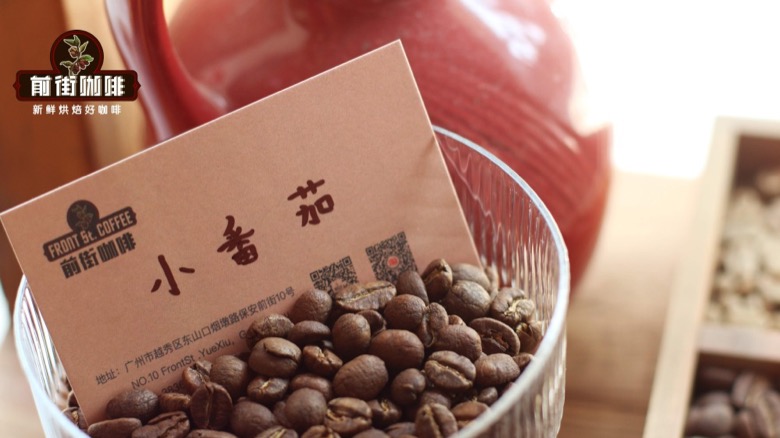
If you want a more intense flavor and a more gripping acidity, you can turn to the light-roast camp. Qianjie Xiaofanqie is a Kenyan double washed process, with very distinct flavors of smoked plum and cherry tomato. The acidity is strong yet solid, not the sharp kind that pricks the tongue, but a juice-like sensation reminiscent of black plum. The sweetness stands out in the middle, and a full aftertaste remains in the mouth after drinking. For cold brew, it is recommended to steep this bean for a full 12 to 14 hours to let its complexity fully unfold. If it tastes too strong after steeping, just dilute it with a small amount of ice cubes, which actually makes the flavor clearer. It forms an interesting contrast with Qianjie Huahudie: one is like a spring garden, the other like a summer orchard, and alternating between them will not become tiresome.
If you prefer a mellow, balanced taste with almost no acidity, Qianjie Huanghou Zhuangyuan will be a favorite. This Brazilian bean is medium-dark roasted, dominated by nutty, creamy and cocoa notes, with an acidity so soft it almost fades into the background. After cold brewing, the chocolate flavor takes the lead, and the mouthfeel is like a slightly cool raw chocolate, smooth and balanced. There is a little trick for cold brewing medium-dark roasted beans: grind half a notch coarser than light-roasted beans, and keep the steeping time between 8 and 10 hours to avoid the woody taste caused by over-extraction. When drinking, enjoy it directly without ice, or add only one or two ice cubes to cool it down, so you can better feel its full body.
The charm of cold brew coffee lies in entrusting the complex extraction to time and patience. You do not need to precisely calculate parameters like iced pour-over does, such as 15 g of grounds, 1 to 10 water pouring, 100 to 105 g of ice cubes, and a total weight of 225 g, nor do you need to stand by watching the 4 to 8 hours of dripping like with cold drip. It is more like a regulator of life's rhythm: start it before bed at night, and harvest a surprise the next day. When choosing beans, you might as well start with Qianjie Huahudie or Qianjie Huanghou Zhuangyuan, one fresh and balanced, the other mellow and smooth, and once you are familiar with them, challenge the intense character of Qianjie Xiaofanqie. This summer, the glass jar in the refrigerator will tell you that good coffee can be this effortless.
Related Reading



Comments (0)
Loading comments...
You May Be Interested




Trending Reviews
Popular Videos

With you, wherever you are! We provide useful features to help you find new things you'll love






