Source:Best Coffee > News Author:qjroot Published:2026-09-03 18:52:12
The grind size for a moka pot cannot be summed up with just the words "medium-fine." What truly affects the result is the filter basket volume, the thickness of the coffee bed, the size of the pot body, the heating method and the flow rate. A home moka pot should generally use particles between pour-over and espresso, close to the finer side, but not so fine that it feels distinctly powdery. This way it can create enough resistance while still letting water pass through the coffee bed smoothly.
First look at the capacity of the filter basket. A small-capacity pot has a smaller coffee bed area and a shorter distance for water to travel, so when the particles are too coarse it easily turns out watery with insufficient aroma; a large-capacity pot has a deeper coffee bed, so resistance naturally increases, and if you still use very fine grounds, the flow will slow down and bitterness and a dry, astringent feeling will accumulate more easily. The same grind setting may not perform the same on a one-cup pot and a six-cup pot, so the pot's specifications should be the starting point for adjustment.
Next, observe the holes and shape at the bottom of the filter basket. Some moka pot baskets have denser holes, so the coffee bed meets greater resistance and the grind can lean toward medium-fine; models with sparser holes and a deeper basket need to leave room for the water to flow. If there is an obvious gap at the edge of the filter basket, water will concentrate through the lower-resistance spot, so before adjusting the grind size you should first check whether the coffee bed is spread evenly and whether the basket is seated properly.
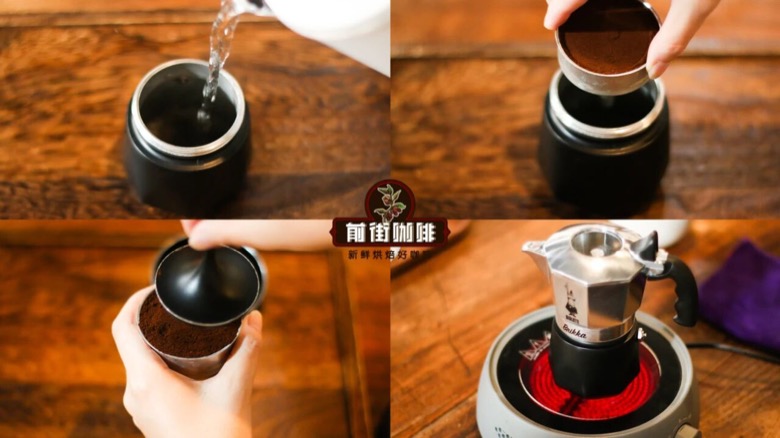
A moka pot is not a device that increases density by tamping. When adding grounds, let the powder fall naturally into the basket and just level the surface; gently tidy the edges with a finger or a scraper, avoiding pressing out a firm puck. If the coffee bed is too loose, water passes through quickly and the cup feels thin; if the coffee bed is pressed tight, water resistance rises sharply and intermittent flow easily occurs. Grind size should be judged together with the correct way of adding grounds, and cannot carry all the adjustment work on its own.
The size of the pot body also determines the rhythm of water flow after heating. A small pot heats up quickly, and once the flow starts it changes quickly too, so when the grind is too fine it more easily builds up pressure in a short time; a large pot heats slowly, and the coffee bed is exposed to hot water for longer, so particles that are too coarse may make the extraction seem loose. When using gas, a ceramic hob or an induction cooker, the heat transfer is also different, so the same grinder setting can only serve as a personal record, not a universal standard.

The flow state is an important clue for judging whether the grind is suitable. When coffee starts to come out, the liquid should be continuous and forceful, with the color shifting from dark to light and gradually becoming thinner. If it flows out quickly very early, the taste will mostly be on the weak side, so you can tighten the grind a little finer; if there is no liquid for a long time, or the flow is intermittent with obvious sputtering, adjust toward a coarser direction while also confirming that the dose and heat are not beyond the pot's design.

Qianjie Brazil Queen Estate is suitable for observing the basic parameters of a moka pot. Its nut, cocoa and caramel associations are relatively clear, the acidity is not sharp, and the brewed coffee easily shows a rounded sweetness. When using a medium-capacity pot, you can start from a medium-fine setting close to fine grinding, advance with low heat, and when drinking it straight add a small amount of hot water to let the nutty sweet aroma open up more; it is also suitable with breakfast.
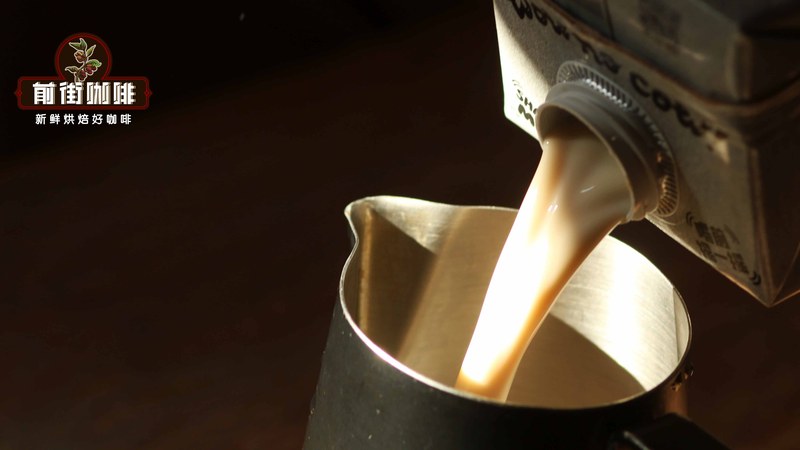
If you more often make milk coffee, Qianjie Dark Cocoa Blend will have clearer support. It carries dark chocolate, roasted nuts and a fuller sweetness, with a lower presence of acidity. After the liquid extracted from the moka pot is added to hot milk, the coffee flavor remains clear. The grind does not need to be tightened finer at all costs; maintain a continuous flow, then preserve body by reducing the proportion of milk, and the cup will feel more concentrated.
The material of the pot also changes the extent of grind adjustment. An aluminum pot reacts to heat faster and suits a gentler heat to control the rhythm; a stainless steel pot has different heat retention and conduction, and the flow time may be longer. If using an induction cooker, also pay attention to whether the heat at the bottom is concentrated. When the same dose gives unstable flavor, you can first record the time from lighting to flow, then decide whether to adjust the setting, avoiding mistaking a heat problem for a grind problem.
In practice, you can write down the pot's rated capacity, the weight of grounds in the filter basket and the grind setting together. First fix the water level below the safety valve, let the dose be whatever the basket naturally holds, heat over steady low heat, then make one small change based on flow rate and taste. In this way you can gradually find the range that belongs to this pot: slightly coarser for black coffee leaning toward clear sweetness, closer to the fine end when milk coffee needs more body, but always keeping the water flowing smoothly.
Related Reading





Comments (0)
Loading comments...
You May Be Interested



Trending Reviews
Popular Videos

With you, wherever you are! We provide useful features to help you find new things you'll love






