Source:Best Coffee > News Author:qjroot Published:2026-10-09 09:34:55
Many friends feel a bit disappointed the first time they brew coffee with a moka pot, when they open the lid, because the dense golden foam seen in other people's videos is reduced to nothing but a pool of dark brown liquid in their own hands. In fact, a moka pot can absolutely produce impressive crema; the key is to first understand where this layer of "golden foam" actually comes from. Coffee crema is essentially an "arranged marriage" between carbon dioxide and coffee lipids: under high temperature and high pressure, steam pressure forcibly presses the carbon dioxide escaping from the coffee beans into emulsified lipids, and the lipids quickly wrap around the gas to form countless fine bubbles, which float to the surface as what we see as crema. Although the steam pressure of a moka pot cannot match that of a semi-automatic espresso machine (the latter usually uses 18-19g of grounds to yield 36-38g of liquid), as long as you understand the patterns, you can still cultivate a beautiful layer of crema.
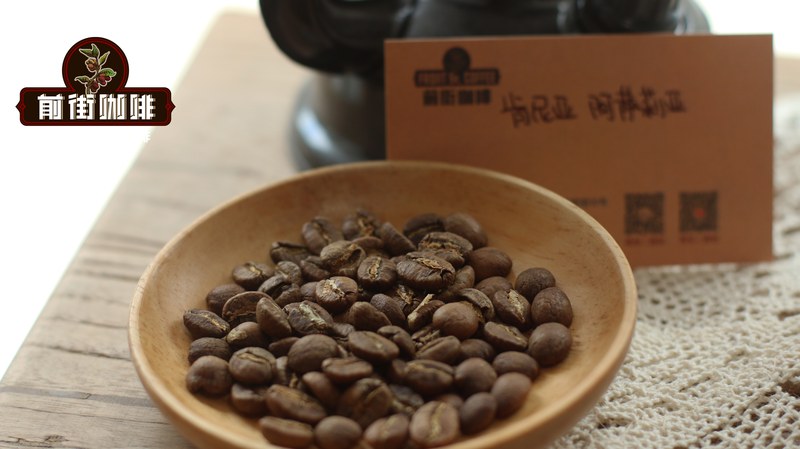
If you want rich crema, you first have to tackle it at the source: the coffee beans themselves. Carbon dioxide is the "inflating skeleton" of crema, and the amount of carbon dioxide in the beans depends first on roast level and second on freshness. The darker the roast, the looser the fibrous structure of the bean body and the more carbon dioxide it retains; freshly roasted beans are at their peak resting period, with an especially abundant gas content. Therefore, beginners are advised to prioritize medium-dark roasted beans that have rested for between two weeks and one month. Qianjie Classic Blend is a choice born for this purpose, a medium-dark roasted combination of Brazil, Mandheling and Robusta, with butter and toasted bread aromas as the base, caramel cookie sweetness at the finish, fine crema and stable extraction, equally handy for making Americanos or lattes at home. Those who prefer a fuller mouthfeel can try Qianjie Autumn Chestnut Blend, with rich roasted chestnut and caramel notes, and hazelnut aroma lingering in the aftertaste, especially warm with milk on autumn and winter mornings. If you are fond of single origins, Qianjie Queen's Estate's nutty creamy notes, Qianjie PWN Qianjie Mandheling's herbal richness, Qianjie Colombia Huila's caramel balance, and Qianjie Brazil Cerrado's chocolate sweetness are all reliable choices for crema performance among medium-dark roasts.
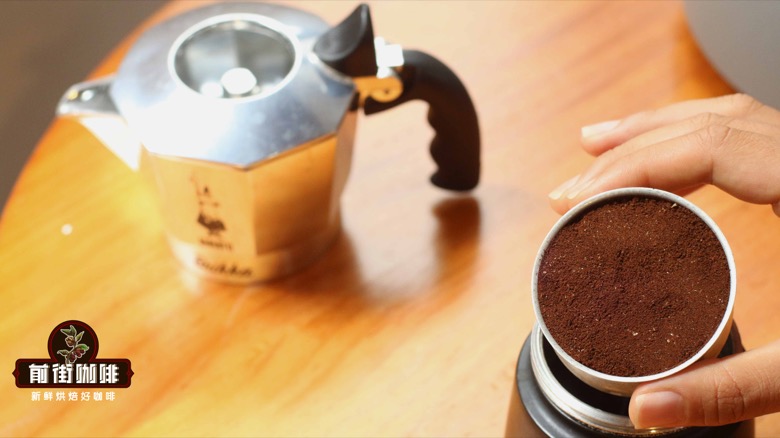
Once the beans are chosen correctly, grinding is the second threshold. The resistance of the puck in a moka pot directly determines how high the steam pressure can build; the finer the grind, the harder it is for water to penetrate, and the pressure naturally rises. It is recommended to grind the beans to a fine salt texture, with particles slightly smaller than granulated sugar, visibly even and not clumped. The filter basket should be filled and then lightly leveled off, without pressing and without leaving gaps, so that hot water must honestly pass through the entire layer of coffee before it can move upward. There is a common misconception here: some people think the amount of grounds does not matter, but in fact the thinner the coffee layer, the easier it is for hot water to "take a shortcut" and slip away from the edges; the pressure leaks, and the crema is ruined along with it.
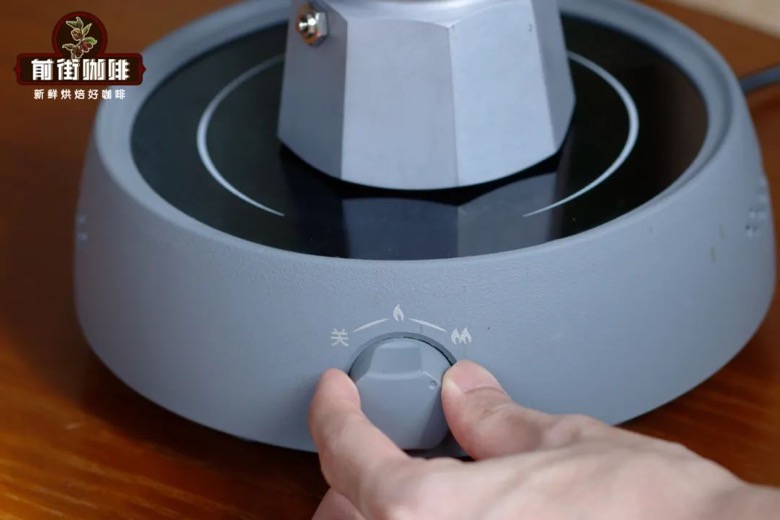
The third trick is hidden in the water-heating step. Experienced brewers almost always start a moka pot with hot water, and there is a reason for this. Heating cold water is a long process; as the water temperature in the lower chamber rises slowly, the coffee grounds are already being heated in advance, and by the time the steam pressure has built up enough, the coffee above has long been over-extracted and bitter, with the crema torn to pieces by the high temperature. Switch to pouring hot water at about 80°C into the lower chamber, controlling the water volume between 80-140ml, with the water level stopping about 0.5cm below the pressure relief valve, leaving enough expansion space for the steam. After screwing on the upper chamber, heat directly over medium-low heat, compressing the entire extraction to between 1 minute 15 seconds and 2 minutes 30 seconds; when you see about half of the coffee liquid has emerged, decisively turn off the heat and let the residual heat gently push out the rest of the liquid, so that the crema produced can withstand close inspection.
The last thing is about equipment: single valve or double valve. In a traditional single-valve moka pot, the steam freely dissipates once it reaches the upper chamber, and the peak pressure is limited; a double-valve moka pot adds a pressure valve at the upper chamber outlet, and the coffee liquid must build up to a higher pressure before it can push the valve open, which is equivalent to arranging an extra "forced matchmaking" session for carbon dioxide and lipids, naturally making the crema richer and longer-lasting. If beginners always feel that their operation is fine but the crema remains thin, switching to a double-valve pot often has an immediate effect. Of course, the equipment is only an aid; if the beans, grind and water temperature mentioned earlier are not up to standard, even a double valve cannot save the situation.

Brewing a pot of moka pot coffee with good crema is ultimately about drinking it comfortably. Drinking it straight allows you to taste the dense mouthfeel and aroma-wrapping sensation brought by the crema; when making milk coffee, it is recommended to mix coffee and milk at a ratio of about 1:4, for example 45ml of espresso base with 180ml of milk; the chocolate and caramel notes of dark roasted beans are rich enough not to be easily drowned by the milk. The joy of a moka pot lies in the countless details worth pondering hidden within this simple device; every time you unscrew the lid, it is the moment a small experiment is revealed.
Related Reading


Comments (0)
Loading comments...
You May Be Interested



Trending Reviews
Popular Videos

With you, wherever you are! We provide useful features to help you find new things you'll love






