Source:Best Coffee > News Author:qjroot Published:2024-10-11 18:34:09
According to media reports, the United Kingdom Maritime Trade Operations said that on the 10th, the Yemeni Houthi armed group claimed responsibility for two attacks on commercial ships off the coast of Yemen, one of which caused damage but no casualties.According to Yahya Saree, a spokesman for the Yemeni Houthi armed group, the "Olympic Spirit" was "hit directly and severely by 11 ballistic missiles and two drones," and he claimed it was an "American oil tanker."

According to a report by the Maritime Trade Operations, a ship flying the flag of Liberia was sailing from Jeddah, Saudi Arabia, to Muscat, Oman, carrying chemicals, when it was hit by an unidentified projectile in waters near the Yemeni Red Sea port city of Hodeidah, causing minor damage, but no fire or casualties were reported, and the ship is currently heading to its next port of call.
In addition, the Houthi armed group also claimed responsibility for a missile attack on the ship St. John in the Indian Ocean, saying that the company that owns the ship violated the decision on the occupied Palestinian port, but the news has not yet been confirmed by the Maritime Trade Operations.
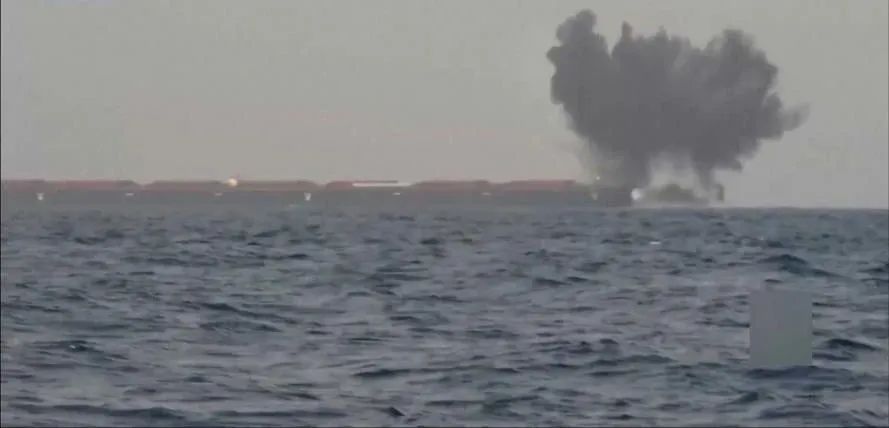
Recently, a spokesman for the Yemeni Houthi armed group issued a statement saying that the Yemeni Houthi armed group launched two attacks on Israel. In addition, the spokesman stressed that the Yemeni Houthi armed group will continue to take more military actions and implement a maritime blockade until Israel stops its military operations in the Gaza Strip and Lebanon.
It is reported that in the first attack, the Yemeni armed forces fired two missiles, attacking two military targets in the central Israeli city of Tel Aviv. In the second attack, the Houthi armed group dispatched multiple drones to strike multiple targets in the central Israeli city of Tel Aviv and the southern port city of Eilat.
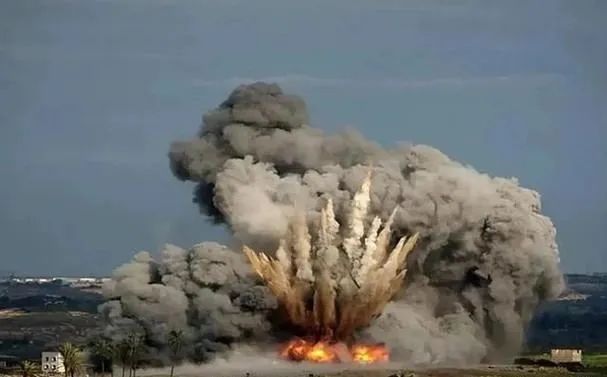
Since the outbreak of a new round of the Palestinian-Israeli conflict last October, in order to pressure Israel to stop its military operations in the Palestinian Gaza Strip, the Yemeni Houthi armed group has frequently attacked foreign commercial ships passing through the Red Sea. According to statistics, the Houthi armed group has so far launched nearly 80 attacks in the Red Sea, causing considerable losses.
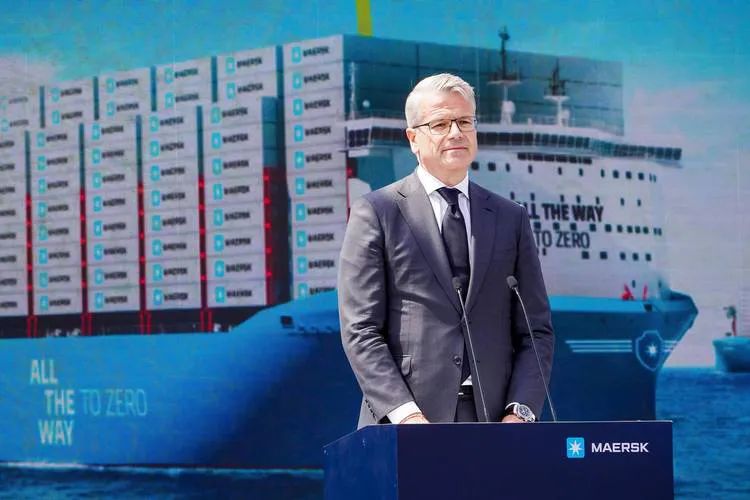
But at present, due to the recent escalation of Israeli military operations in the Gaza Strip and Lebanon, the Yemeni Houthi armed group has continued to take more military actions, leading to an escalation of the situation in the Red Sea region. This action has forced cargo ships and commercial vessels from many countries to avoid the Suez Canal and detour around the Cape of Good Hope in South Africa in order to evade attacks, resulting in voyage delays of 10 to 14 days, as well as shortages of some products, indirectly driving up logistics costs. The global container shipping giants Maersk and Hapag-Lloyd, two shipping giants, expect the Red Sea region to remain unsafe in 2025, so they have decided to continue detouring around the Cape of Good Hope in South Africa.
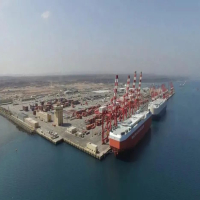
In addition, recent accidents at ports in multiple countries are also affecting international logistics, such as the 3-day strike at ports on the US East Coast in early October, and the recent Category 3 hurricane "Milton" that shut down some ports in the south. These events have caused a large backlog of ships and containers, disrupting the global supply chain. Furthermore, as ships detour to southern Africa, cargo handling volumes at ports in countries such as Kenya and Tanzania have increased, but the port infrastructure is relatively outdated, leading to cargo backlogs and ongoing ship congestion at ports, ultimately reducing port operational efficiency. At the same time, port congestion in multiple countries and longer shipping times have made the container shortage problem severe.
These problems have a major impact on the coffee trade, which relies heavily on maritime shipping, and the coffee trade has also been disrupted. This is especially true on the Europe-Asia route. According to some coffee exporters, freight costs from Asia to Europe have risen by nearly 7 times, causing some buyers to reduce coffee purchases in Asia, leading to a sharp drop in coffee shipments, and the economic livelihood of coffee farmers has been severely hit as a result. Moreover, due to rising freight costs, combined with reports of production declines in multiple countries, international coffee prices have also soared.
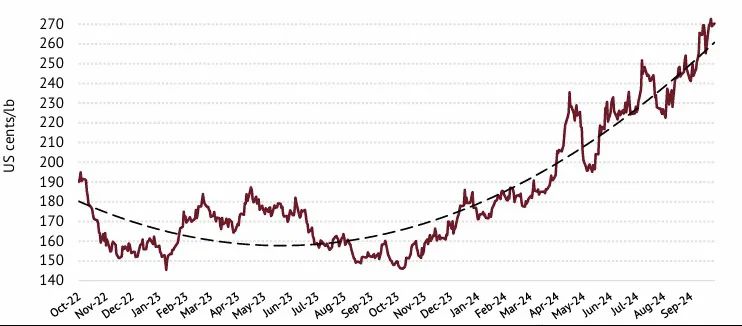
According to the International Coffee Organization (ICO), the monthly average of the ICO composite coffee price index for 9 was 258.90 US cents/lb, up 8.4% from 8, and up 69.1% compared with the same period last year. International coffee futures prices have also been strong, with Arabica coffee futures prices reaching their highest level since 9 2011, and Robusta coffee futures prices reaching their highest level since 5 1977. ICO believes that production affected by climate in multiple countries, as well as the global logistics crisis and geopolitical factors, are supporting coffee prices, and coffee prices will remain high in the short term.
To learn more coffee origin news and information, please scan the QR code to follow: Kaping
Long-press the QR code to follow:

Related Reading







Comments (0)
Loading comments...
You May Be Interested





Trending Reviews
Popular Videos

With you, wherever you are! We provide useful features to help you find new things you'll love






