Source:Best Coffee > News Author:qjroot Published:2026-10-09 18:32:12
When I teach customers latte art in the shop, I've noticed a pattern: of every ten cups where the pattern collapses, at least eight have a problem with the crema or the milk foam, and only a minority are actually due to poor technique. Latte art is essentially painting on the surface of the crema with milk foam, and if either of these two things is off, the pattern either won't hold up or smears into a blur. Today I'll break it down from both sides, the coffee and the milk, to help you pinpoint the problem.
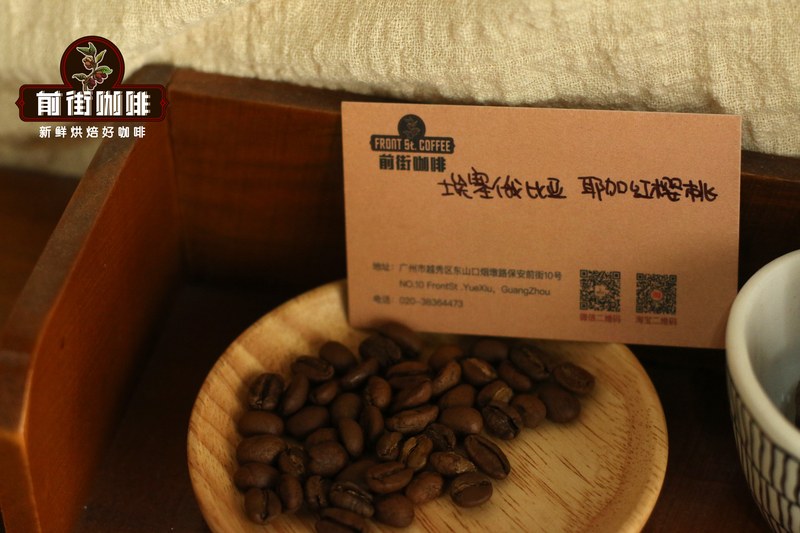
Let's start with the coffee side. The crema is the canvas for latte art, and if it's too thin or too coarse, the pattern won't stand up. If the crema is thin, the milk foam sinks and disperses; if the crema is too coarse with lots of bubbles, the surface is like orange peel, and the milk foam won't slide across it at all, leaving the pattern edges full of jagged edges. Good crema should be fine and dense like silk, about 3mm thick, with even reflection on the surface. This has a lot to do with the beans you choose. Medium-dark roasted espresso beans within their optimal flavor window are more likely to extract this kind of crema, because the carbon dioxide and lipids produced during roasting are abundant enough to form a stable golden foam layer during extraction. Qianjie Commercial Blend uses the traditional recipe of Colombia, Brazil plus a small amount of Robusta, medium-dark roasted, and the crema extracted is exceptionally rich with good flow, so beginners practicing latte art won't have the pattern break apart midway. Qianjie Specialty Blend is a combination of Colombia washed and Brazil semi-washed, also medium-dark roasted, and after merging with milk the sweet aroma rises a notch, with the crema's support strong enough for fairly complex patterns. If you prefer the character of a single origin, Qianjie Queen's Estate SOE is a Brazilian high-altitude Yellow Bourbon, medium-dark roasted, with crema as beautiful as if glazed, and when made into milk coffee the cream, peanut and nut aromas are full, the acidity is low, and the pattern contrast is clear. Qianjie Yirgacheffe Red Cherry SOE takes another route, an Ethiopian natural bean medium roasted, with relatively light but fine-textured crema, soft citrus fruit acidity paired with a creamy chocolate base, suitable for those who like a refreshing sweetness and don't seek heavy body, and the pattern will be more delicate when pouring.
Whether the crema is good, the extraction parameters must first be stable. I habitually use a double shot, 19 to 20g of coffee grounds, extracting 38 to 40g of coffee liquid, with time controlled at 25 to 30 seconds. In this range, the amount and fineness of the crema are relatively balanced. Bean freshness is also crucial. Qianjie's beans all complete roasting within 5 days, and after receiving them you can let them degas slightly before putting them in the machine, and it's safest to finish them within a month. Insufficient resting makes them harsh with many bubbles, while over-resting makes the crema prone to whitening and dissipating quickly.
Now let's look at the milk side. If the milk foam is too thick and coarse, it pours down like a thrown ball of cotton, floating on the surface without flowing, and the pattern looks faint with blurred edges. Temperature is even more of a hidden killer: above 60°C, milk proteins denature and produce milk residue, leaving the surface full of particles; below 55°C, lactose doesn't break down sufficiently, the sweet aroma doesn't come out, and the milk foam is also watery. When frothing milk, I watch the thermometer, targeting the range of 55 to 60°C, while listening to the sound to judge air intake - a hissing sound that's too long means too much air, making the foam thick; when the sound becomes dull it's time to stop and start texturing. Good milk foam should be like paint, highly fluid when pouring, with a glossy surface and no large bubbles.
The merging step is often overlooked, yet it's the prerequisite for a clean pattern. If the espresso and milk aren't merged evenly, the surface color will be uneven with large bubbles, and no matter what pattern you pour afterward it's like painting on a dirty canvas. I habitually pour from high up with a small flow in circles first, stirring the crema and milk into an even light brown, then lower the pitcher spout to start composing. I usually use a 1:5 ratio for milk coffee, enough coffee flavor and enough milk sweetness, with moderate surface tension so the pattern doesn't sink.
To develop stable latte art, my advice is to fix one side first. Lock down the espresso parameters, keeping beans, dose, yield and time unchanged, ensuring a consistent crema state every time, then practice the feel of frothing milk separately. Thick today, thin tomorrow, too hot the day after - with too many variables you simply can't find the pattern. Once you can consistently achieve a fine, flowing texture ten times in a row, then go back and adjust the extraction details of the crema; when both sides match up, the pattern will naturally hold.
Related Reading





Comments (0)
Loading comments...
You May Be Interested


Trending Reviews
Popular Videos

With you, wherever you are! We provide useful features to help you find new things you'll love






