Source:Best Coffee > News Author:qjroot Published:2025-11-13 15:19:05

Compared with Ethiopia, the country widely recognized as the birthplace of coffee, coffee cultivation in Brazil began in 1727. At first, production was small and intended only for domestic use. Later, because of the American Revolutionary War, and in order to break away from ties with Britain, Washington publicly declared coffee to be a patriotic drink. The number of coffeehouses in the United States surged, and coffee bean imports rose sharply along with it, creating trade opportunities for Brazil.
Brazilian coffee cultivation expanded rapidly in the nineteenth century, and by the mid-nineteenth century, Brazilian coffee beans accounted for half of Brazil's total exports. Coffee beans brought Brazil enormous economic returns, and railways were even built so that coffee plantations far inland could transport coffee beans to ports more conveniently, allowing the scale of coffee plantations to expand rapidly as well.
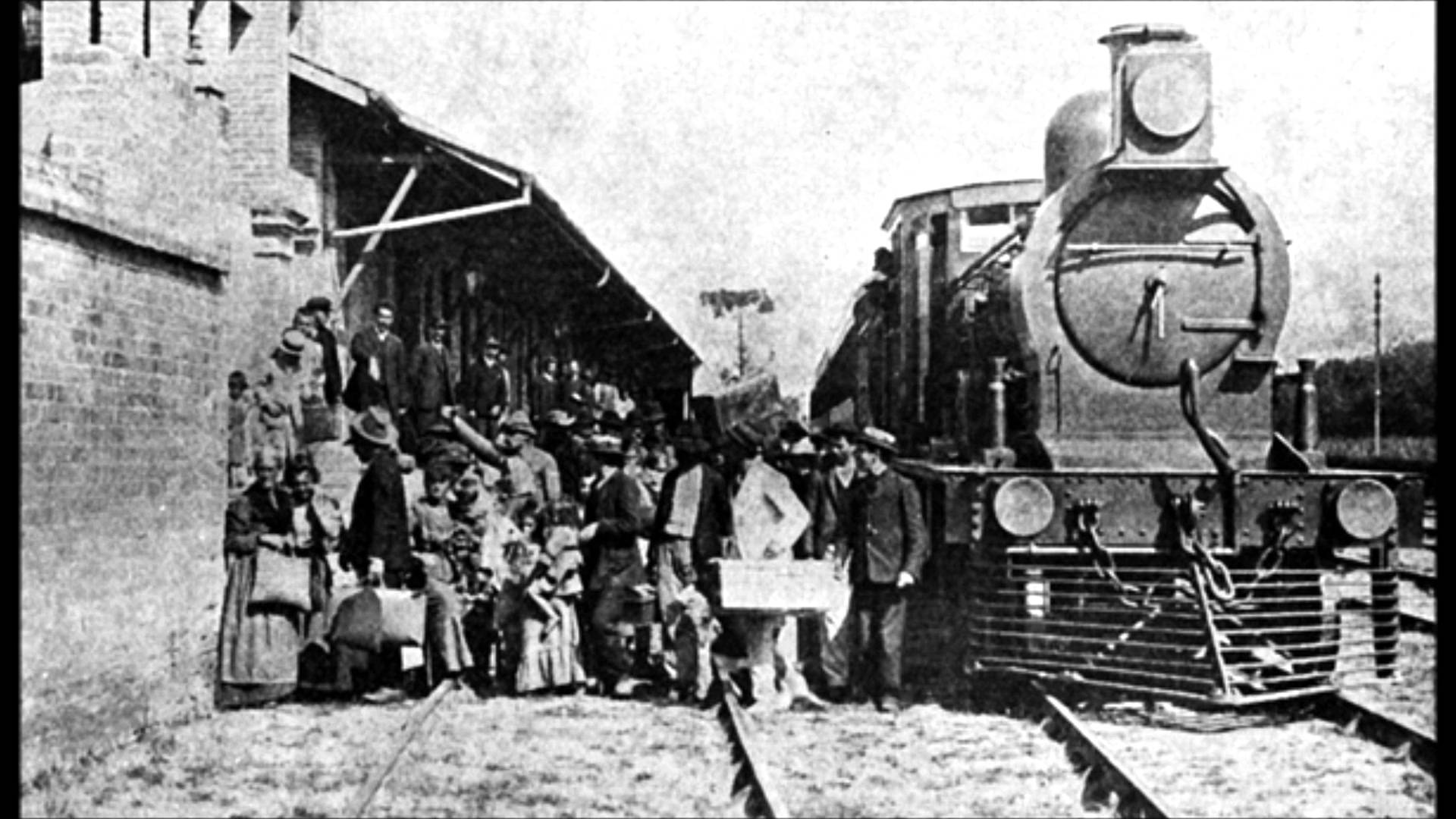
By the 1860s, coffee had even become a military necessity for the American Civil War. Demand for Brazilian coffee surged, but because the Typica variety had relatively low productivity, the higher-yielding Bourbon variety was introduced from Reunion Island. By the 1870s, the Bourbon variety had become the main coffee variety cultivated in Brazil.
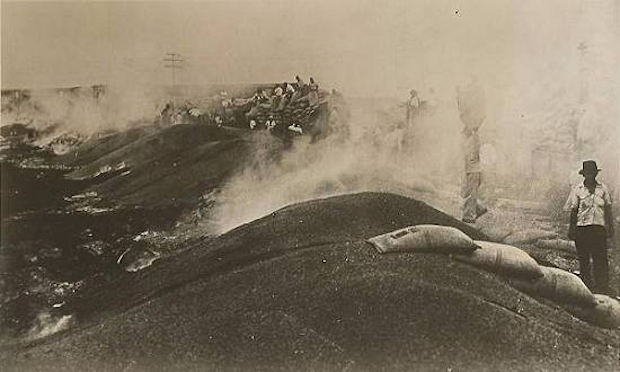
Unfortunately, in the early 1930s, the United States suffered the Great Depression. At that time, Brazil's coffee production already accounted for about 80% of the world total, and the United States, as the largest consumer of Brazilian coffee, could not afford the cost of coffee. Brazilian coffee beans went unsold and could only be piled up in warehouses. But the greater the quantity, the more serious the depreciation became. Later, the Brazilian government had no choice but to burn 78 million bags of coffee.
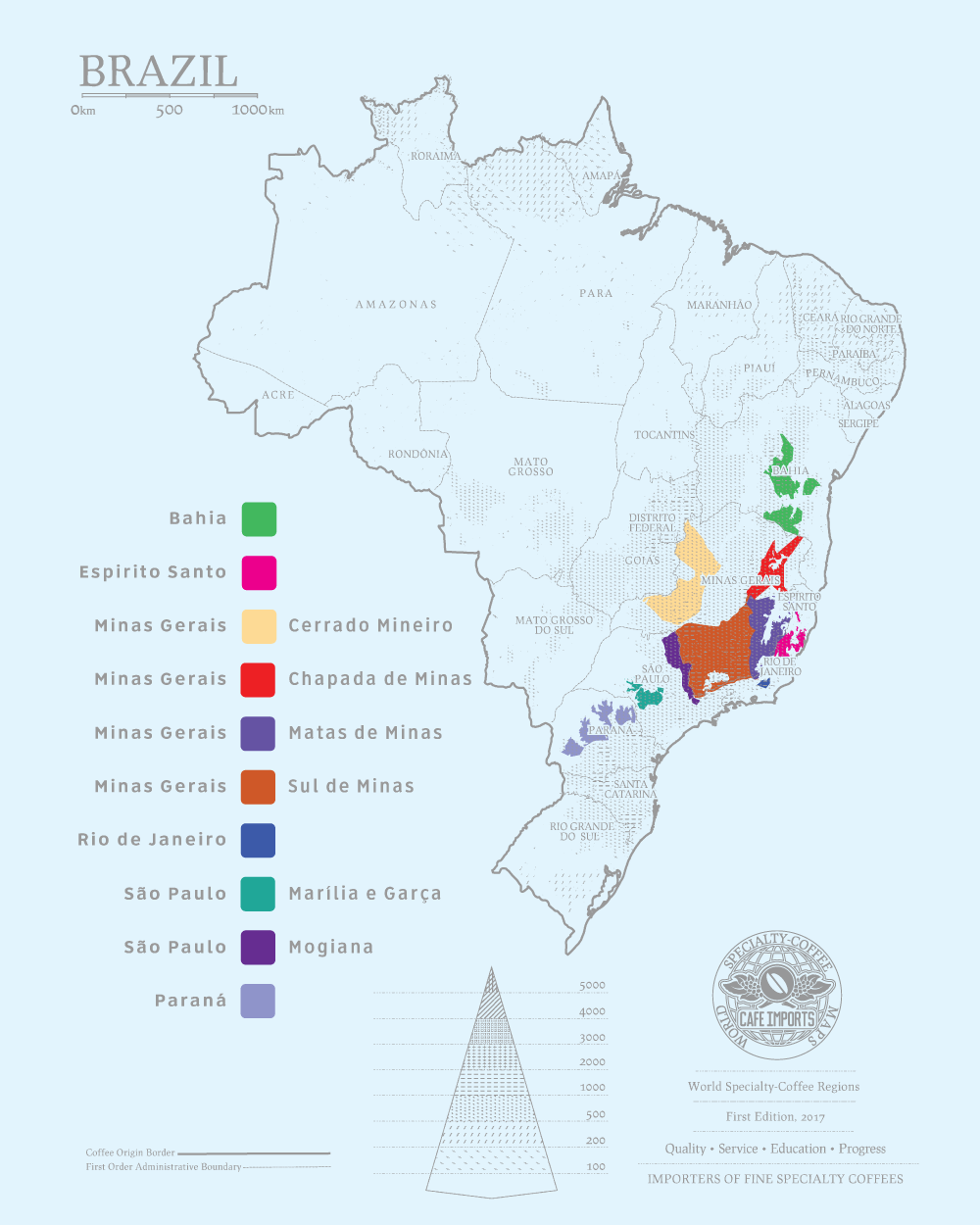
Brazil is a country rich in coffee, with 17 of its 21 states producing coffee. But coffee production in Brazil is mainly concentrated in six states: Bahia, Espirito Santo, Minas Gerais, Sao Paulo, Parana, and Rondonia.
The main differences between each coffee-producing country include the soil, altitude and temperature of the farms where the coffee is grown. The characteristic taste of Brazilian coffee beans is low acidity, pronounced sweetness, and a smooth mouthfeel. On FrontStreet Coffee's bean list, there are only two coffees from Brazil: one is Brazil Red Bourbon, and the other is Brazil Queen's Estate.
Among them, Brazil Red Bourbon is grouped into the daily-drinker bean series, which shows how much FrontStreet values this coffee bean. It is currently sold at both FrontStreet's Tmall flagship store and FrontStreet's Taobao store.
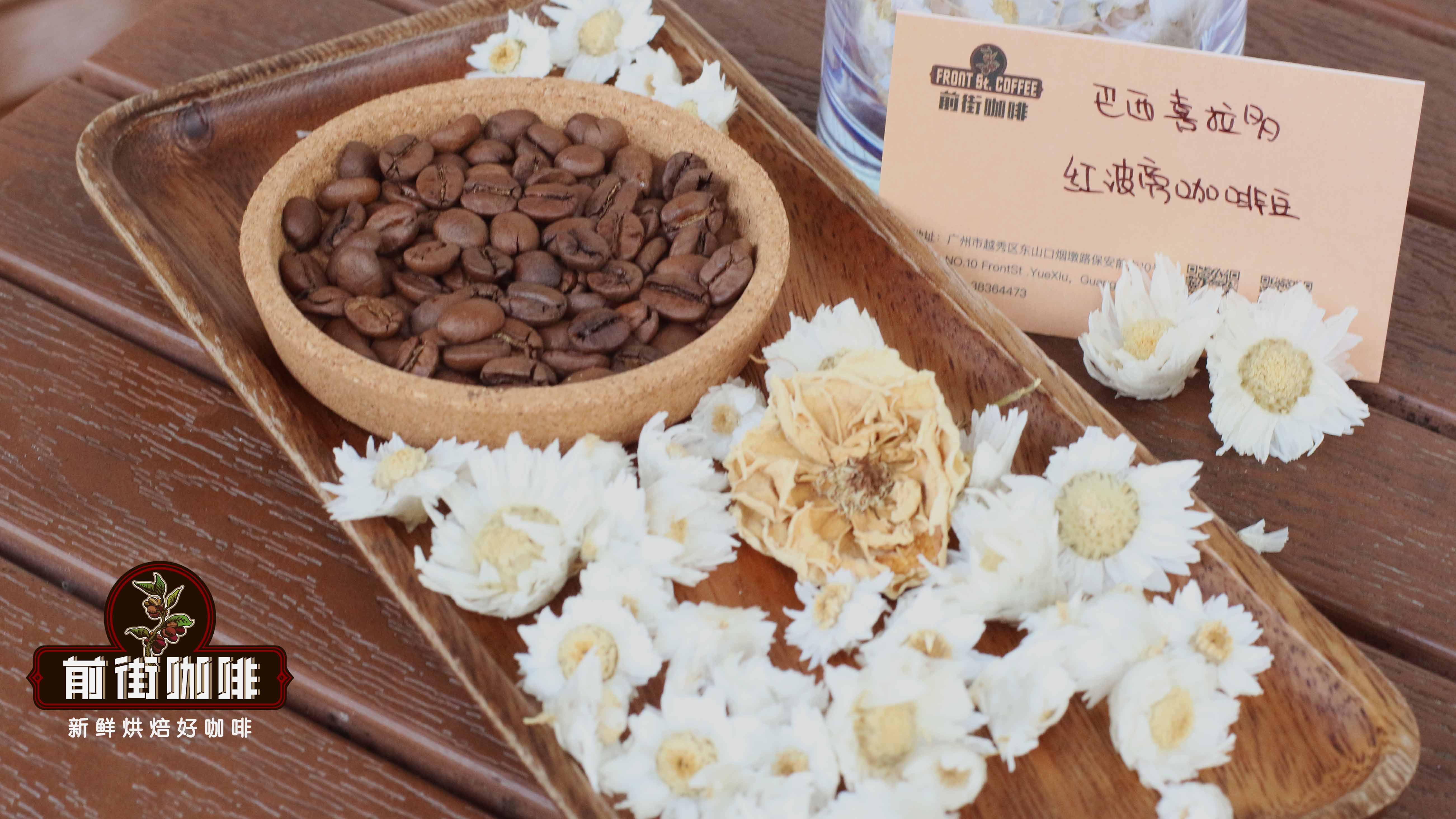
FrontStreet Coffee: Brazil Red Bourbon
Country: Brazil
Region: Cerrado, Minas Gerais
Altitude: 1000 m
Variety: Red Bourbon
Processing Method: Pulped Natural
The pulped natural processing method is the prototype of honey processing. In 1990, Brazil wanted to adopt the washed processing method in order to increase its coffee bean exports, but because Brazil's weather is dry and water is scarce, and the washed processing method requires a relatively large capital investment, it invented the pulped natural method (Pulped Natural), that is, the pulped natural method.
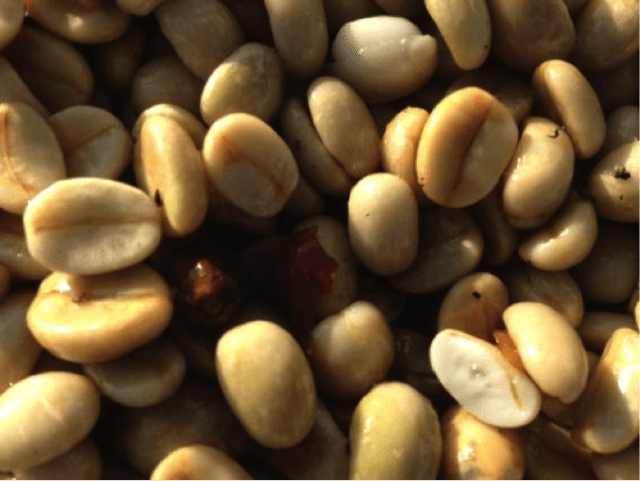
A production method in which the skin and pulp are removed while part of the mucilage is retained for drying can take less time than the oldest and most primitive natural processing method, and can effectively improve the quality of green beans as well as the flavor and mouthfeel of the coffee. Brazil's traditional pulped natural method also provides a good reference case for some coffee-producing countries in the Americas that lack funds and water resources. Costa Rica's honey-processed coffee is an excellent example.
This Brazil Red Bourbon from FrontStreet comes from the Cerrado region, and Cerrado is part of the main producing region of Minas Gerais, which accounted for about 40% of Brazil's coffee production in 2020. Coffee in the Cerrado region is grown at altitudes between 800 m and 1200 m. The Cerrado region is the first coffee-producing region in Brazil to obtain Brazilian origin certification, and the region is mainly composed of large-scale coffee plantations.
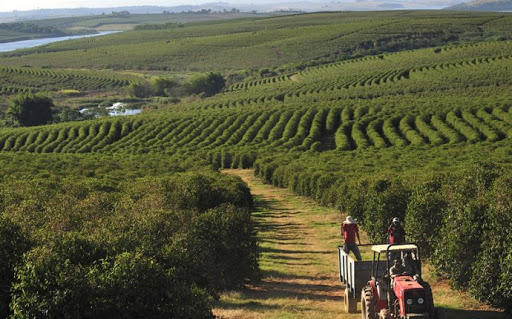
In the Qianjie daily-drinker bean series, the Brazil semi-washed Red Bourbon has rich nutty and chocolate flavors, a caramel sweetness, a smooth and silky mouthfeel, and an overall balance.
In the Brazil country-of-origin column on the Qianjie bean list, there is another Brazil Yellow Bourbon that lets you compare the two. The Brazil Yellow Bourbon on the Qianjie bean list comes from Fazenda Rainha in the Mogiana region of Sao Paulo state. The Mogiana region of Sao Paulo state has steep terrain, high altitude, a mild climate and fertile red volcanic soil, which makes it easy to produce high-quality coffee beans.

FrontStreet Coffee: Brazil Queen's Farm
Region: Mogiana region, Sao Paulo state, Brazil
Farm: Queen's Farm
Altitude: 1400m--1950m
Variety: Yellow Bourbon
Processing method: Natural
Through cupping coffee beans from different regions, FrontStreet has found that fertile soil is a necessary condition for producing high-quality coffee beans. As soil fertility increases, coffee tree yields rise, and the trees can also better resist the invasion of coffee plant diseases, which is especially important for growing Arabica coffee varieties. Mineral-rich soil also has a greatly beneficial effect on the flavor of healthy coffee cherries.
Queen's Farm has a planted area of 280 hectares, of which 200 hectares are planted with the Yellow Bourbon coffee variety. Through cupping comparisons of Red Bourbon and Yellow Bourbon, FrontStreet has found that Yellow Bourbon has more pronounced sweetness, along with a faint lemon aroma, and even richer fruit flavors. Scientific verification has found that the Yellow Bourbon variety contains more sugar than the Red Bourbon variety, because Yellow Bourbon has a richer pectin layer, and the pectin layer contains more saccharides.
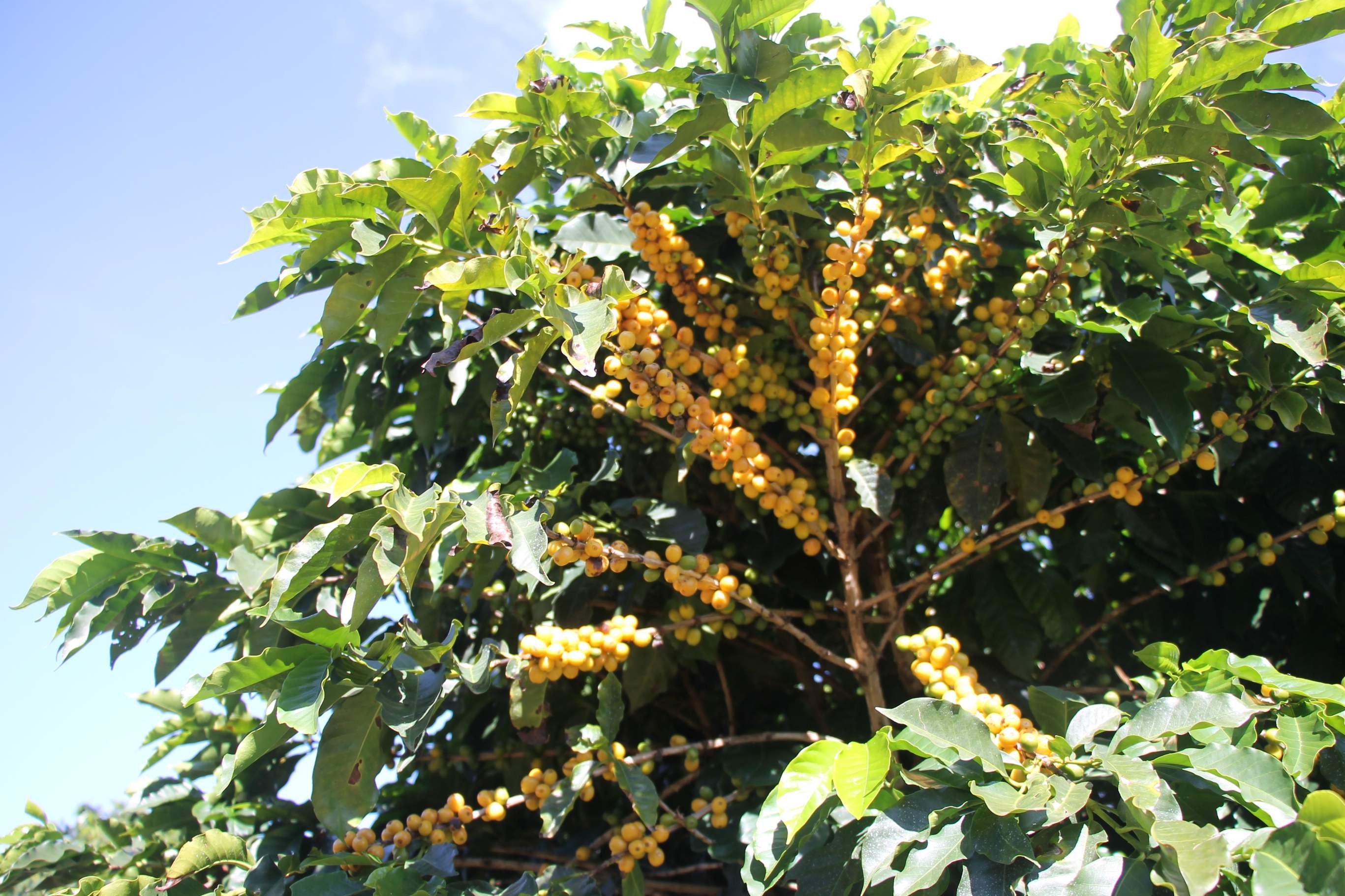
Best Coffee's Fazenda Rainha Yellow Bourbon is processed using the natural method, which takes the already pronounced sweetness of this Yellow Bourbon coffee to an even higher level. Because the natural method requires more labor, when Fazenda Rainha uses it, the drying is done on a small scale to ensure bean quality, with the cherries spread evenly on African raised beds to dry in the sun. This avoids unpleasant fermentation flavors caused by uneven turning of the coffee cherries, as well as earthy flavors from contact with the soil.
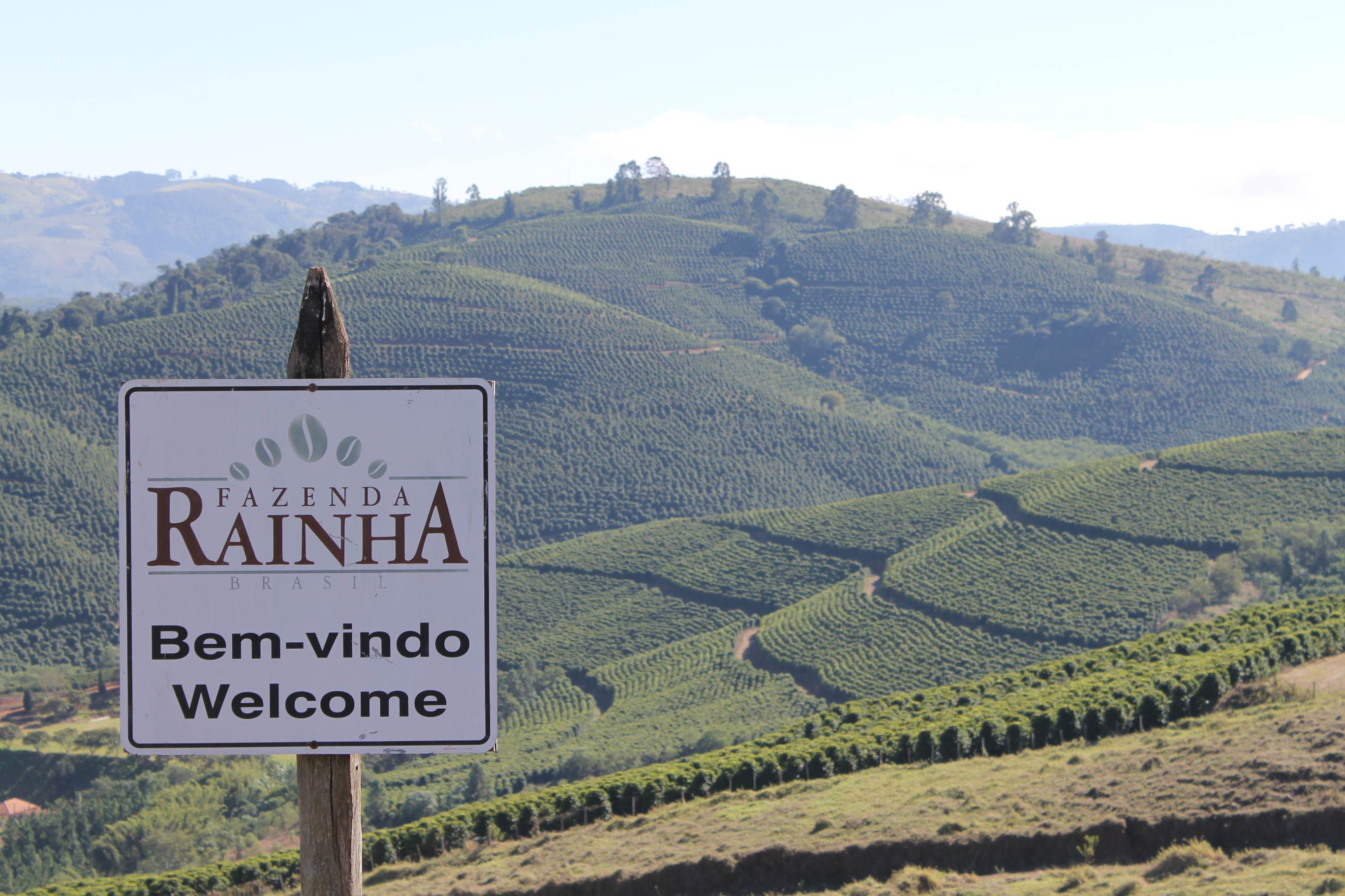
After receiving this green coffee carefully produced by Fazenda Rainha, Best Coffee's roaster chose a medium-dark roast, aiming to highlight the sweetness of the Yellow Bourbon, the nutty character typical of Brazilian coffee, and a soft, full-bodied mouthfeel.
When brewing this coffee, since it is a medium-dark roast, Best Coffee recommends using a slower-flow dripper, such as the KONO dripper. To avoid over-extraction caused by too slow a flow, use a water temperature of 88°C and a slightly coarser grind. At the same time, for a richer layering of flavors, it is recommended to brew using a three-pour method.

Dripper: KONO dripper
Water temperature: 88°C
Dose: 15 g
Coffee-to-water ratio: 1:15
Grind size: 70% passing through a No. 20 sieve
First pour 30 g of water and let it bloom for 30 seconds, then slowly pour the second pour in a small stream in circles until it reaches 125 g. When the water level in the dripper drops to 1/2, gently pour the third pour until it reaches 225 g. Once the water in the dripper has fully dripped through into the container below, remove the dripper. Total brew time is about 2 minutes.
Related Reading


Comments (0)
Loading comments...
You May Be Interested

Trending Reviews
Popular Videos

With you, wherever you are! We provide useful features to help you find new things you'll love






