Source:Best Coffee > News Author:qjroot Published:2026-08-22 14:28:10
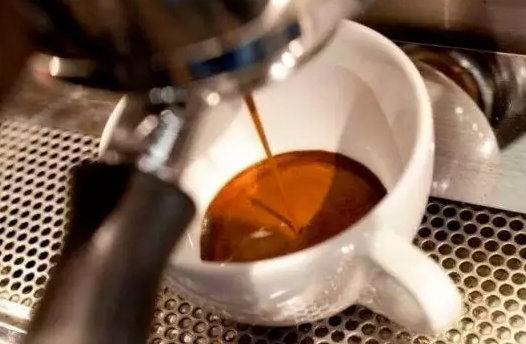
Whether a floral-and-fruity Americano tastes good is 70 percent about the beans and 30 percent about the parameters. With the same beans, different parameters can swing the cup between "juicy sweetness and acidity" and "sharp sourness and astringency." In this test, three representative floral-and-fruity beans were used in a controlled experiment to quantify how three variables - water temperature, grind, and concentration - affect the expression of fruit acidity.
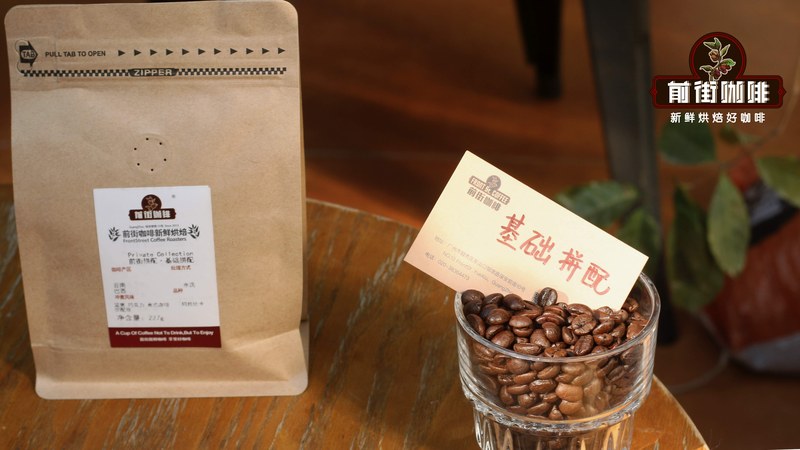
Experiment setup: the three beans are Qianjie Yirgacheffe Gedingding (washed, light roast), Qianjie Ethiopia Huakui (natural, light roast), and Qianjie Colombia Xizhua (double anaerobic natural, medium-light roast). The baseline group used a medium-fine grind, 92 degrees water temperature, and a 1:16 coffee-to-water ratio. Only one variable was changed at a time, and the brews were compared by cupping.
The water temperature results were striking. At the 92-degree baseline, Gedingding's citrus and floral notes were complete, with bright yet gentle acidity; when raised to 96 degrees, the acidity turned sharp, astringency appeared in the cupping, and the floral notes weakened; when lowered to 88 degrees, the acidity became smooth but overall flavor intensity dropped, and the sweetness also became flat. Huakui and Xizhua showed the same trend, but with different slopes - naturally processed beans are more sensitive to high temperatures, and at 96 degrees Huakui's off-flavors were noticeably amplified. Conclusion: the water temperature sweet spot for floral-and-fruity beans is 90 to 92 degrees, and anaerobically fermented beans can go another 1 to 2 degrees lower.
The grind experiment produced unexpected findings. Conventional wisdom says a finer grind increases acidity, but the actual test showed a "two-way amplification": when the grind was too fine, not only was the acidity amplified, but astringency and off-flavors were amplified at the same time, throwing the cup off balance; when the grind was too coarse, the acidity was thin and the flavor hollow. What truly determines the quality of fruit acidity is grind uniformity - at the same grind setting, an even coffee bed extracts "rounded fruit acidity," while a bed with too many fines extracts "jagged sharp acidity." Conclusion: rather than chasing a fixed setting, chase uniformity; better to go slightly coarser than risk fines.
The concentration experiment revealed the flavor presentation threshold. At 1:14 (strong), the acidity of all three beans leaned "taut," and the fruit aromatics were restrained in their expressiveness; at 1:18 (weak), the acidity was lighter but the flavor impression became shallow, like diluted juice. 1:16 to 1:17 was the shared comfort zone for all three beans - the acidity had structure, the fruit aromatics had room, and the sweetness had presence. For iced Americanos, it is recommended to tighten the coffee-to-water ratio to 1:14 to leave margin for dilution by ice.
Cross-bean conclusions: Gedingding has a wider parameter window and is suitable for getting started with floral-and-fruity coffee; Huakui has a higher flavor ceiling but a narrower window, with an obvious drop-off when water temperature goes out of control, so it is worth pairing with temperature-adjustable equipment; Xizhua's anaerobic fermentation flavors are stable among medium-light roast beans, and its parameter tolerance falls between the other two, making a balanced sweet-and-sour cup easy to achieve.
The ultimate meaning of parameter experiments is to give "tasting good" a reproducible path: 90 to 92 degrees, even medium-fine grind, 1:16 - remember these three numbers, and with any floral-and-fruity bean in hand, you have a starting point of parameters for a juicy Americano.
Related Reading


Comments (0)
Loading comments...
With you, wherever you are! We provide useful features to help you find new things you'll love