Source:Best Coffee > News Author:qjroot Published:2024-09-08 18:48:43
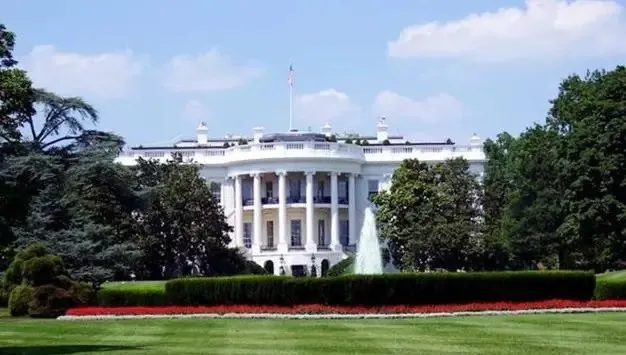
According to media reports, on September 6 the U.S. White House issued a statement announcing that the national state of emergency in Ethiopia would continue. Moreover, the continuation of Ethiopia's national emergency was announced after news emerged of a currency swap agreement reached between China and Ethiopia.
However, according to the Ethiopian Minister of Finance, who revealed the currency swap agreement with China in an interview, the financial details of the currency swap have not yet been disclosed. Nor has a final timetable been set. It is understood that China and the National Bank of Ethiopia have already carried out relevant work, and Chinese financial service providers will conduct business in Ethiopia.It is understood that a currency swap agreement enables both countries to strengthen financial cooperation, promote trade and investment facilitation, and so on, and can reduce dependence on the U.S. dollar, lower exchange costs and exchange rate risks, and promote the development of international trade.
According to the statement issued by the United States, as early as September 17, 2021, the United States declared a national emergency under the International Emergency Economic Powers Act in response to the threat posed by the situation in northern Ethiopia. The situation in northern Ethiopia has long threatened the peace, security and stability of Ethiopia and the Horn of Africa region, as well as posing threats to U.S. national security and foreign policy. Therefore, after September 17, 2024, Ethiopia's national emergency will continue, and this state of emergency will be extended for one year, until 2025.
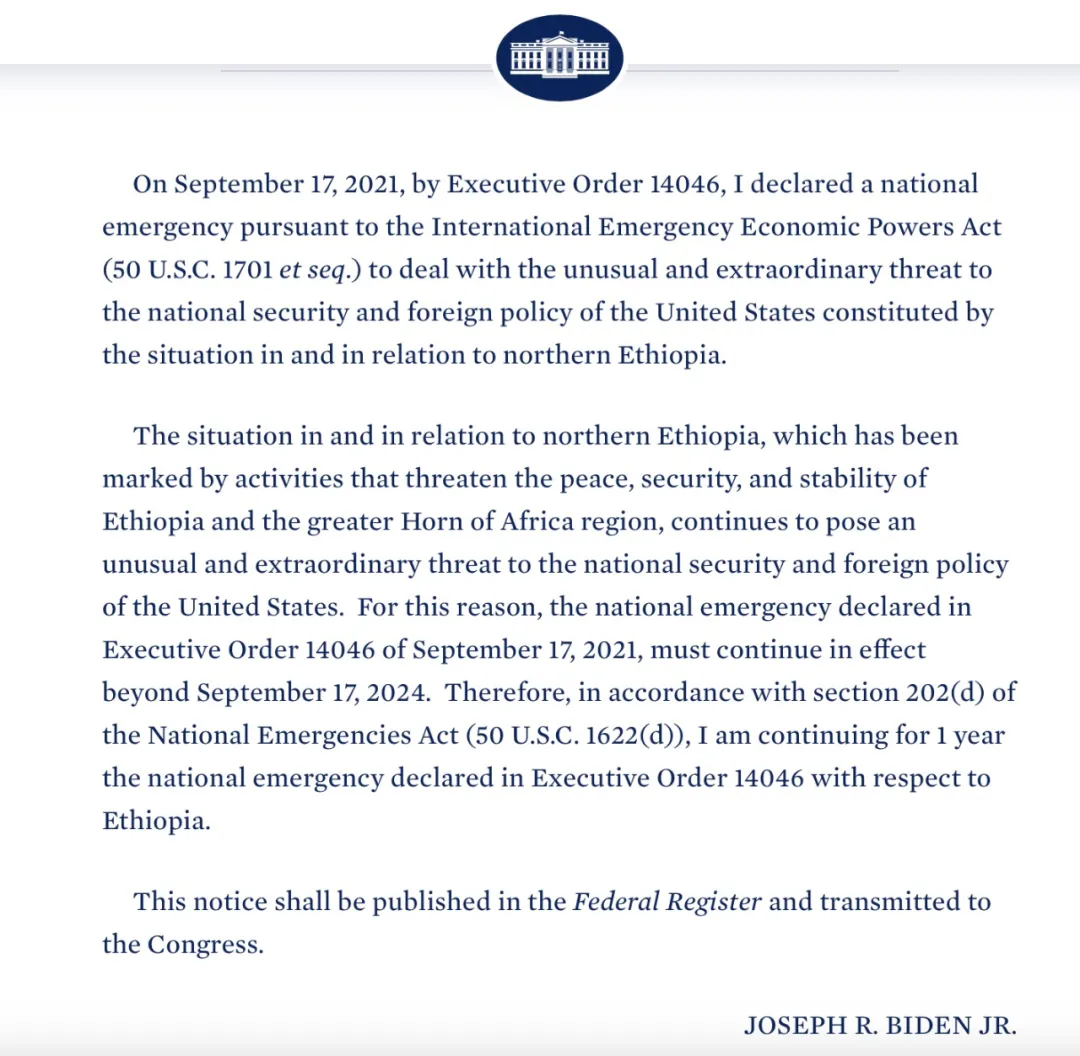
It is understood that the President of the United States can declare a national emergency on national security grounds and impose sanctions on foreign governments, organizations, enterprises, political parties or individuals. This also means that the United States may take a series of measures to respond to threats from Ethiopia, which may include restricting trade, and imposing restrictions on investment or technology transfer to specific countries.
It is reported that in order to promote the development of African countries, in 2015 the U.S. government passed the African Growth and Opportunity Act (AGOA), making it easier and more favorable (lower tariffs or duty-free) for African countries to export goods to the United States. However, in 2022, Ethiopia was removed from the AGOA by the United States, so tariffs will be restored on Ethiopia's main export commodities (coffee and other crops, textiles and leather goods, etc.), dealing a severe blow to multiple industries in Ethiopia, because at that time the United States and the European Union were Ethiopia's main importing countries.
By August of this year, Ethiopia implemented a new foreign exchange policy, and the Ethiopian currency, the birr, began to fall. At this point, the United States began to soften its stance on Ethiopia regaining AGOA eligibility, and stated that the Ethiopian government needed to resolve civil unrest outside the capital before it could obtain AGOA eligibility. But as things stand now, Ethiopia's chances of obtaining AGOA are very slim.
In addition, the current situation in Ethiopia is far from optimistic, as armed conflicts have broken out in multiple regions of the country. The conflict that was originally in the north of the country has begun to spread to the central capital and surrounding areas in the south. Furthermore, due to its relations with Somaliland, relations with neighboring Somalia and Eritrea have deteriorated, and conflict could break out at any time.

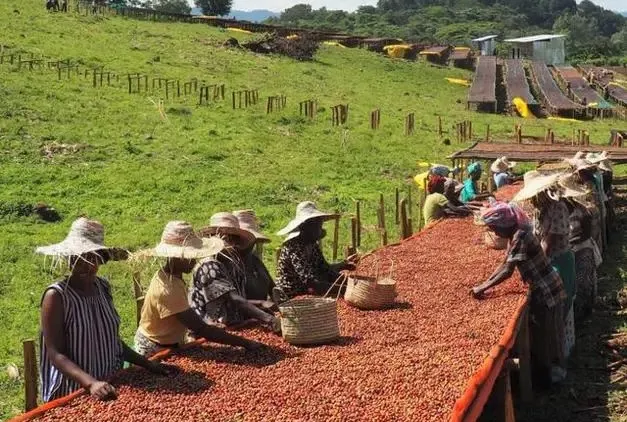
Ethiopia's foreign exchange earnings depend heavily on exports, especially agricultural exports, mainly exporting agricultural products such as coffee. However, according to data analysis, the largest importer of Ethiopian coffee is currently Germany, followed by Saudi Arabia and Japan, with the United States ranking fourth, accounting for 9.3% of Ethiopia's coffee exports.
Currently, the United States has imposed a state of emergency on Ethiopia, which may restrict trade between the two sides, will reduce imports of Ethiopian coffee, and will also reduce exports to Ethiopia of goods such as fertilizer and industrial supplies.This will be a severe blow to Ethiopia's economy. Because Ethiopia's earlier foreign exchange policy led to rising local prices and a higher cost of living in Ethiopia, this situation may be further aggravated. For the coffee industry, rising costs and reduced exports will lead to a substantial increase in coffee prices.
To learn more about coffee origins and news, please scan the QR code to follow: Kaping
Long-press the QR code to follow:

Related Reading






Comments (0)
Loading comments...
You May Be Interested






Trending Reviews
Popular Videos

With you, wherever you are! We provide useful features to help you find new things you'll love






