Source:Best Coffee > News Author:qjroot Published:2021-12-19 18:27:34
Around the 19th century, global maritime transport relied on sailing ships to carry cargo. In 1807, American mechanical engineer Robert Fulton successfully applied the steam engine to ship propulsion, ushering the shipping industry into the age of steamships. Thereafter, sailing ships were gradually replaced by steamships. Today, all cargo vessels in the world use a non-renewable resource, and their emissions contribute to global greenhouse effects and extreme climate changes. In 2021 alone, bizarre climate events occurred, such as droughts in Brazil, floods in Vietnam, and snowfall in Africa.
Low-carbon emission reduction has become an urgent global task. On the last day (November 12) of the 26th United Nations Climate Change Conference (COP26), news emerged that Café William, a Canadian coffee roasting company, would invest in its partner Sailcargo to build the first zero-emission sailing cargo ship. Named “Ceiba,” this vessel will be used to transport coffee beans from South America to its roasting factory in Canada. This initiative is the first of its kind in the coffee industry.
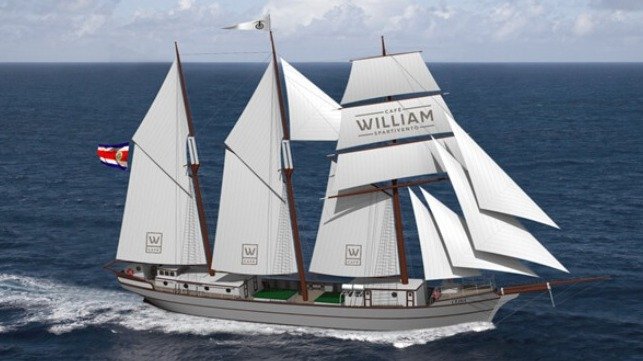
The “Ceiba” is currently under construction at Sailcargo’s headquarters in Costa Rica and is expected to be operational in 2023. This sailing ship is a traditional three-masted topsail schooner with an overall length of approximately 148 feet. It uses sustainable and renewable materials and energy, and its two internal cargo holds can transport up to 250 tons of goods.
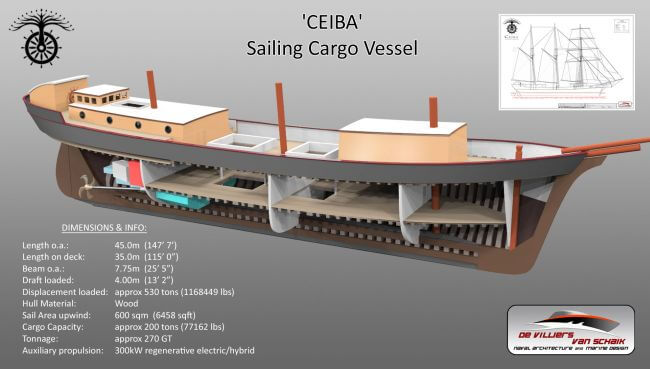
To maximize reliability and efficiency, the “Ceiba” will also be equipped with an auxiliary electric engine. This electric engine will be able to combine green hydrogen fuel cells with batteries regenerated by variable-pitch propellers.
Interestingly, many people like to boast about concepts like “carbon neutrality,” “zero carbon,” and “low carbon.” But if you think seriously about the entire process of coffee beans—from tree to cup—covering cultivation and production, post-harvest processing of green beans, transportation, roasting, and packaging, each step could potentially generate significant carbon emissions.
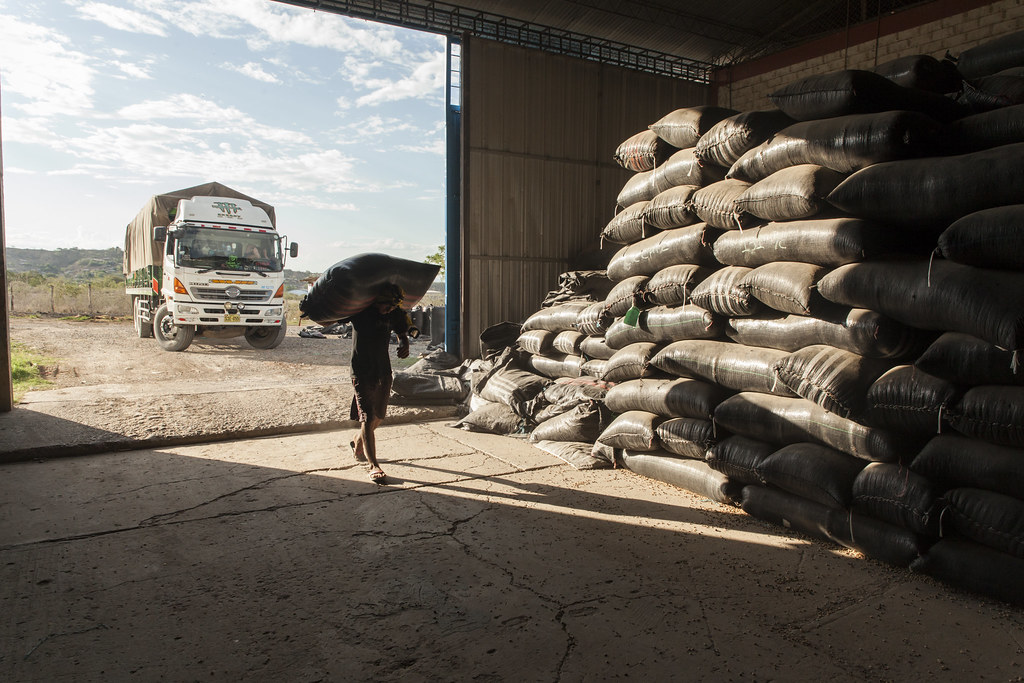
Take transportation, for example. Claiming “low carbon” or even “zero carbon” based solely on the ocean freight leg is not rigorous. What mode of transportation is used to move coffee beans from the factory to the port? And from the port to the warehouse? What about the final delivery to end consumers? Today, tugboats used to transport containers at ports still burn diesel or natural gas—non-renewable resources.
With the advancement of technology, the likelihood of reusing nearby resources has greatly increased, but there is also hope for reducing the use of non-renewable energy. Achieving true low-carbon is not an easy task, yet the rising speed of global temperatures keeps urging us humans. On June 20, 2020, the highest temperature of 38 degrees Celsius was recorded within the Arctic Circle. Let’s hope the day when one can wear shorts and a T-shirt in the Arctic Circle never comes, and that some coffee-producing countries don’t face issues like being unable to grow coffee.
So, let the low-carbon movement come more fiercely—starting with small steps.
Related Reading






Comments (0)
Loading comments...
You May Be Interested





Trending Reviews
Popular Videos

With you, wherever you are! We provide useful features to help you find new things you'll love






