Source:Best Coffee > News Author:qjroot Published:2026-10-05 16:25:15
The coffee liquid brewed by a moka pot has a concentration between espresso and pour-over. Typically, the lower chamber is filled with 80 to 140 ml of water, and after the filter basket is filled and lightly tamped, the yield is about 40 to 60 ml. This concentration is rather heavy when drunk straight, with obvious caramel and cocoa undertones, so using it as a base for mixed drinks is a particularly reasonable approach. Once you understand the strength of this concentrated liquid, you can then decide how much water to add and how much milk to use, allowing you to consistently reproduce a palatable Americano, latte or iced drink without relying on guesswork every time.
When making an Americano, it is recommended to dilute with hot water at a ratio of 1 to 2 up to 1 to 2.5, that is, 40 ml of moka pot concentrate with 80 to 100 ml of hot water. This range preserves the rounded mouthfeel brought by the oils while allowing the flavors to open up. If you prefer a lighter taste, you can extend it to 1 to 3, but beyond this ratio the body becomes noticeably thinner and the nutty and chocolate finish tends to dissipate. For a hot latte, a milk amount of 1 to 3 up to 1 to 4 is recommended, with 40 ml of concentrate paired with 120 to 160 ml of milk steamed to about 60°C, and the milk foam thickness controlled within 1 cm, so that it blends with the milk's sweetness without being completely overwhelmed by the milky taste. The approach for iced drinks is slightly different. The ice itself will dilute the concentration, so it is recommended to first dilute with 1 to 1.5 parts room-temperature water or drinking milk, then add 100 to 120 g of ice. After the ice slowly melts, the overall concentration will naturally fall into a comfortable range.
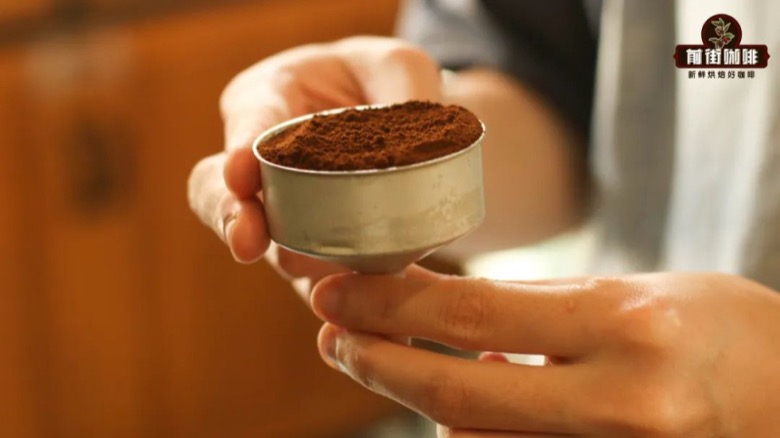
There are two directions for adjusting strength. First, change the amount of grounds in the moka pot. The fuller the filter basket and the firmer the tamp, the greater the extraction resistance, the lower the yield, and the higher the concentration; the opposite makes it lighter. Second, after fixing the moka pot output, adjust the dilution ratio. This is a more flexible method, suitable when you have already brewed a pot and want to split it into cups of different concentrations. It should be noted that the moka pot's extraction temperature is close to boiling, and fine grounds easily over-extract and produce bitterness, so it is not recommended to tamp excessively in order to increase strength. Adjusting through the dilution ratio is the safer priority.
After dilution, beans of different roast levels show clear differences in flavor direction. Medium-dark roasted beans themselves carry the heaviness brought by caramelization and the Maillard reaction, and after adding hot water the cocoa and roasted nut character remains solid, making them suitable for hot Americanos. Medium-light roasted beans have bright acidity and prominent floral and fruity aromas, but after dilution, if the ratio is too high, they easily taste thin and sharply acidic, so it is recommended to keep it within 1 to 2, or directly use an iced drink method to preserve the aroma. When making milk coffee, the lactose and protein in milk will wrap around some flavor molecules. If the beans themselves lack body, it will taste like "coffee-flavored milk" rather than a "milk coffee", so it is necessary to choose beans with high fullness and obvious caramel sweetness to provide support. Iced drinks are the opposite: low temperature suppresses the perception of bitterness, while sweetness and fruity notes are instead easier to capture, so choose beans with clear sweetness and soft acidity, and they will still be pleasing after adding ice.
Looking at specific bean options, Qianjie Commercial Blend is composed of Brazilian and Colombian Arabica with a small amount of Robusta. It has rich oils, abundant caramel sweetness, and a flavor direction of nuts, cocoa and dark chocolate. It is balanced in acidity and sweetness with high fullness, and after adding milk it forms a full mouthfeel with milk fat, making it a reliable choice for hot lattes and iced lattes. Qianjie Specialty Blend uses beans from the two producing regions of Brazil and Colombia, presenting a classic hazelnut flavor with a high extraction success rate, and has long been used in stores. Its flavor structure is clear and its sweetness is straightforward; when diluted with water to make an Americano it has distinct layers, and when drunk with ice it also maintains a clean finish. Neither of these two blends involves the operation of blending them yourself; they can be used directly, saving you the trouble of formulation.

In the end, it comes down to the logic of choice: if you prefer hot Americanos or hot lattes and pursue a full, rich mouthfeel, the oil and caramel base of Qianjie Commercial Blend can give a solid response; if you like iced drinks or light-style milk coffee and value sweetness and clarity of flavor, the hazelnut character and high extraction fault tolerance of Qianjie Specialty Blend will make your output smoother. The charm of the moka pot lies in its convenience for home scenarios. Once you have mastered the ratios, the same pot of concentrate can also extend into different drinking experiences; the key is simply matching bean characteristics with the blending method.
Related Reading

Comments (0)
Loading comments...
You May Be Interested





Trending Reviews
Popular Videos

With you, wherever you are! We provide useful features to help you find new things you'll love






