Source:Best Coffee > News Author:qjroot Published:2024-08-09 18:52:59
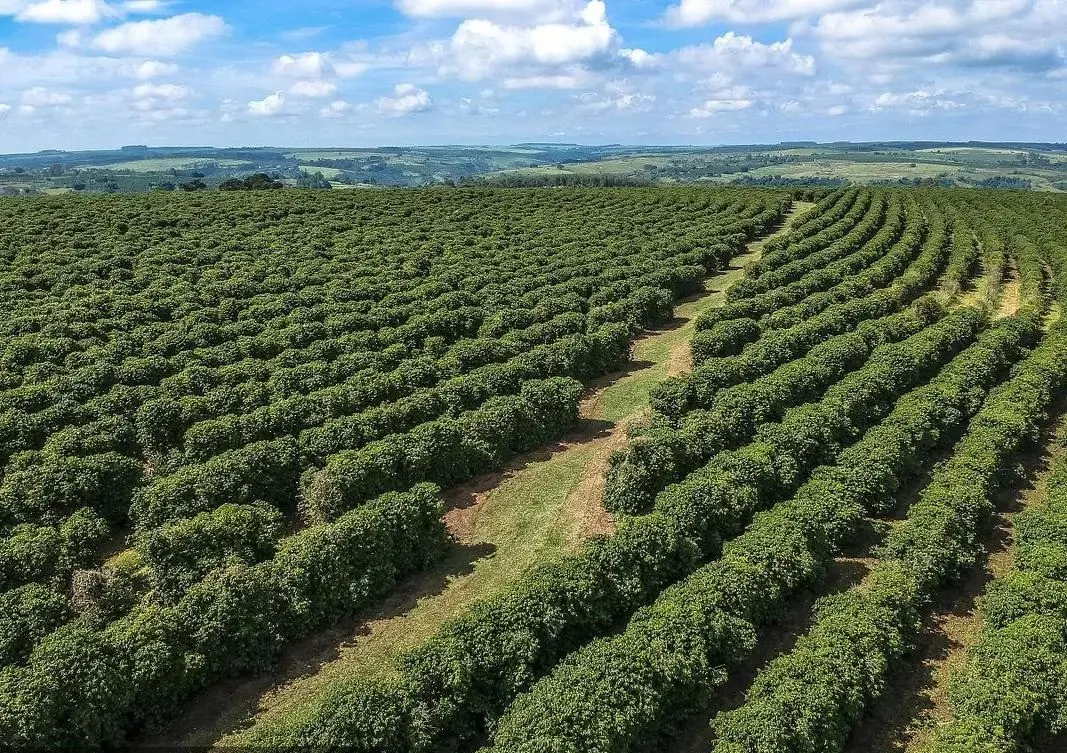
South America is the world's fourth-largest continent, with natural environmental resources such as the Andes Mountains and the Brazilian Plain. It is also a continent with a relatively large number of volcanoes, with fertile soil provided by volcanic ash, plus most of the region has a tropical climate, warm and humid. These conditions are very suitable for coffee cultivation, so South America has quite a few major coffee-producing countries, such as Brazil, Colombia, Ecuador, and others.
And in South America, the largest country is Brazil. Due to its strong industrial foundation and relatively developed agriculture, among Brazil's 26 states, 17 states produce coffee, which also makes Brazil the world's largest coffee-producing country.
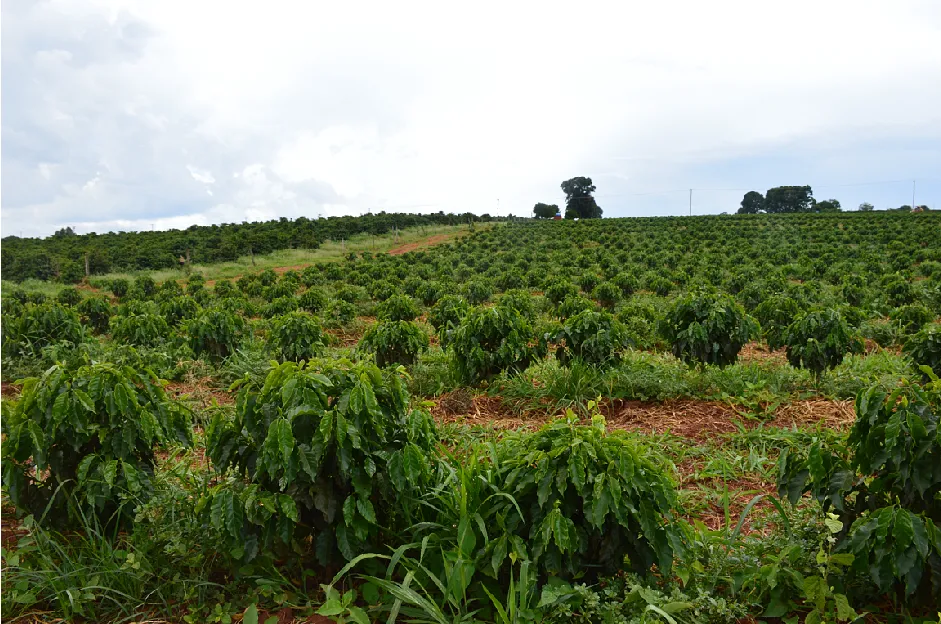
Brazil's terrain is mainly divided into 2 major parts. One part is concentrated in the Amazon River basin in the northwest of the country, while the southeast is mainly the Brazilian Highlands at an altitude above 500 m, where the soil is mainly red earth, so the south is very suitable for the cultivation and growth of tropical crops such as coffee.
Most of Brazil is in the tropics, and part of the south has a subtropical monsoon humid climate, with high temperatures and abundant rain in summer, while winters are mild and humid, with a relatively large temperature difference between day and night, and an annual average temperature of 21°C. Brazil is vast in territory and rich in resources. In addition to multiple states growing coffee, its superior geographical conditions and climate are also what drive Brazil to become the country with the largest coffee production.
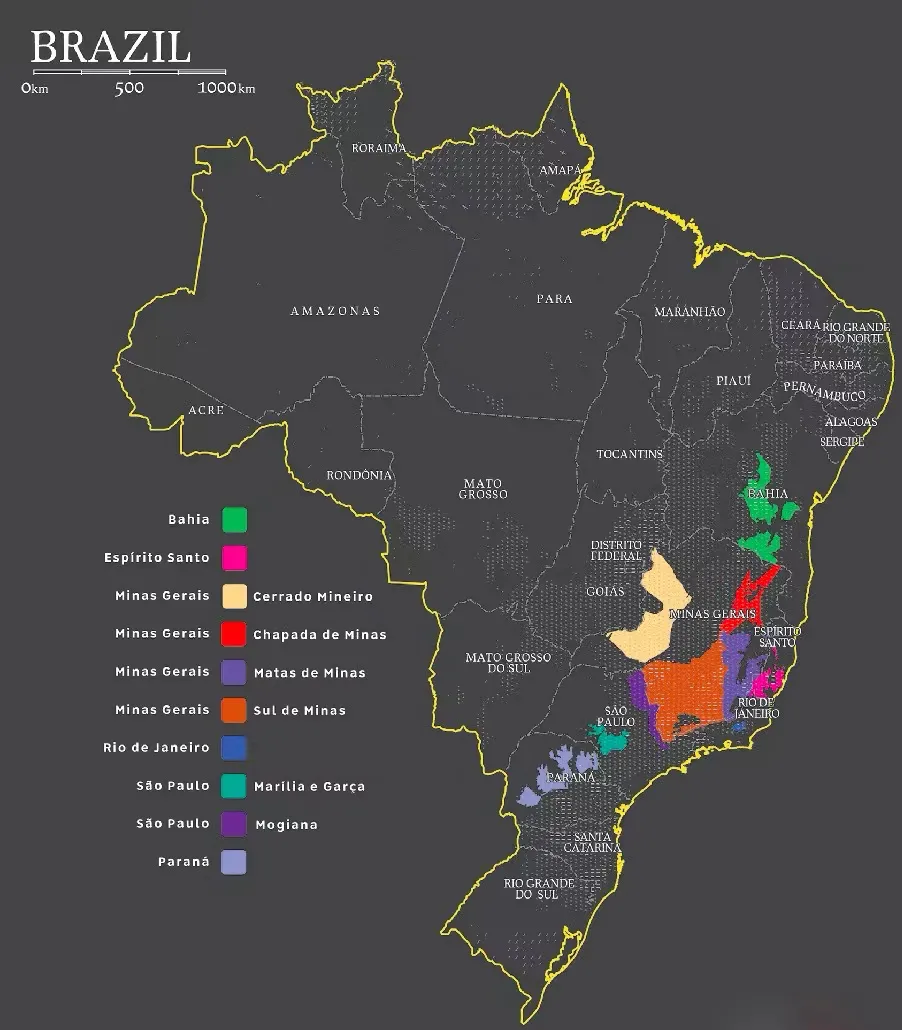
Although Brazil has 17 states growing coffee, coffee is mainly grown in four states: Parana, Sao Paulo, Minas Gerais and Espirito Santo. These four states account for 80% of the country's total coffee production and grow both major coffee varieties, Arabica and Robusta.
Among them, the most famous and largest in production is Minas Gerais, which accounts for 30% of the country's coffee production. The relatively well-known sub-regions Cerrado and Sul de Minas are both in this state, and Sul de Minas is known as the heart of Brazil's coffee industry. FrontStreet Coffee has a pulped natural Cerrado coffee that serves as a representative entry-level pick, with chocolate flavor and nutty aroma and a balanced mouthfeel.
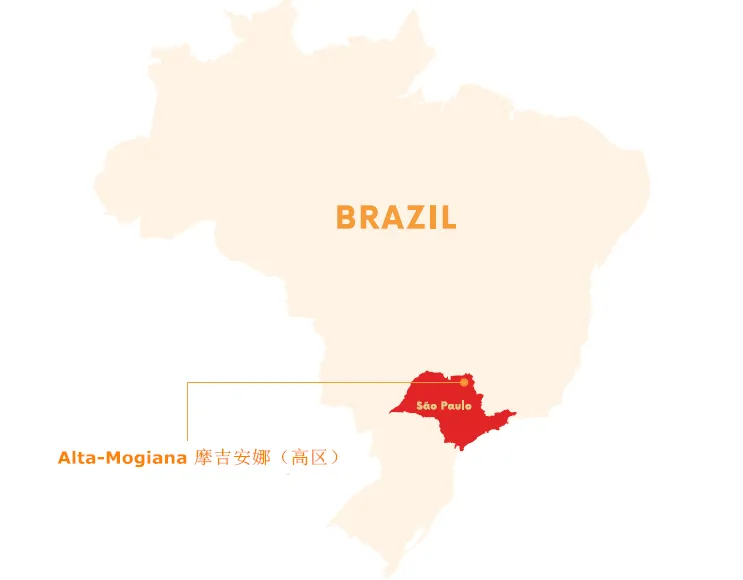
In addition, Sao Paulo is also one of Brazil's important producing regions. Sao Paulo is located in southeastern Brazil, bordered by Rio de Janeiro state and Minas Gerais to the northeast, Mato Grosso do Sul to the west, and Parana to the south. The terrain is high in the southeast and low in the northwest, with a subtropical climate and an annual average temperature of 20°C.
The most famous sub-region in Sao Paulo is Alta Mogiana ("Alta" means "high" in Brazilian Portuguese), located in the north of Sao Paulo, near the high mountain area of Minas Gerais. It is one of the higher-altitude areas, with an altitude between 1000-1400 m. However, because of the steep terrain and limited mechanization, most crops here are harvested by hand. Thanks to the higher altitude, fertile soil, mild climate, abundant sunlight and plentiful rainfall, this is an excellent environment for growing coffee crops.
As a result, the Mogiana region is home to quite a few well-known coffee estates. For example, FrontStreet Coffee offers a semi-washed Fazenda Rainha Yellow Bourbon coffee, with fruity sweetness, notes of sugarcane, chocolate and nuts such as peanut, a faint clean bitterness, and a smooth, delicate mouthfeel.
There is also Fazenda Recreio, which was founded in 1890 and has now been run by Teixeira de Macedo Júnior and five generations of his family. It is currently managed mainly by his son Diogo Dias Teixeira de Macedo, who studied agricultural science and has worked on the estate since 2000, learning about coffee cultivation and processing.
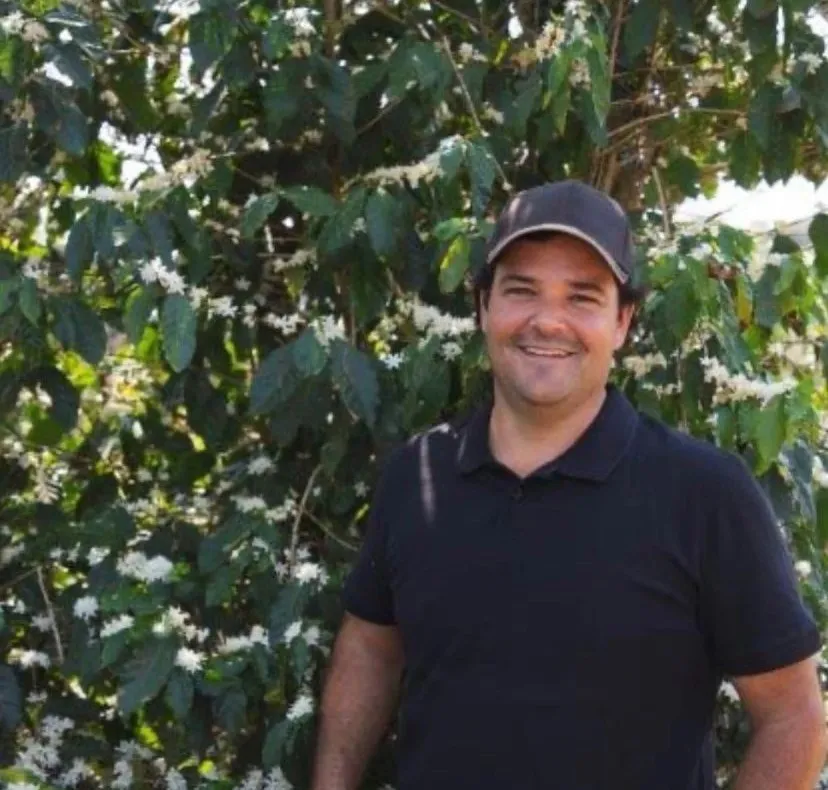
In addition, the farm owner places great emphasis on environmental protection, with designated conservation areas featuring native vegetation and abundant flora and fauna. Due to the geography, the coffee crops here are harvested by hand, and for this reason the farm has complete infrastructure, and to guarantee the quality and origin of the coffee produced, the coffee is carefully marked from harvest to transport and warehouse storage.
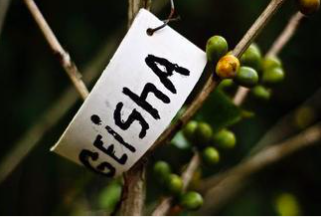
As a result, the estate began participating in the Cup of Excellence Brazil in 2004, and in 2008 it once took runner-up. Previously the estate grew varieties such as Bourbon Bourbon, Catuai Catuai, Typica Typica, and Mundo Novo Mundo Novo, after which the farm joined the speciality coffee program of the Campinas Agronomic Institute (IAC) to grow the Geisha Geisha variety, and with the Geisha variety it took 2023 4th place at the Cup of Excellence Brazil.
Related Reading

Comments (0)
Loading comments...
You May Be Interested



Trending Reviews
Popular Videos

With you, wherever you are! We provide useful features to help you find new things you'll love






