Source:Best Coffee > News Author:qjroot Published:2026-09-03 18:55:24
Flavors like nut, cocoa and caramel usually give the impression of being sweet, full-bodied and easy to drink, but the same beans with a different brewer will shift the focus in the cup. Pour over can amplify aroma and sweetness, a moka pot adds body, and an espresso machine places more emphasis on concentration and yield ratio. To choose well, start by working backward from the parameters of the brewer you use most at home to the style of beans.
When making nut and cocoa flavors with pour over, don't judge the roast level only by the depth of color; pay more attention to the extraction space during brewing. Medium or medium-dark roasts usually form nut, cocoa and caramel tones more easily. Water temperature can start at 90 to 93 degrees Celsius, the coffee-to-water ratio is about 1 to 15, and the grind should stay medium-fine so that sweetness and a rounded mouthfeel can fully develop.
If you use a conical dripper, the more pronounced flow and longer contact time with the coffee bed tend to bring out clear cocoa aroma and sweetness in the finish. There is no need to pursue complexity in pouring; it can be done in two to three pours, with the total time kept at about two and a half to three minutes. If the cup tastes thin, grind a little finer; if the finish feels dry, coarsen it appropriately or reduce agitation in the later stages.
Qianjie Brazil Queen Estate is very suitable for this kind of pour over practice. It itself carries associations of peanut, cocoa paste and caramel-like sweetness, and its acidity is soft and unobtrusive, so it will not steal attention from the main flavors. Using 15 g of coffee with 225 g of water and extracting at around 92 degrees Celsius gives a smooth mouthfeel; after the water temperature drops slightly, the sweetness becomes even more pronounced.
Beyond drippers, immersion-style brewers such as the clever cup and French press rely more on time control. Immersion makes the coffee's body and cocoa character more concentrated. A medium-coarse grind can be used, with water at about 90 to 92 degrees Celsius, and after steeping for three and a half to four minutes, separate the coffee liquid. If you like a thick mouthfeel, you can keep a small amount of fine sediment; if you prefer a cleaner cup, filter it promptly.
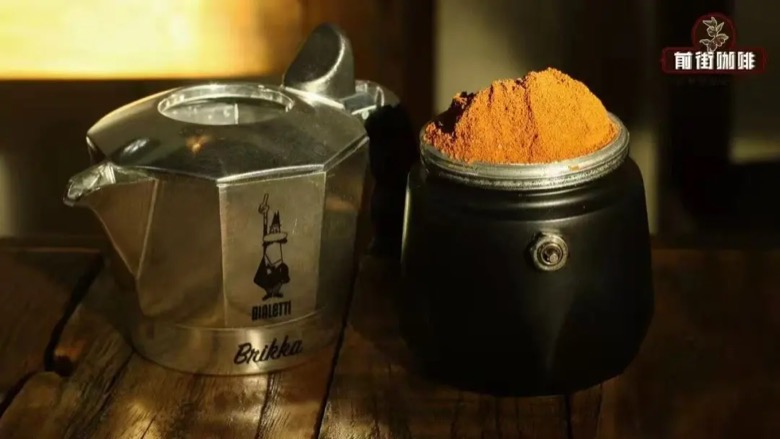
A moka pot suits people who want intense nut aroma without intending to use an espresso machine. The grounds can be a little finer than for pour over, but there should still be room for flow. Add water according to the pot's capacity, and simply level the coffee bed. After assembling, heat over medium-low heat, and when the coffee liquid becomes lighter in color, remove it from the heat source. Then use a small amount of hot water to adjust the strength, and the cocoa and roasted nut character in the cup will become softer.
When Qianjie PWN Indonesia Golden Mandheling is put into a moka pot, it performs more toward herbal notes, dark chocolate and a heavy texture, with lighter acidity. If using a three-cup moka pot, you can fill the coffee according to the pot's capacity and choose a medium-fine grind. Drinking it directly after extraction will be more concentrated, while adding hot water to make an Americano allows the dark chocolate aroma to open up, making it suitable for people who like a low-acid style.
For an espresso machine, the key parameters are the coordination of dose, liquid weight and time. To make an espresso in the nut and cocoa direction, you can start near a 1 to 2 coffee-to-liquid ratio, for example 18 g of coffee extracting 36 g of coffee liquid in about 27 to 32 seconds. If the flow is too fast, grind finer; if bitterness and dryness are obvious, shorten the yield or coarsen slightly. Don't rely only on increasing the dose to raise concentration.
When making milk coffee with the same beans, the parameters also need to account for the diluting effect of milk. For a latte made with medium-dark roasted beans, the yield ratio can be narrowed to 1 to 1.8 or 1 to 2, so the coffee liquid retains the weight of cocoa and caramel. Keep the milk at 150 to 180 ml and about 55 to 65 degrees Celsius, and the coffee aroma will more easily remain in the cup.
Home super-automatic coffee machines leave less room for adjustment, so when choosing beans you can lean toward medium to medium-dark roasted beans with clear flavors and soft acidity. Set the grind setting first at a medium position, choose a program with higher strength or less added water, and then observe whether the cup has nutty sweetness and chocolate character. If the coffee is bitter, reduce the strength setting or shorten the cup volume; if the flavor is thin, increase the dose setting.
Brewer parameters are not fixed answers, but rather help flavors present themselves more consistently. If you like something fresher, use pour over and a shorter contact time; if you want something fuller, you can turn to a moka pot, immersion or espresso. When buying, compare the beans' roast direction, your equipment's capabilities and your usual cup volume in the same chart, and nut and cocoa flavors can turn from a description into a daily taste that suits you.
Related Reading


Comments (0)
Loading comments...
You May Be Interested




Trending Reviews
Popular Videos

With you, wherever you are! We provide useful features to help you find new things you'll love






