Source:Best Coffee > News Author:qjroot Published:2025-03-29 13:02:38
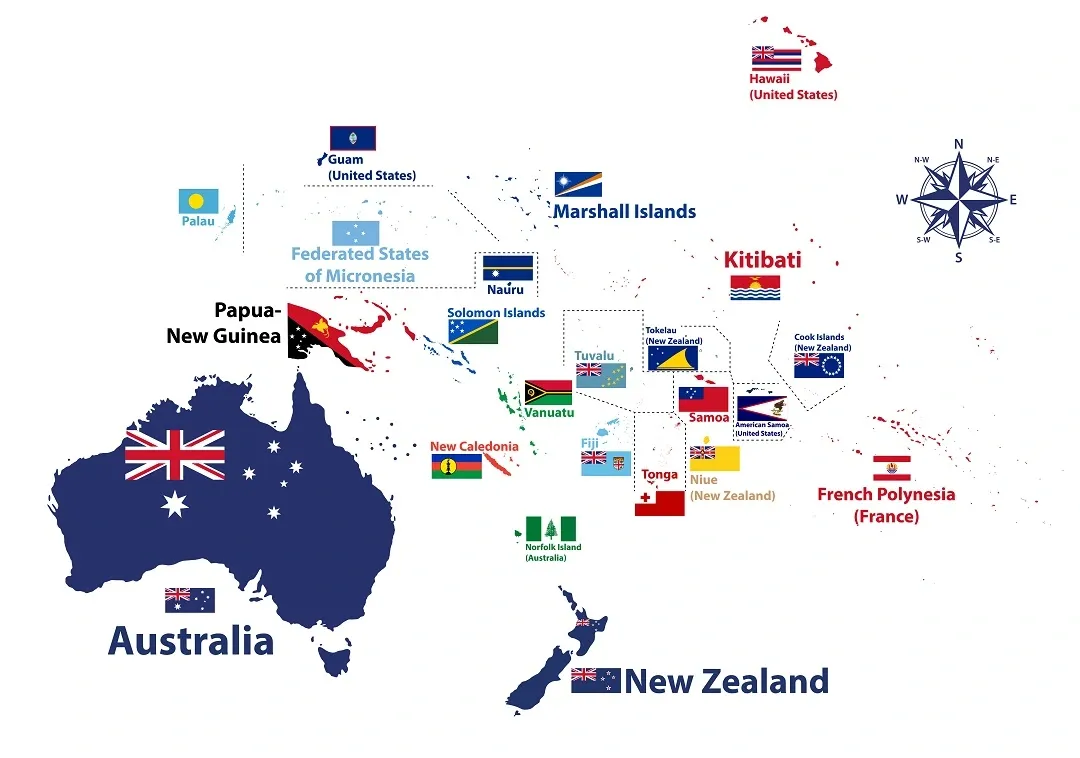
Oceania lies in the vast seas north and south of the equator in the central and south-central Pacific Ocean. It is the smallest continent in the world, made up mainly of one Australian continent and more than about 10,000 islands scattered across the sea. According to Best Coffee, Oceania spans three major plates - the Indo-Australian, Pacific and Eurasian - and has numerous islands, and the formation of these islands is related to volcanic activity. In addition, because it stretches across a wide range of latitudes from north to south, the climates of different places differ markedly and the types are diverse. Therefore, most of the countries located here are agricultural countries, and among them, Papua New Guinea is known for its abundant coffee beans and has the reputation of a "Little Blue Mountain".
According to historical records, Papua New Guinea began growing coffee in the 1890s, but it was not initially regarded as a commercial product. It was not until 1931, when Papua New Guinea was still a British colony and Jamaica was also occupied by Britain at the time, that Papua New Guinea introduced the Typica coffee variety from Jamaica Blue Mountain, and later introduced Bourbon coffee beans from Kenya, as well as the Mundo Novo and Caturra varieties from Brazil. These measures improved the coffee quality of Papua New Guinea.
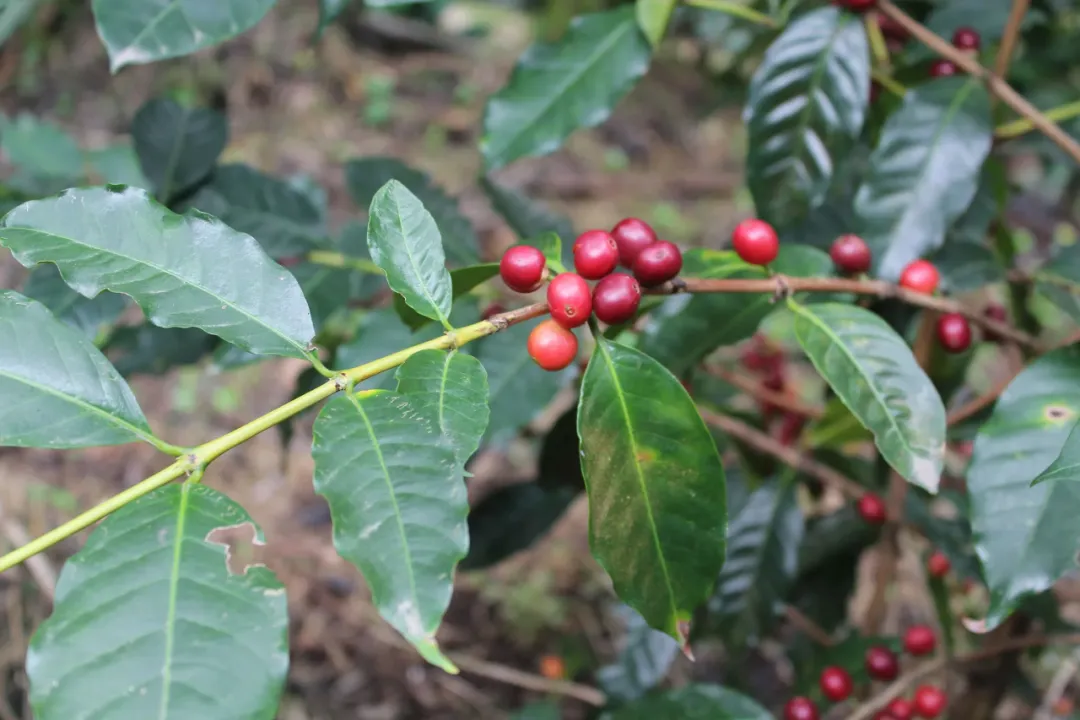
In 1975, Brazil suffered frost and most of its coffee crop was destroyed. In 1989, the International Coffee Organization abandoned its production allocation system, leading to a global coffee growing boom. This also stimulated the development of coffee in Papua New Guinea. The government funded rural areas to create coffee plantations of about 20 hectares, increasing the penetration of coffee growing in the local economy. By 1990, Papua New Guinea's annual output had reached 1 million bags.
Coffee has been able to develop steadily in Papua New Guinea. Best Coffee believes this is mainly because it has uniquely favorable coffee growing conditions. Papua New Guinea is the largest island country in the South Pacific and also the second largest island in the world. Southern Papua New Guinea consists of plains and lowlands, the central part is the Central Range, and the mountain ranges in the north run parallel to the range, made up of several separate ridges, and there are many volcanoes.
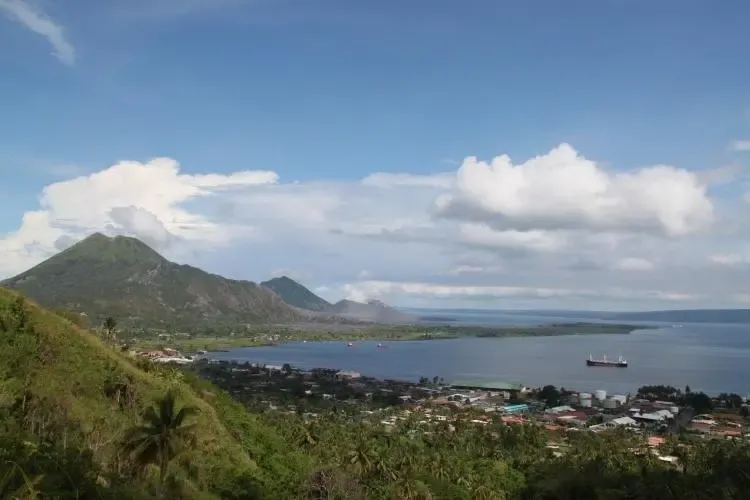
In Papua New Guinea, areas above 1000 m have a mountain climate, while lower-lying areas have a tropical rainforest climate. The dry season runs from May to October, and the rainy season from November to April. The average temperature in coastal areas is 21.1-32.2°C, and the mountains are 5-6°C lower than the coast. The average annual rainfall is 2500 mm. The mild climate and rich natural resources, including tropical rainforests, volcanic rock and highlands, make it an ideal zone for growing coffee.
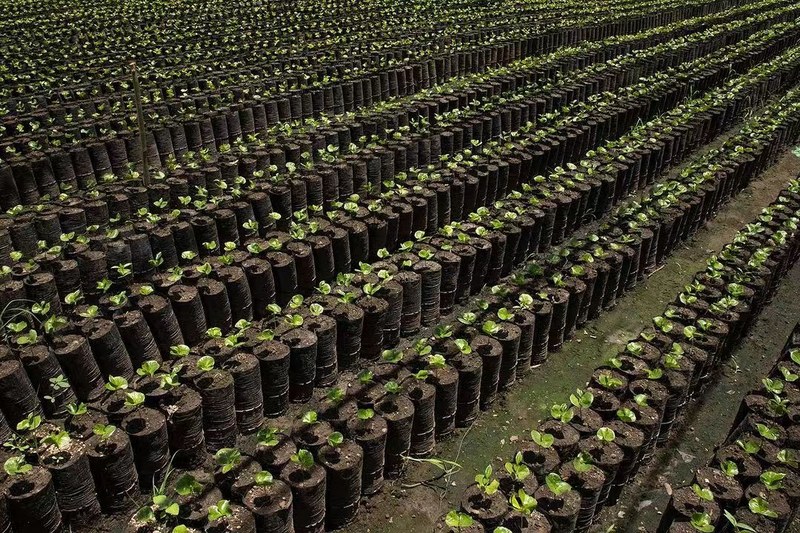
At present, coffee cultivation in Papua New Guinea is concentrated in five highland provinces in the central region: Western Highlands, Eastern Highlands, Chimbu, Morobe and East Sepik.
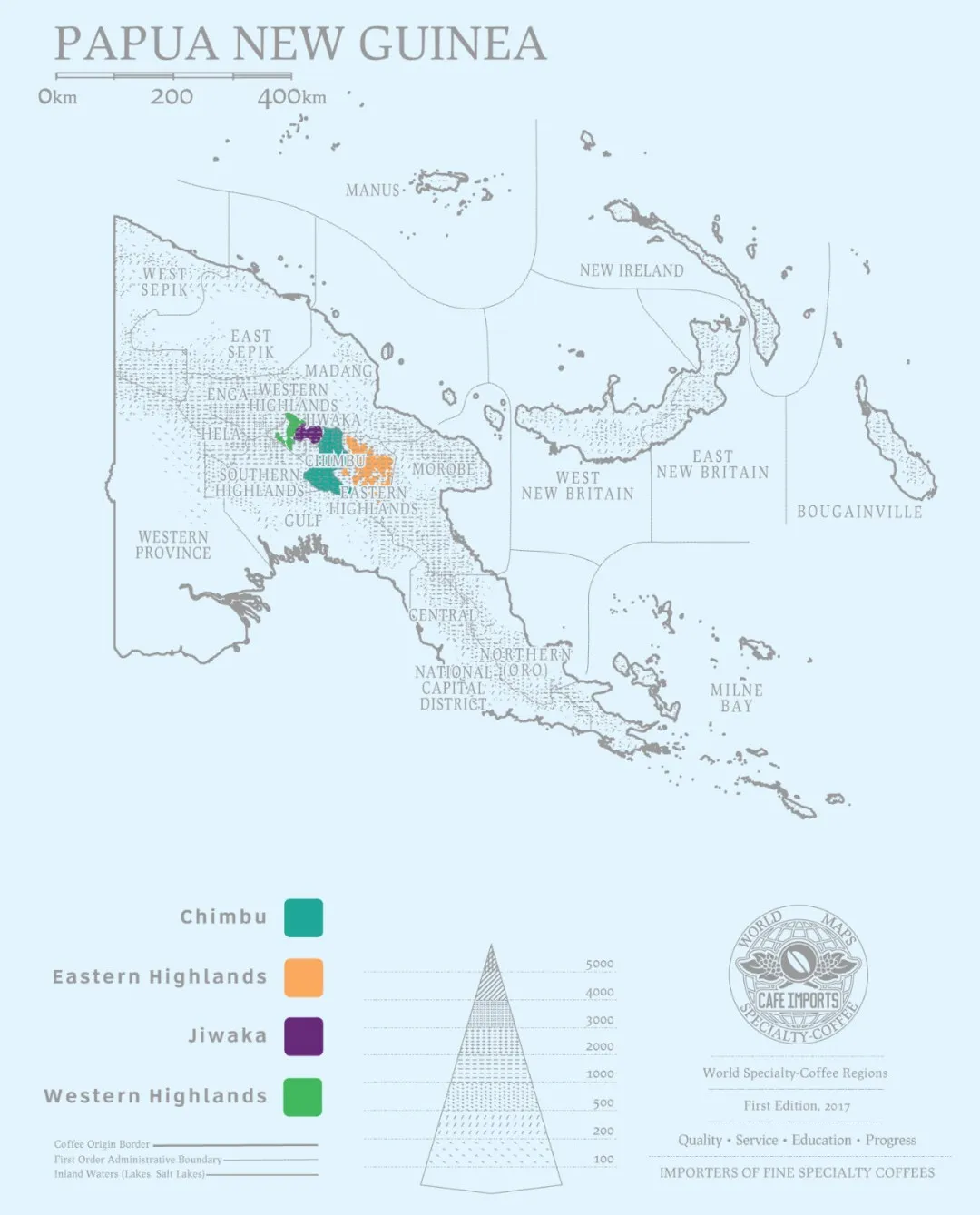
Western Highlands and Eastern Highlands are the most important coffee-producing regions in Papua New Guinea. They surround an ancient dormant volcano, and the fertile land gives the coffee grown here relatively outstanding quality. In Western Highlands is the famous Sigri estate. FrontStreet Coffee has a Sigri estate Bird of Paradise coffee bean: it enters with caramel, cocoa and almond flavors, and at lower temperatures has a citrus-like acidity, overall balanced.
In Eastern Highlands, the most famous are Arona estate, Kimel estate, Arokare estate and Goroka estate.
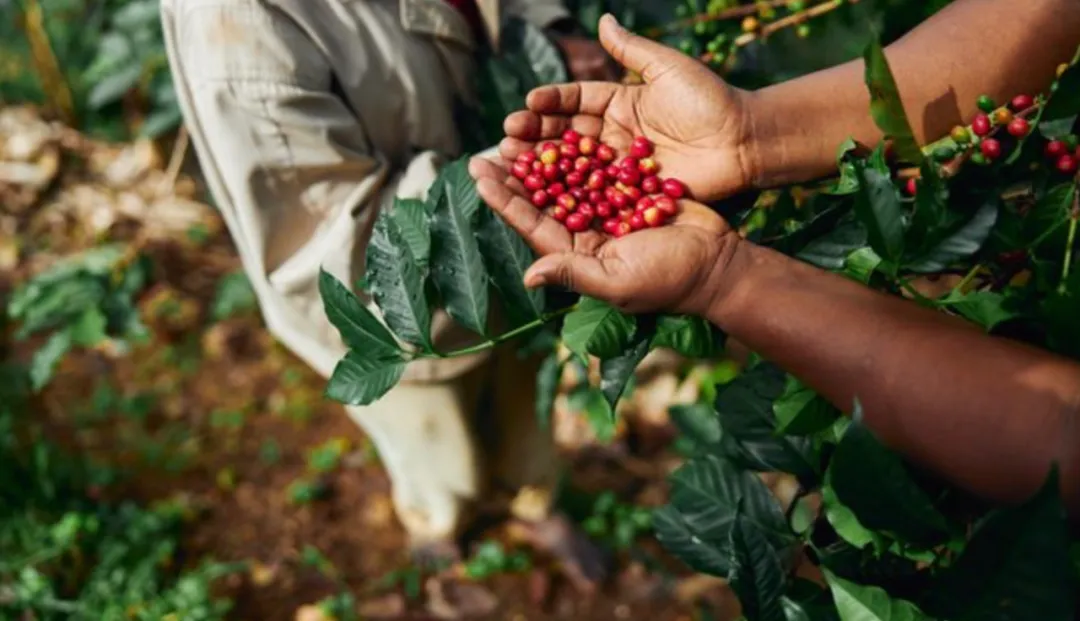
Kimel Estate (Kimel) is located in the Wiki Valley on the western highlands of Papua New Guinea, near the Kimel River. It is an estate jointly owned by many small coffee farmers of the surrounding Opais people, and it has its own wet processing mill, so it can be described as a private cooperative. The estate enjoys excellent growing conditions and the mill maintains a stable quality control process, enabling it to produce high-quality coffee.
Related Reading
Comments (0)
Loading comments...
You May Be Interested


Trending Reviews
Popular Videos

With you, wherever you are! We provide useful features to help you find new things you'll love






