Source:Best Coffee > News Author:qjroot Published:2024-07-12 19:00:22
South America is located in the southwestern hemisphere and is the fourth-largest continent by land area. The Andes run almost the entire length of western South America, and South America is a continent with many volcanoes, frequent earthquakes and many strong earthquakes. Its climate is warm and humid, mainly tropical, with abundant rainfall. Because it has diverse environmental resources, quite a few countries on the continent focus on agricultural cultivation such as coffee, including Ecuador, Peru, Brazil and Colombia.
In the past, Colombia was constantly in the midst of war, with social unrest, and development such as coffee also stalled because of it. Today, however, it has developed into a world-recognized producer of Arabica coffee beans and the world's third-largest coffee-producing country.
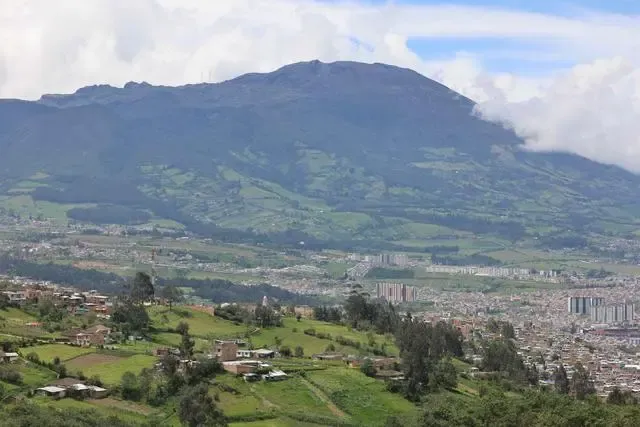
According to some records, coffee may have been introduced to Colombia in 1723 by Jesuit monks and then gradually spread throughout the country. However, during 1899-1903, the country of Colombia was at war, which caused the coffee-growing population to plummet and a large number of plantations to be abandoned. After the war ended, in order to save the coffee industry, the government began to consolidate wasteland and divide it into small plots, selling them to farmers at extremely low prices so that farmers could grow coffee and other crops and start a new life. By 1912, coffee had developed and accounted for 50% of Colombia's total exports.
But coffee produced by small coffee farms did not have much say in the international coffee market. Therefore, in 1920, on the proposal of coffee farmers, the Colombian Coffee Federation was established to protect the interests of small coffee farms. Afterwards, the organization continued to grow and develop, and in 1927 it led to the establishment of the more authoritative and standardized National Federation of Coffee Growers of Colombia, abbreviated as FNC. After its establishment, FNC carried out a series of measures, including strictly controlling quality, setting up a national coffee research center, and enhancing the global competitiveness and influence of Colombian coffee.
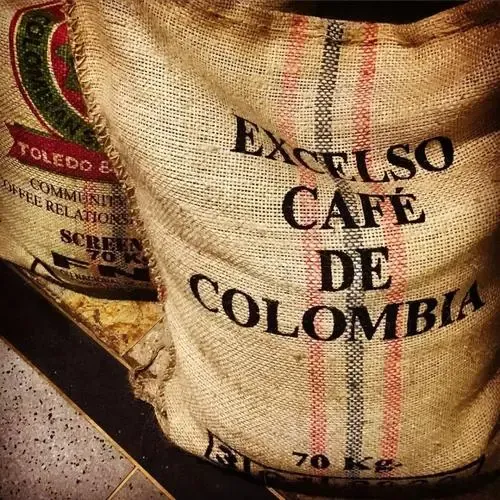
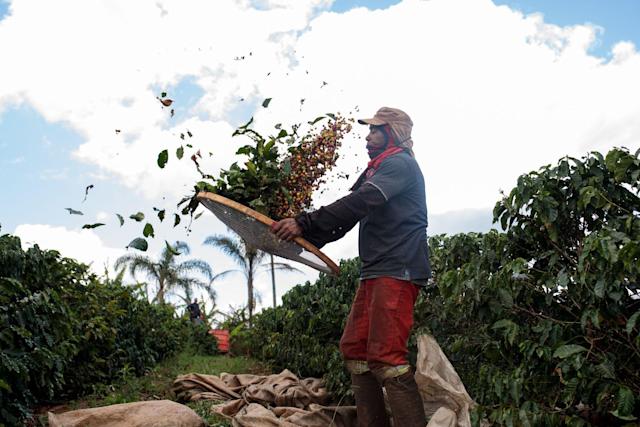
Colombia's ability to achieve such high production is inseparable from its terrain and climate. Three Cordillera mountain ranges run north to south across Colombia, extending toward the Andes, and coffee is planted along the highlands of these ranges. On both sides of the mountains at higher and lower elevations there is fertile volcanic soil, and the mountain terraces provide diverse climates, so it is harvest season all year round, with different varieties of coffee ripening in succession at different times.
Colombia is a relatively large country with multiple coffee-producing regions, and the main coffee regions include Cauca, Santander, Narino, Tolima, and Huila, among others. There are two harvest seasons a year; the main harvest is from October to January, and the secondary harvest is from April to July.
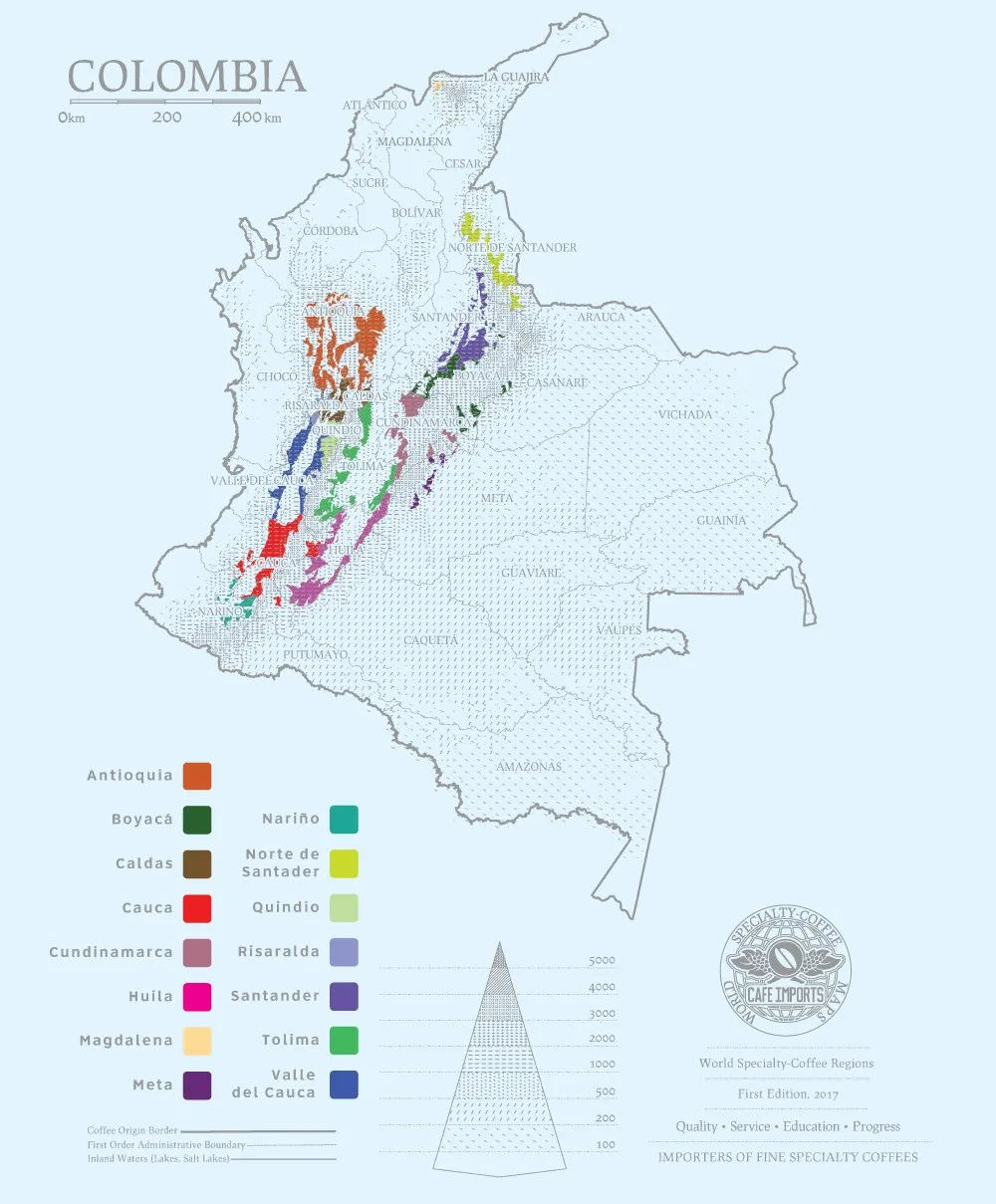
Among them, Huila and Tolima are better known, but Narino also produces high-quality coffee beans and appears on the COE list year after year.
Narino is also known as Narino, and is located on the southwestern coast of Colombia, near Ecuador. It has many rivers and lakes, as well as the Cumbal Volcano and the Galeras Volcano. These natural conditions make agriculture here well developed. Because it is close to the equator, the coffee from this region is known for its highly complex flavor layers and floral aroma. There are many famous coffee estates here, such as Santa Ana estate, which won second place in Colombia's COE in 2023.
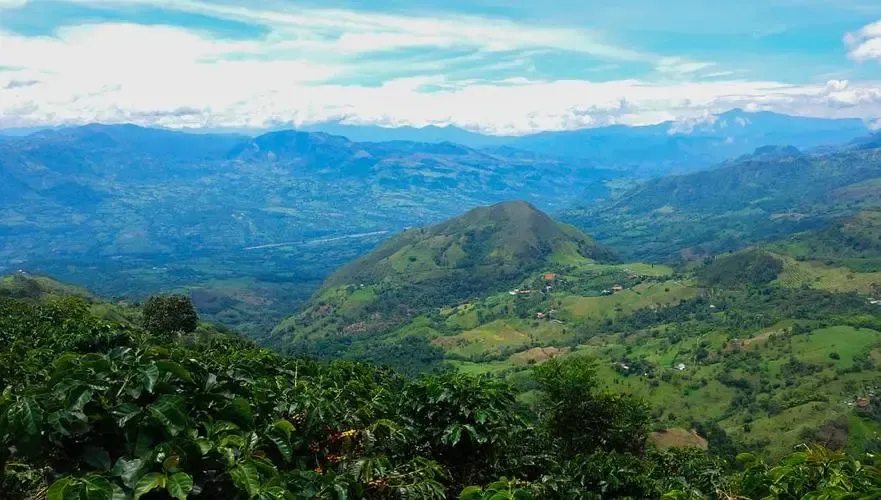
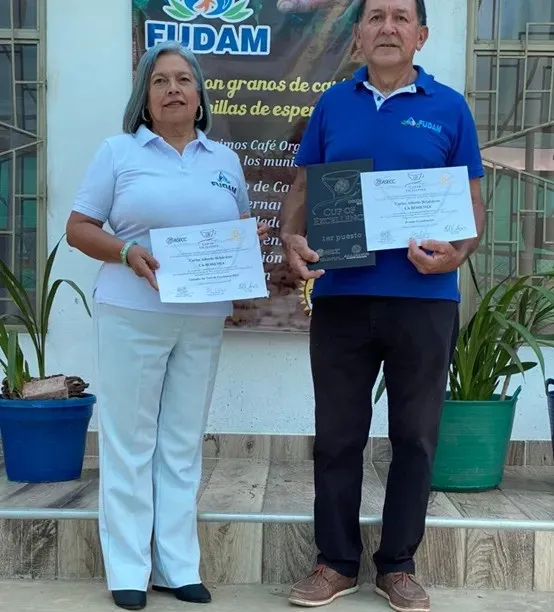
Santa Ana Estate is currently managed by Carlos Alberto Belalcazar and Raquel Lasso Munoz, a married couple. The wife, Raquel Lasso Munoz, is the founder of the FUDAM smallholder producer organization, served as its president for many years, and manages La Bohemia Estate. Her husband, Carlos Alberto Belalcazar, is a coffee producer with about 30 years of work experience and has extensive knowledge and experience in cultivation and processing. At present, the couple focuses on promoting the coffee of Narino Department.
At this couple's estate, the main variety planted previously was Caturra (Caturra), while in recent years they began switching to Geisha (Geisha). At Santa Ana Estate, the growing altitude is around 1990 m, while at La Bohemia Estate, the coffee is grown at an altitude of 2150 m. They began participating in the COE in 2017, and in the 2023 Colombia COE, Santa Ana Estate's Geisha won second place with 90.39 points, while La Bohemia Estate's Geisha won fifth place with 87.78 points.
Related Reading







Comments (0)
Loading comments...
You May Be Interested




Trending Reviews
Popular Videos

With you, wherever you are! We provide useful features to help you find new things you'll love






