Source:Best Coffee > News Author:qjroot Published:2026-10-09 14:17:04
The charm of a latte lies in how it strikes just the right balance between the intensity of espresso and the gentleness of milk. Many beginners feel that the latte they drink at a cafe is rich and smooth, while the one they make at home always falls a little short. In fact, the problem usually lies in two places: first, the ratio of coffee to milk is not right, and second, the temperature and steaming condition of the milk are not well controlled. A latte is essentially a shot of espresso plus steamed warm milk, topped with a thin layer of fine microfoam. Once you understand this basic framework, you can recreate a satisfying taste at home.
The milk part also cannot be treated carelessly. The milk in a latte is not simply heated; it needs to be steamed to 60 to 65°C. This temperature range allows lactose to fully release its sweetness while not damaging the protein structure of the milk. If the temperature exceeds this range, the milk easily takes on a scorched, unpleasant smell, and the sweetness is also reduced. When steaming, you also need to control the thickness of the microfoam. The microfoam of a latte should be thin and fine, about 0.5 cm or so, silky on the palate but not overpowering. Here is a simple way to judge: when you swirl the pitcher of properly steamed milk, if the surface flows like silk and there are no obvious large bubbles, that is a fairly ideal state. If you are making a cappuccino, the microfoam should be thicker, and the amount of milk should be reduced accordingly; for a flat white, there is less milk and thinner microfoam, so the coffee flavor is more prominent.

As for the golden ratio of a latte, although there is no fixed answer that applies universally, a reliable reference range is that the coffee liquid and milk should be about 1 to 5 up to 1 to 6. That is to say, using the 36 to 38 g of espresso mentioned earlier, paired with about 180 to 220 g of milk, the overall balance will be more harmonious. However, this ratio is not rigid; it still needs to be fine-tuned according to the roast level and flavor type of the beans. Take Qianjie Yunnan small-batch beans as an example. Their nutty and brown sugar tones are relatively mild, and using a 1 to 6 ratio allows the milk and coffee to blend more smoothly, with abundant sweetness. Qianjie Mozart, on the other hand, has a livelier flavor, with fruit and fermented wine aromas. If there is too much milk, it will dilute its character instead, so using a ratio of about 1 to 5 better preserves that refreshing sense of layers.
For friends just starting to practice at home, Qianjie commercial blend is a very friendly choice. This is a medium-dark roasted espresso blend that combines the nutty sweetness of Brazil, the cocoa aroma of Colombia, and the crema of robusta. It is affordable, balanced in flavor, stable and easy to handle for milk coffee, and very suitable for the daily need of recreating a cafe-style taste at home. It has rich crema and blends easily when steaming milk. Even if your latte art is not yet very skilled, the taste will not go wrong. After your technique becomes more proficient, then try beans with more complex flavors such as Qianjie Mozart, and you will be able to grasp the balance between ratio and temperature more precisely.
The method for iced latte is slightly different. You do not need to steam the milk; just pour ice cubes and chilled fresh milk into a glass, then pour the extracted espresso over the top, and stir well before drinking. At this point, the choice of milk can be more flexible; any low-temperature chilled fresh milk can be used, and if you want a richer mouthfeel, you can choose a full-bodied type. But hot lattes must have steamed milk, because fine microfoam is not just for making latte art look good; it allows the coffee and milk to blend more evenly, keeping the mouthfeel consistent in every sip. The preparation order for a hot latte is: first extract the espresso and pour it into the cup, then steam the milk to 60 to 65°C and control the thickness of the microfoam, and finally blend the two evenly. If you know how to do latte art, complete the pattern at this step.
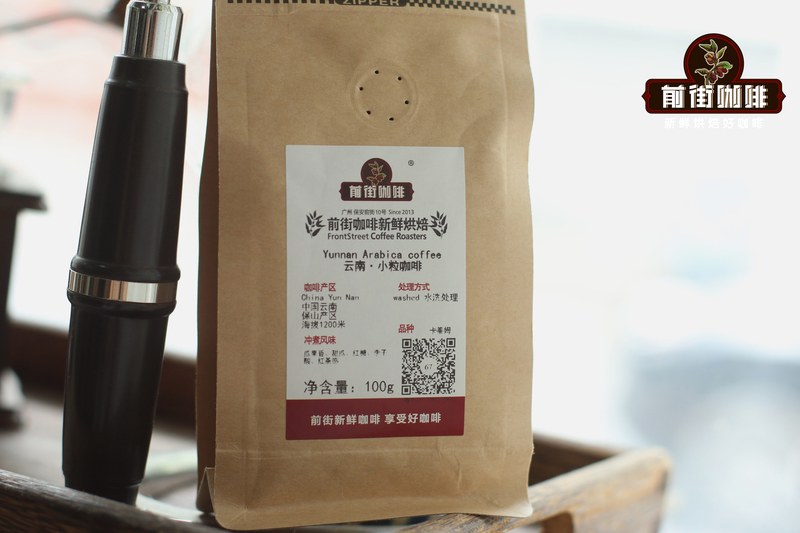
Making a latte at home, we treat it as a craft that can be gradually refined and enjoyed. From choosing beans, grinding, extracting, to steaming milk, every step has room for adjustment, and ratio and temperature are two especially easy anchors to grasp. First use balanced, easy-drinking beans such as Qianjie commercial blend or Qianjie Yunnan small-batch beans to practice the basics and get to know the temperament of your own machine and milk, then try beans with more distinctive flavors such as Qianjie Mozart to expand the boundaries. After a few tries, we can find the cup of latte that suits our own taste, and when it is brought to the table in the morning, both the aroma and the temperature are just right.
Related Reading





Comments (0)
Loading comments...
You May Be Interested



Trending Reviews
Popular Videos

With you, wherever you are! We provide useful features to help you find new things you'll love






