Source:Best Coffee > News Author:qjroot Published:2026-01-11 14:42:24

For more specialty coffee knowledge, please follow our WeChat official account: FrontStreet Coffee
"Passing by a coffee shop, at the bottom of the espresso menu it said [Switch to SOE for 3 yuan extra]." So what exactly is SOE, and does switching to it make the coffee taste better! This installment of Barista Training Diary will walk you through what SOE is.

What Is SOE?
SOE is the abbreviation of "Single Origin Espresso," meaning "single origin espresso." Its key point is to highlight the coffee flavor of a certain origin; put plainly, it means using single origin coffee beans to make espresso. Its opposite is espresso blend beans, and FrontStreet has also stressed many times that blend beans are a balance struck between flavor, consistency and price, that is, if you want both flavor and consistency advantages, the price will be high; while taking price and consistency as the premise means sacrificing flavor.

But SOE is different. First let us look at the background of its birth. SOE only began to rise in recent years. Single origin coffee beans used in pour-over can express all kinds of flavors with regional character, and coupled with the diversity of information media in recent years, the news that single origin coffee beans are used in the World Barista Championship has spread widely. So applying single origin coffee beans to espresso is also the direction of the trend.
Is SOE Coffee Specialty Coffee?
Actually this question is equivalent to asking whether single origin coffee is specialty coffee. The answer is that it is not entirely equal. When the concept of specialty coffee was first proposed in the 1970s and 1980s, yield was the primary goal at the time. Coffee beans were collected and processed centrally by origin and exported in the name of the country to earn foreign exchange. Imagine it: coffee beans of uneven quality mixed together, and having no obvious negative flavors was already extremely lucky.

Back then Ms. Erna Knutsen proposed that specialty coffee is "coffee beans cultivated under the unique microclimate and geographical conditions of an origin, with the flavor of that origin." The essential meaning is that good coffee should not be mixed into large batches of bulk commodity beans, but should be separated out. It aims to distinguish it from the bulk commercial coffee of the New York futures trading market.
Therefore specialty coffee beans require good varieties, a good environment, and intensive cultivation to produce high quality, good tasting coffee beans, while single origin coffee beans merely refer to coffee beans from a single origin that form the flavor of that origin. There is no requirement on quality. For example, FrontStreet's Indonesia Lintong Mandheling G2 is a single origin coffee bean, but it is not necessarily a specialty coffee bean (specifically it still depends on the cupping score). Of course, the single origin coffee we drink in coffee shops is almost 100% specialty coffee beans.

What Are the Advantages and Disadvantages of SOE Coffee?
In FrontStreet's view, SOE has been labeled from birth as coffee with good origin flavor, which means the quality of the coffee beans selected must be guaranteed. How can the advantages of SOE coffee be highlighted? Of course it is that the flavor must stand out, with that eye-catching feeling. This means good beans alone are not enough; suitable roasting is also needed.
Take espresso blend beans: to satisfy consistency and make up for insufficient coffee bean quality, the roast level is deepened, and then the flavor becomes consistent. But SOE coffee, to show an eye-catching flavor, cannot be like blend beans, nor can it directly use the light roasted single origin coffee beans meant for pour-over to make SOE; if the roast is too light, the extracted espresso will be incredibly sour and astringent. Therefore, SOE beans need a unique roasting profile designed for them.
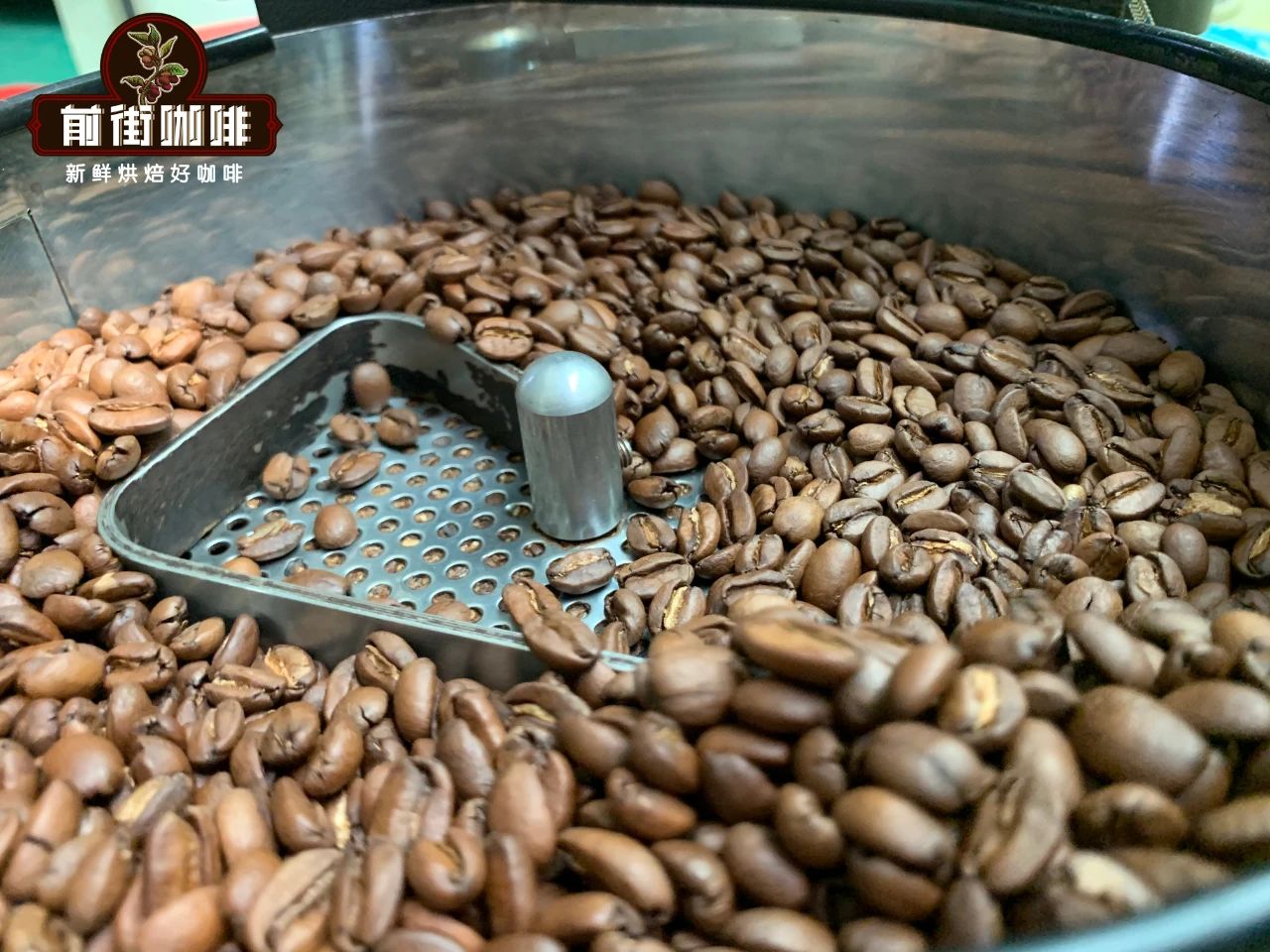
Making a delicious SOE is not simply a matter of choosing a single origin coffee bean of good quality; it takes countless roasting trials and extraction adjustments to have a chance of reaching the ideal result (sometimes after several roasts and extractions, you find this bean is simply not suitable for making espresso). Espresso can amplify the flavor of a single origin coffee bean, and it will also amplify the defects of that coffee bean; for example, some coffee beans with good flavor will be lacking in body. Therefore, in some shops that offer SOE, only 1-2 SOE single origin beans can be found for customers to choose from.
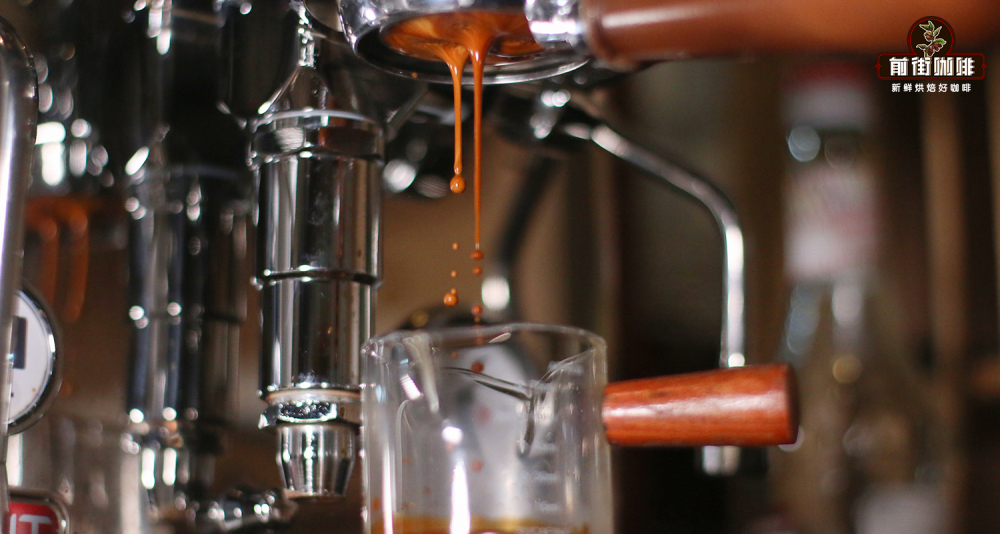
Of course, a latte or americano made with SOE will have aromatic characteristics that a blend simply cannot match. For example, an americano made with a properly extracted Qianjie Yirgacheffe Gutingding SOE clearly delivers notes of citrus, florals and honey, and the lingering aroma left in the cup after you finish is especially noticeable, something that some bitterness-forward blends cannot achieve.

To that end, for customers who love the Ethiopian region and need to make SOE, Qianjie specially selected three natural single-origin coffees, adjusted a separate espresso roast profile for each of them, and launched Huakui SOE coffee beans, Chaka SOE coffee beans and Red Cherry SOE coffee beans respectively.

If you prefer espresso with rich fruity aromas and rounded sweetness, then high-altitude beans from some Central and South American countries may be your thing. Coffees from countries such as Colombia, Panama, Costa Rica, Guatemala and Peru are usually given a medium roast in order to bring out the sweet aromatics and caramel character of the origin/variety, so they are compatible with a range of extraction methods.
Also, if you want to maximise the fruity aromas of your SOE coffee, it is worth starting with single-origin beans processed by natural, honey or anaerobic natural methods. For example, Qianjie Colombia Sidra undergoes double anaerobic natural processing, and the SOE americano it produces has obvious notes of blueberry juice, passion fruit and ripe grapes; another SOE latte made with Anaerobic Natural Big Navel, also from Colombia, has aromas of orange, nuts and milk candy.

If none of the single-origin coffees mentioned above are your type, or you are not too keen on acidic coffee, then look among single-origin coffees from Asia and South America, ideally ones roasted to a medium to dark level. For example, espresso made with Qianjie Brazil Cerrado and Colombia Queen's Estate beans shows low acidity without bitterness and a balanced profile.

How do you make a delicious SOE coffee?
In fact, making a delicious SOE is not difficult. Just as with dialling in espresso as usual, the first step in making SOE is still to apply the basic formula of a "1:2 dose-to-beverage ratio" and keep the time within 25 to 35 seconds, while the grind size depends on whether the flow rate falls within that time range.
For example, Qianjie uses 20g of Huakui SOE coffee grounds to extract 40g of coffee liquid (18g of coffee grounds corresponds to 36g of coffee liquid). When the time falls far short of 25 seconds, it means the grind is too coarse and needs to be made finer; if the coffee liquid finishes flowing in around 30 seconds, it means the grind size is roughly fine as it is, so there is no need to change the setting.

Since SOE is ultimately made into flavoured coffees such as americano, latte and flat white, once the espresso is set we need to make some fine adjustments to the extraction plan in advance based on the SOE's own flavour profile.
If you are using a medium or medium-light roasted Ethiopian coffee whose regional flavours are fresh notes such as florals, bright fruit acidity and berries, the espresso it produces tends to have thin or even no crema. In this case we can compensate for the aromatic compounds in the coffee by increasing the dose by 0.3 to 0.5g. For example, Qianjie uses 20.5g of Huakui SOE coffee grounds extracted over 31 seconds to yield 40g of coffee liquid as the base; the americano it makes shows a refreshing sweet-and-sour mouthfeel, and the coffee strength of the latte is also boosted, so you can better perceive the aromas of the espresso combined with milk.

When we make SOE with a fruity single-origin coffee that also carries a certain fermented flavour, the espresso itself has rich sweet-and-sour flavours. If you want the SOE americano to show a rich aroma as well, try increasing the espresso extraction yield by 3 to 5g, which can give the coffee higher sweetness and a longer finish; if you are making an SOE latte and want to highlight the single-origin coffee's aroma, simply reduce the amount of milk. Suppose you originally used 200g of fresh milk, you can then change the amount to 160 to 180g.

The last common scenario is when using a medium-dark roasted single-origin coffee, the SOE shows harsh flavours such as rubber, hay, smoke and charcoal, which means the espresso has most likely been over-extracted, and that is why the americano or latte it makes is so hard to drink. The fix is simple: reduce the espresso extraction yield by 3 to 5g to effectively remove the defective finish;
but if your coffee has a weak aroma, a short finish and obvious acidity, that means the SOE is probably under-extracted, and you need to make the grind slightly finer so that the extraction time is extended by 2 to 3 seconds, thereby ensuring a moderate coffee strength.
Related Reading
Comments (0)
Loading comments...
You May Be Interested

Trending Reviews
Popular Videos

With you, wherever you are! We provide useful features to help you find new things you'll love






