Source:Best Coffee > News Author:qjroot Published:2024-11-01 18:35:47
According to Ethiopian media reports, relations between Ethiopia and its neighbor Somalia are continuing to deteriorate. Recently, Somalia's Ministry of Foreign Affairs and International Cooperation expelled Mr. Ali Mohamed Adan, the number two counselor at the Ethiopian embassy in Somalia, and declared him persona non grata.
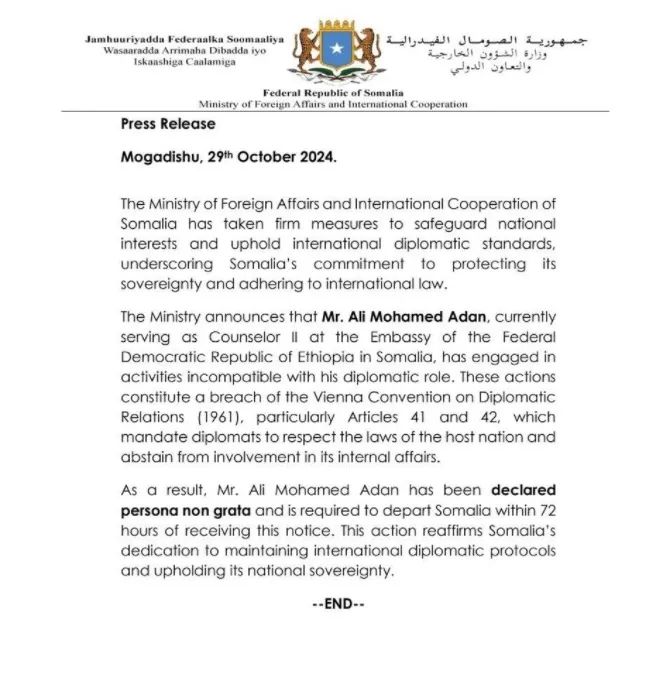
It is reported that the Somali authorities said the diplomat's conduct was incompatible with his duties, and stated in a declaration that the diplomat violated Articles 41 and 42 of the Vienna Convention on Diplomatic Relations, which require diplomats to respect the laws of the host country and to refrain from interfering in or participating in its internal affairs; the Ethiopian diplomat was therefore ordered to leave within 72 hours.
This is not the first time Somalia has expelled an Ethiopian diplomat. As early as April this year, Somalia's Ministry of Foreign Affairs issued a declaration confirming that the Ethiopian ambassador would leave Somalia within 72 hours. In addition, it stated that Somalia's ambassador in Addis Ababa, the Ethiopian capital, had been recalled to Somalia for comprehensive consultations.

At present, relations between Somalia and Ethiopia continue to deteriorate. The reason is that in January this year, after Ethiopia signed a memorandum of understanding with Somaliland (one of the autonomous regions of the Federal Republic of Somalia, which has unilaterally declared "independence" but has never received international recognition), in exchange for leasing the port of Berbera in the Gulf of Aden, Ethiopia would receive international recognition of Somaliland as an independent country.
The Somali government is dissatisfied with Ethiopia's signing of the agreement with Somaliland, believing it infringes on Somalia's national sovereignty. Therefore, from January to now, the Somali government has taken a series of measures to pressure Ethiopia and put the country at a disadvantage.
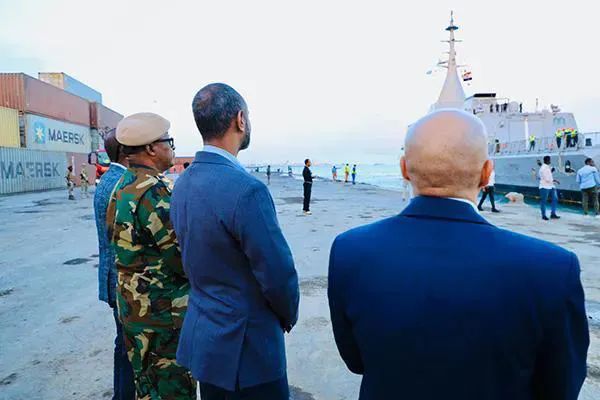
During this period, Somalia cooperated with Eritrea and Egypt. Egypt recently delivered two batches of military aid to Somalia, including heavy artillery, anti-tank weapons and armored vehicles, strengthening Somalia's "ability to protect its land and sea borders." In response, Ethiopia warned that ammunition and these weapons provided by external forces could further exacerbate the region's fragile security situation.
Due to the deterioration of relations between the two countries, Ethiopia still has not obtained Somaliland's Berbera port as stipulated in the memorandum of understanding, and at the same time the two ports of Mogadishu and Kismayo in southern Somalia cannot be used, so it can only continue to rely on Djibouti's port for Ethiopia's import and export business.
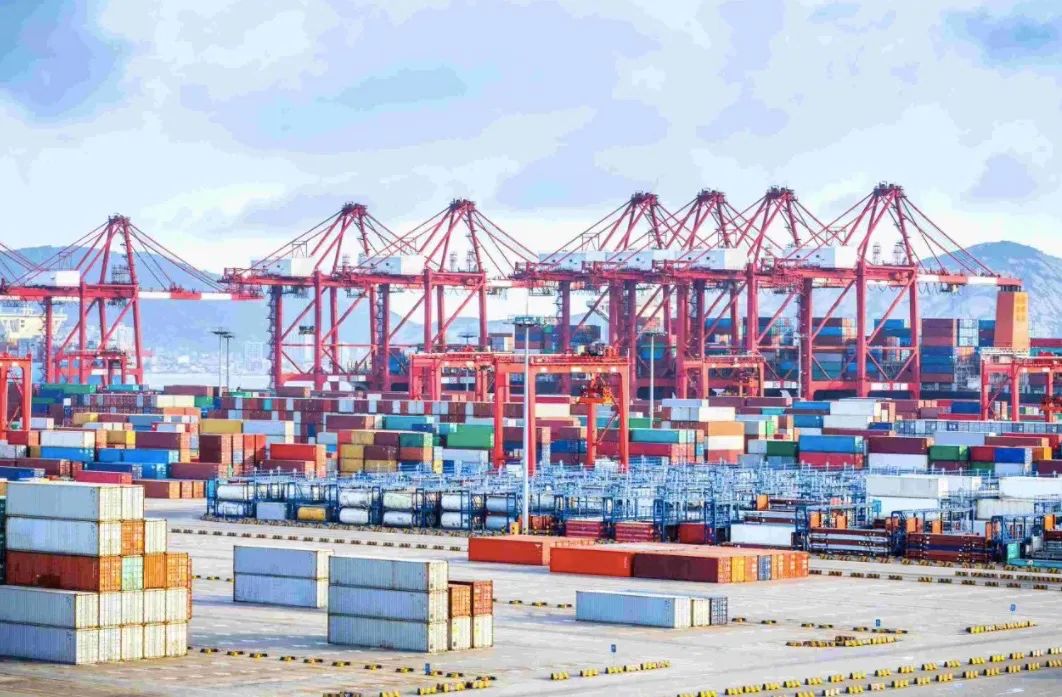
However, the port of Djibouti is located at the southern entrance to the Red Sea and has been affected by the Red Sea crisis recently. Since the outbreak of the Israeli-Palestinian conflict last October, the Houthi armed group, in order to pressure Israel to stop its military operations, has continuously attacked foreign merchant ships passing through the Red Sea, and has so far attacked more than 180 ships in total. As a result, shipping companies and vessels can only choose to detour or suspend vessels in the region, so the throughput of the port of Djibouti has decreased, hindering Ethiopia's export and import business of major commodities such as coffee.
However, recently Ethiopian Prime Minister Abiy said in parliament that Ethiopia should have access to the Red Sea according to any law and the experience of any country, as this involves national interests, but Ethiopia will not seek this goal through war or force.

In addition, he also spoke about Ethiopia's relations with Somalia, calling the two sides brothers, and said Ethiopia has no agenda against Somalia. He also said Somalia has time to "rethink and reprioritize" its national interests, and Ethiopia will "wait patiently." Ethiopia will not go to war with anyone, and Ethiopia has no interest in war.
For Ethiopia's current coffee industry, exports and costs are the biggest problems. On the export side, due to the continued deterioration of relations with neighboring countries, Ethiopia cannot obtain a new outlet to the sea and can only continue to rely on Djibouti's two ports, but due to the impact of the Red Sea crisis, imports and exports continue to be blocked. Moreover, the obstruction of imports has exacerbated price increases for some imported goods in Ethiopia.

At the same time, with the arrival of the shipping peak season in the second half of the year and the surge in shipment volumes, shipping companies will raise prices, leading to higher freight rates and increased shipping costs. In addition, Ethiopia's earlier new fiscal regulations have caused the exchange rate of the Ethiopian birr to continue depreciating, so local prices only rise and never fall, causing coffee cultivation costs to keep climbing as well. Currently, the prices of Ethiopian coffee beans across the board have been raised by 0.5%. Furthermore, with the EU EUDR postponement, EU buyers have slowed their purchasing of Ethiopian coffee beans. In summary, various circumstances may lead to a further increase in Ethiopian coffee prices.
To learn more news and information about coffee origins, please scan the QR code to follow: Kaping
Long-press the QR code to follow:

Related Reading







Comments (0)
Loading comments...
You May Be Interested






Trending Reviews
Popular Videos

With you, wherever you are! We provide useful features to help you find new things you'll love






