Source:Best Coffee > News Author:qjroot Published:2024-06-20 18:32:55
In June, during the harvest period of Brazil’s new coffee crop, data from Safras & Mercado shows that Brazil has harvested 37% of this year’s coffee production, higher than last year’s 33% and the five-year average of 34% for the same period.
Safras & Mercado stated that the current acceleration in Brazil's coffee harvest is due to weather conditions. The coffee-growing regions in Brazil are currently experiencing relatively dry weather, with no rainfall in the past two weeks, which has significantly advanced the harvesting progress. They also believe that the current dry weather is beneficial for the processing of coffee cherries, and that proper drying, processing, and storage procedures can help improve the quality of the coffee beans.
However, at the same time, there are concerns that the drier-than-usual weather conditions could have adverse effects on Brazil's coffee crops, which is why the harvest pace has been accelerated.
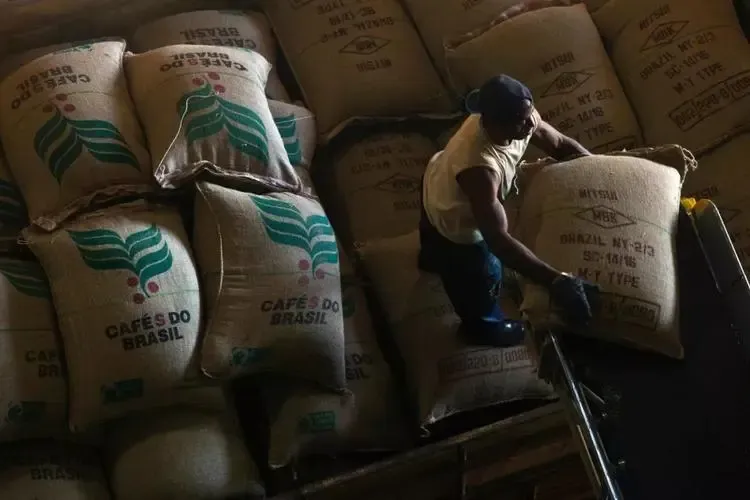
Although the harvesting pace has accelerated, the sales of Brazil’s new season coffee have slowed down relatively. Currently, Brazil has sold 22% of this year’s coffee production, which is lower than last year’s 26% and the five-year average of 32% for the same period.
In addition, port delays in Brazil continue. According to a report by Cecafé, the Brazilian Coffee Exporters Council, more than half of the coffee export ships were delayed and postponed their shipments in May.In the first few months of 2024 in Brazil, the delay rate for coffee ships at the Port of Santos, the country’s largest coffee export hub, was 80%, but the recent delay rate has improved slightly, with the May delay rate at the Port of Santos at 78%.
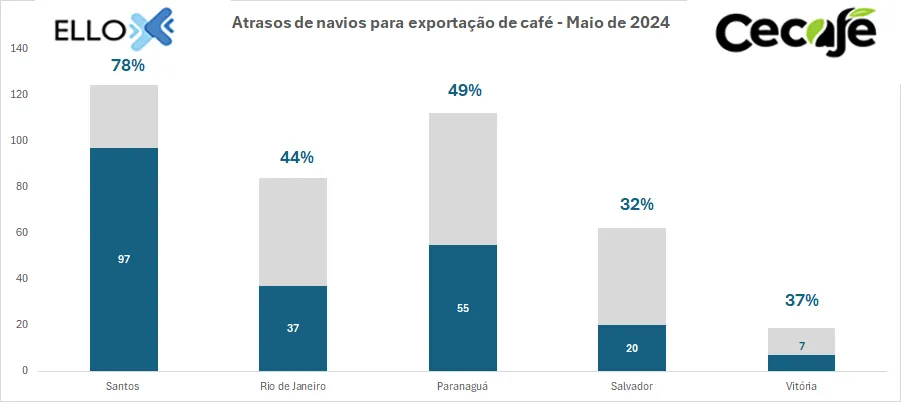
The Port of Santos has long been the main export hub for Brazilian coffee throughout history, but insufficient investment in container cargo transportation has failed to keep up with the growth of Brazil’s foreign trade, ultimately leading to a shortage of storage space and congestion at the port exit.
In fact, in recent times, the slowdown in sales of the new Brazilian coffee harvest is mainly due to the Brazilian government’s earlier proposal to revise the PIS/Cofins tax rules.According to the Brazilian Coffee Exporters Council (Cecafé), this will affect the cash flow of coffee exporting companies, impact costs, increase expenditures, and add to operational burdens, ultimately reducing the international competitiveness of Brazilian coffee. Moreover, some growers of crops such as soybeans and coffee have already stopped selling their agricultural products.
In addition,following the U.S. dollar breaking through the 1:5.40 barrier against the Brazilian real last week, the dollar has appreciated by more than 10% against the real so far this year. Some experts say that the significant appreciation of the dollar will continue to bring inflationary pressure to Brazil in the coming months.

However, there is some good news recently. According to local Brazilian media reports, the Brazilian Congress has rejected the government’s tax measures, allowing Brazilian coffee and other agricultural products to continue enjoying the PIS/Cofins tax benefits. As a result, the slowdown in coffee sales is expected to be resolved.
Related Reading





Comments (0)
Loading comments...
You May Be Interested

Trending Reviews
Popular Videos

With you, wherever you are! We provide useful features to help you find new things you'll love






