Source:Best Coffee > News Author:qjroot Published:2024-07-22 18:12:58
South America is rich in natural resources. The Andes run almost the entire length of the western part of South America and include Aconcagua, the highest peak in the Americas. The continent is also one of the world's more volcanic continents. South America is mainly tropical, with a warm, humid climate and abundant rainfall, and it has diverse natural resources. There are quite a few major coffee-producing countries in South America, such as Brazil, Colombia and Ecuador.
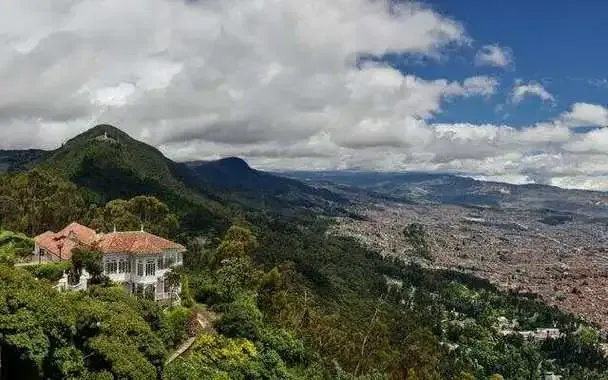
At present, Colombia is the world's third-largest coffee producer, thanks to its terrain and climate. Three Cordillera mountain ranges run north to south across Colombia and extend toward the Andes. On both sides of the ranges there is fertile volcanic soil, and coffee is grown along the highlands of these ranges.
Colombia lies in the tropics, and its climate varies with the terrain. The southern part of the eastern plains and the Pacific coast have a tropical rainforest climate, the mountains at an altitude of 1000-2000 m have a subtropical climate, and the northwest has a tropical savanna climate. The mountain tiers provide a diversity of climates, so it is harvest season all year round, and different varieties of coffee ripen one after another at different times.
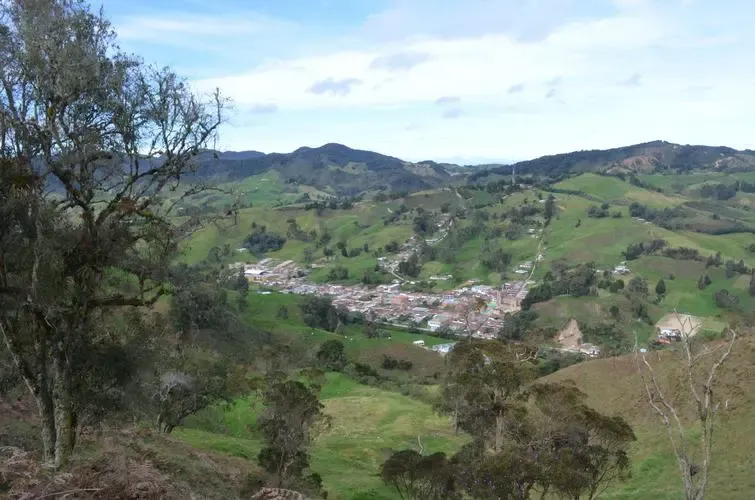
However, Colombia's coffee development path has not been smooth sailing. According to historical records, coffee was introduced to Colombia around the 18th century by Jesuit monks, initially planted in the Antioquia region and later spreading across the country.
But during 1899-1903, Colombia experienced war, which caused the coffee-growing population to plummet and a large number of plantations to be abandoned. After the war ended, in order to save the coffee industry, the government began to consolidate wasteland and divide it into small plots, selling them to farmers at extremely low prices, letting farmers grow coffee and other crops.
But coffee produced by small coffee farms did not have much say in the international coffee market. Therefore, in 1920, at the proposal of coffee farmers, the Colombian Coffee Federation was established to protect the interests of small coffee farms. Afterwards, the organization continued to grow and develop, and in 1927 it led to the more authoritative and standardized National Federation of Coffee Growers of Colombia, FNC, to enhance the global competitiveness and influence of Colombian coffee.
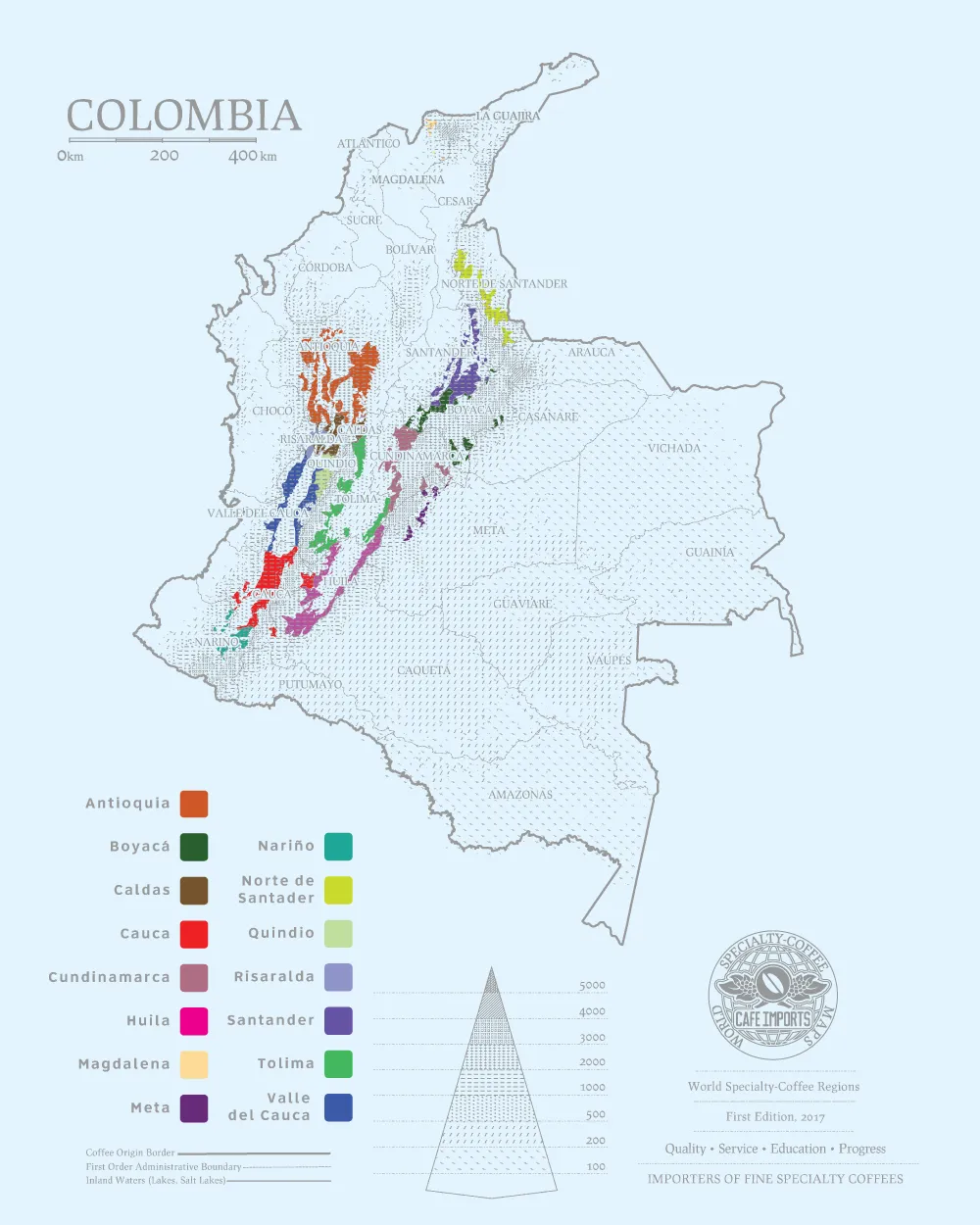
Colombia is a relatively large country with multiple coffee-producing regions, and the main coffee-producing regions include Cauca, Santander, Antioquia, Narino, Tolima, and Huila. There are two harvest seasons a year, with the main season from October to January and the secondary season from April to July.
Among them, Antioquia is located in north-central Colombia, where there are high mountain terrains belonging to the Andes, as well as warm sea breezes from the Caribbean Sea. Coffee is grown at an altitude of 1300-2200 m, and the higher altitude and moderate rainfall make the coffee grown here an important region for Colombian coffee.
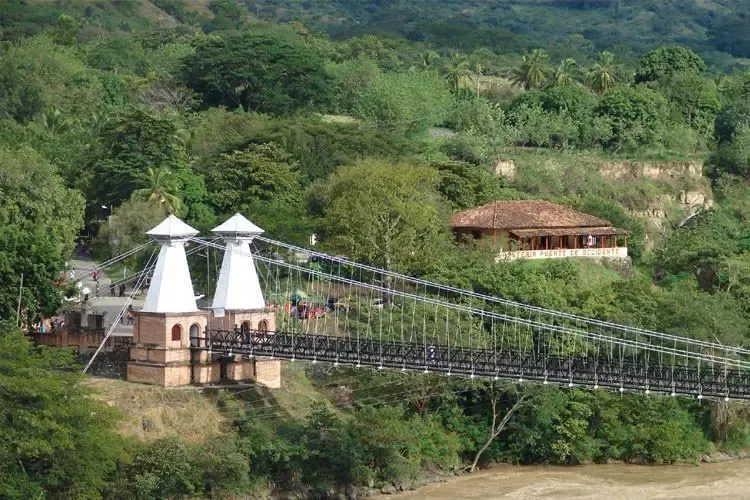
Thanks to its rich agricultural resources, Antioquia is currently Colombia's largest Arabica coffee producing region and one of the provinces that exports the most Colombian coffee beans.Although the Antioquia region is known for its output, it is also home to quite a few estates that produce high-quality coffee, such as La Palma Estate.
La Palma Estate is located in Santa Barbara, Antioquia, and is a farm under the well-known local Echavarría family, with Pedro Miguel Echevarría as the estate owner. In the past, the Echavarría family had always been a large-scale producer, and in the last 10 years it has begun shifting toward high-quality specialty coffee.
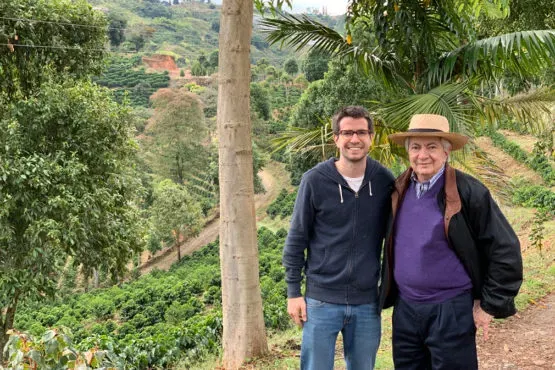
The Echavarría family discovered Chiroso in the town of Urrao more than 10 years ago, brought it back to grow at Santa Bárbara, and also vigorously promoted the Chiroso Chiroso variety in the surrounding areas. And in 2023, taking part in the Colombia COE competition, the estate earned 89.39 points with the Chiroso Chiroso variety, taking 8th place.
Related Reading

Comments (0)
Loading comments...
You May Be Interested

Trending Reviews
Popular Videos

With you, wherever you are! We provide useful features to help you find new things you'll love






