Source:Best Coffee > News Author:qjroot Published:2025-03-29 17:27:02
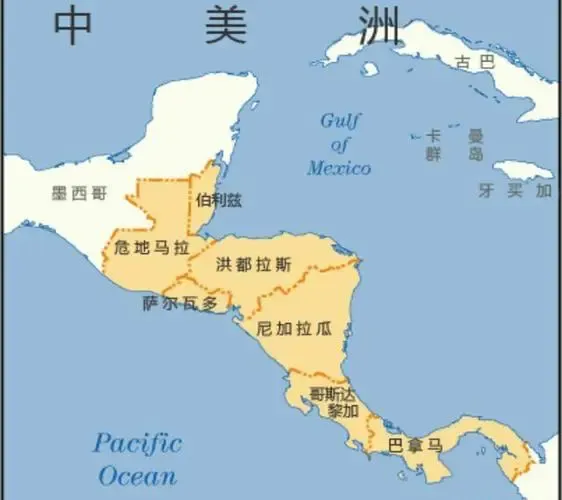
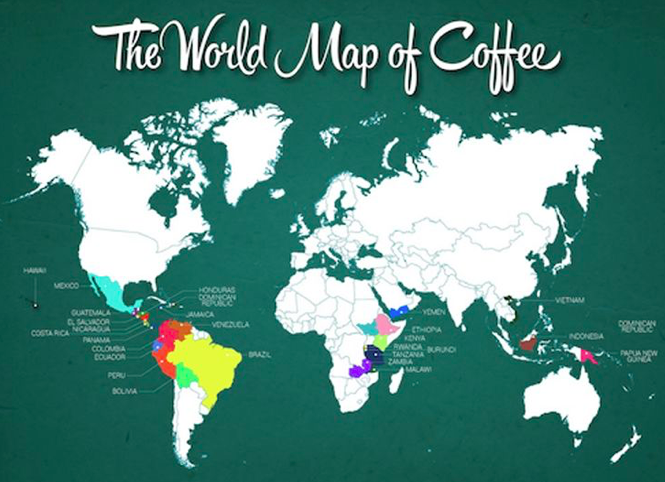
The economy of Central America is mainly agricultural, with tropical cash crops such as bananas, coffee and sugarcane grown for export being the most important, all because the region's terrain is dominated by plateaus, mountains and forests, and it has a volcanic belt more than 1,300 km long.Thanks to the accumulation of volcanic ash, the soil is fertile, and combined with the diverse climate here, many countries in Central America are famous for producing coffee. Among them, El Salvador produces far less than other countries, but El Salvador has a uniquely advantageous growing environment and diverse flavour expression.
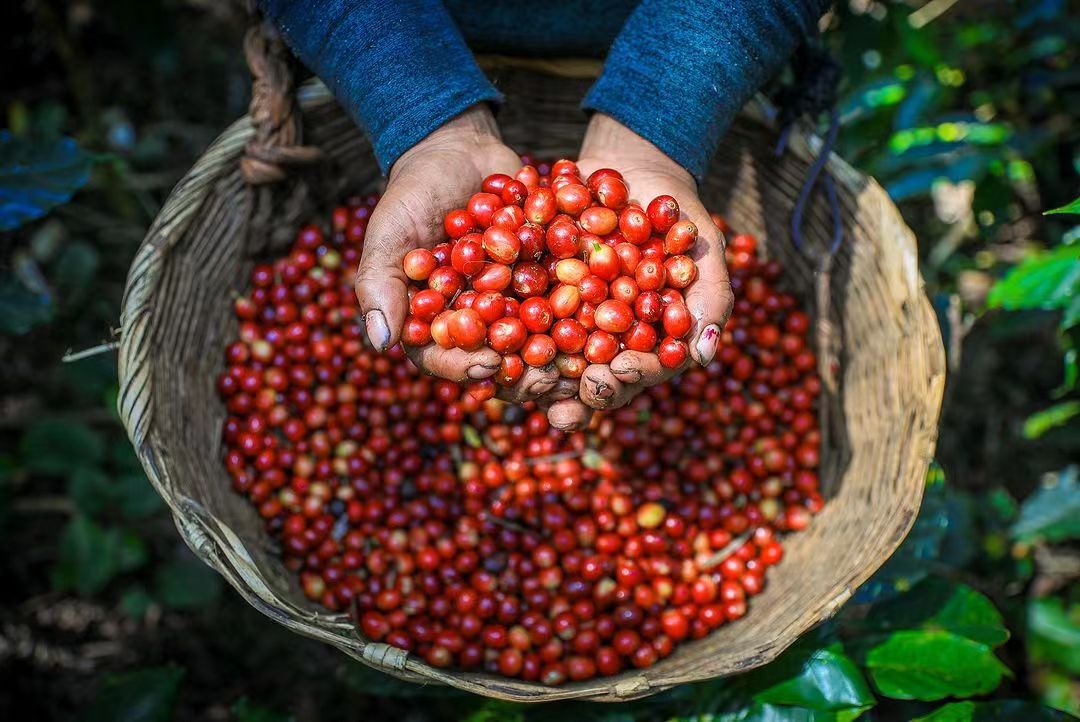
Before coffee arrived, the plant dye indigo had always been El Salvador's main export crop. However, in the 19th century, with the emergence of new, cheaper synthetic dyes, the country's indigo export business gradually disappeared, and coffee replaced indigo as the country's largest export crop.
But the coffee-growing land was basically held by the country's politicians, including the president at the time, who at one point owned more than 6,000 hectares of land. And these politicians used their positions (and the army) to force farmers to cede land and to do low-paid or unpaid labour on the estates, but these politicians were willing to invest funds in infrastructure, which allowed the coffee industry to flourish. In 1920, 90% of El Salvador's exports were coffee, and by 1970, El Salvador had become the world's fourth-largest coffee producer.
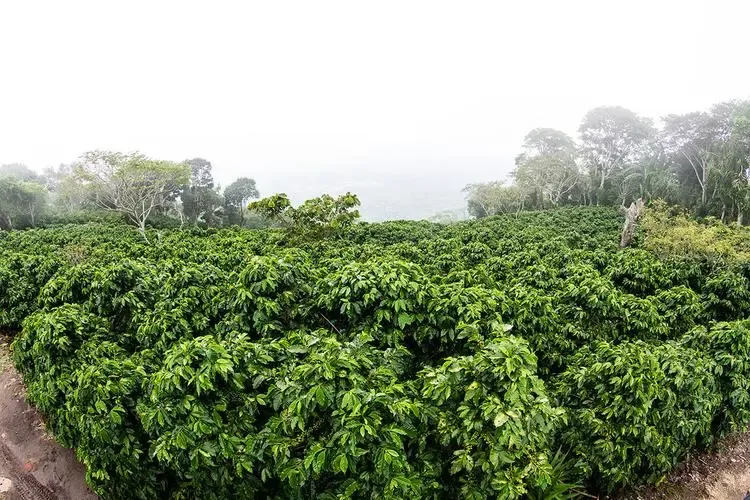
But the good times did not last. In 1979, civil war broke out in El Salvador, and it did not end until 1992. Although it affected the coffee industry, it also brought new land reforms that broke up many large estates, dividing the land and redistributing it to landless workers. Today, 95% of coffee growers in El Salvador grow coffee on less than 20 hectares of land. Although coffee production has declined considerably, the country's coffee industry has continued to shift toward quality.
Such results are possible because El Salvador has an exceptional growing environment. The country is known as the "Land of Volcanoes," with 25 volcanoes. Its terrain is mainly mountainous and highland, and the soil is fertile. The entire country has a tropical climate, but the mountain climate is cool, with annual rainfall above 1800 mm. Although urbanization means the country now has only 11% forest cover, 7% of which is coffee estates, it plays a strong role in environmental protection. More than 90% of local coffee grows under shade trees, which can delay the ripening of the fruit, help maintain the diversity of local and migratory wildlife, support aquifers by storing water, and prevent soil erosion.
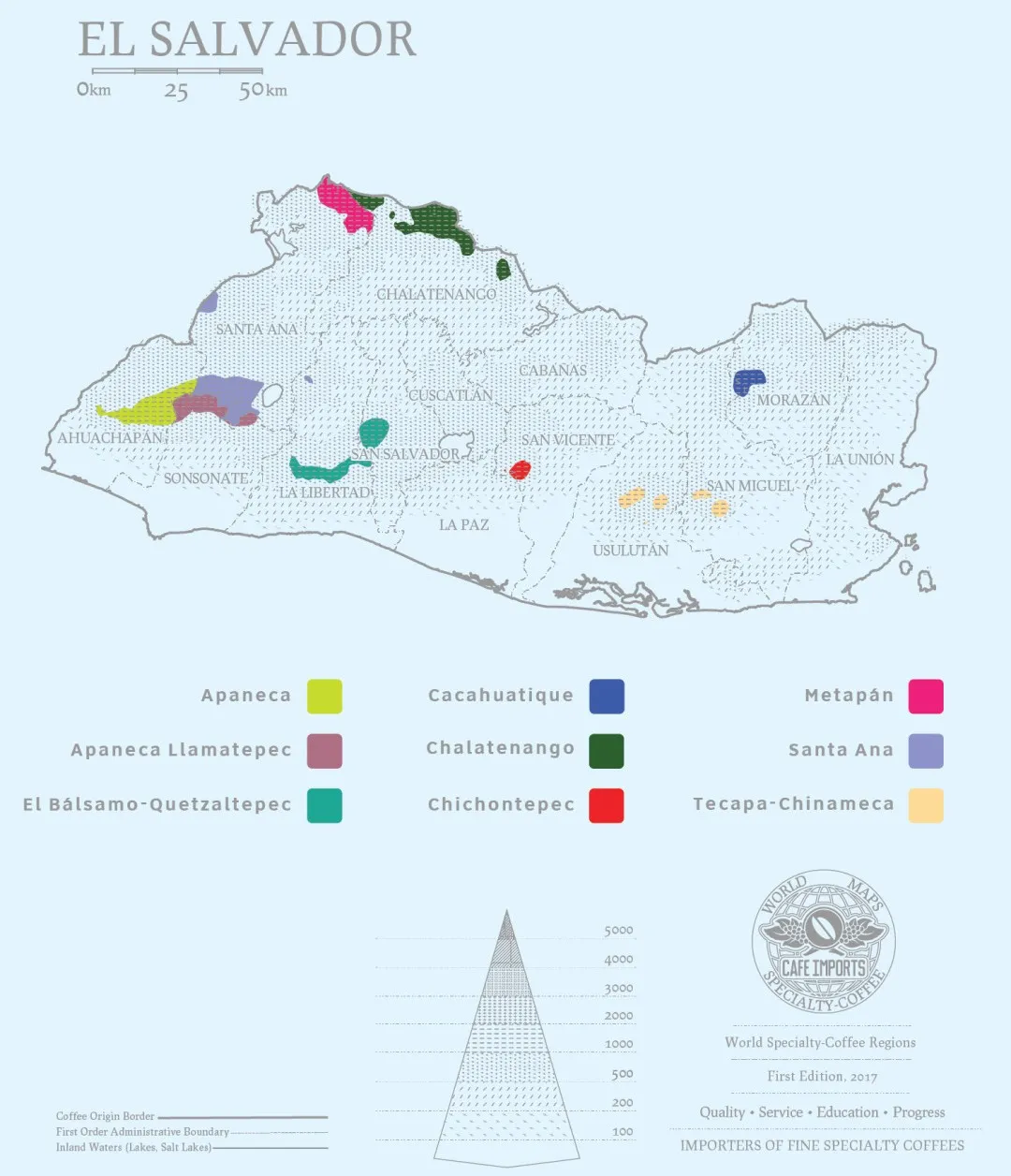
Coffee-growing regions are found throughout the country, with the Alotepec-Metapan highland area in the north and the Apaneca-Ilamatepec volcanic area in the west being the most famous, appearing year after year in El Salvador's COE competitions. Most of these regions grow Pacamara and Pacas varieties, and they have repeatedly placed in coffee competitions.
Apaneca-Ilamatepec is the largest coffee-growing region in El Salvador, located in the west of the country. It is filled with forests, lakes and mountains, as well as four volcanoes, dominated by Santa Ana Volcano (also known as Ilamatepec Volcano). Coffee is planted on the slopes on both sides of the mountain range at altitudes of 800-2300 m. Although volcanic activity here is frequent, the volcanic ash provides more fertile soil, and the diverse microclimates here make it possible to produce high-quality coffee. In this year's El Salvador COE, most of the estates came from this region, including the one that won second place in the natural group, El Aangel.
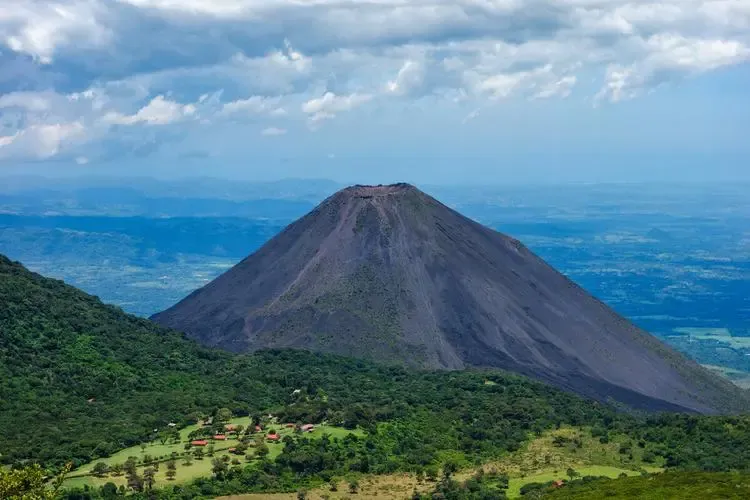
The owner of El Aangel estate is Rafael Gerardo Silva Esteves. According to Best Coffee, the estate was initially acquired by the Mathies family in 2016, when it was just a piece of land, and coffee planting began in 2018. Rafael had always worked at the farm's factory, and it was not until 2022 that Rafael purchased the estate.
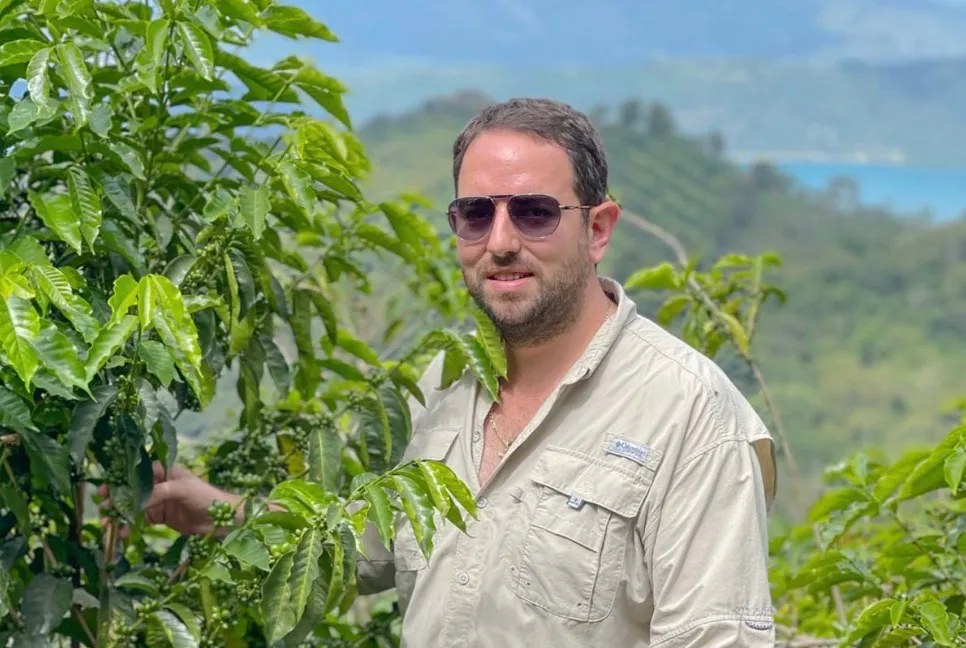
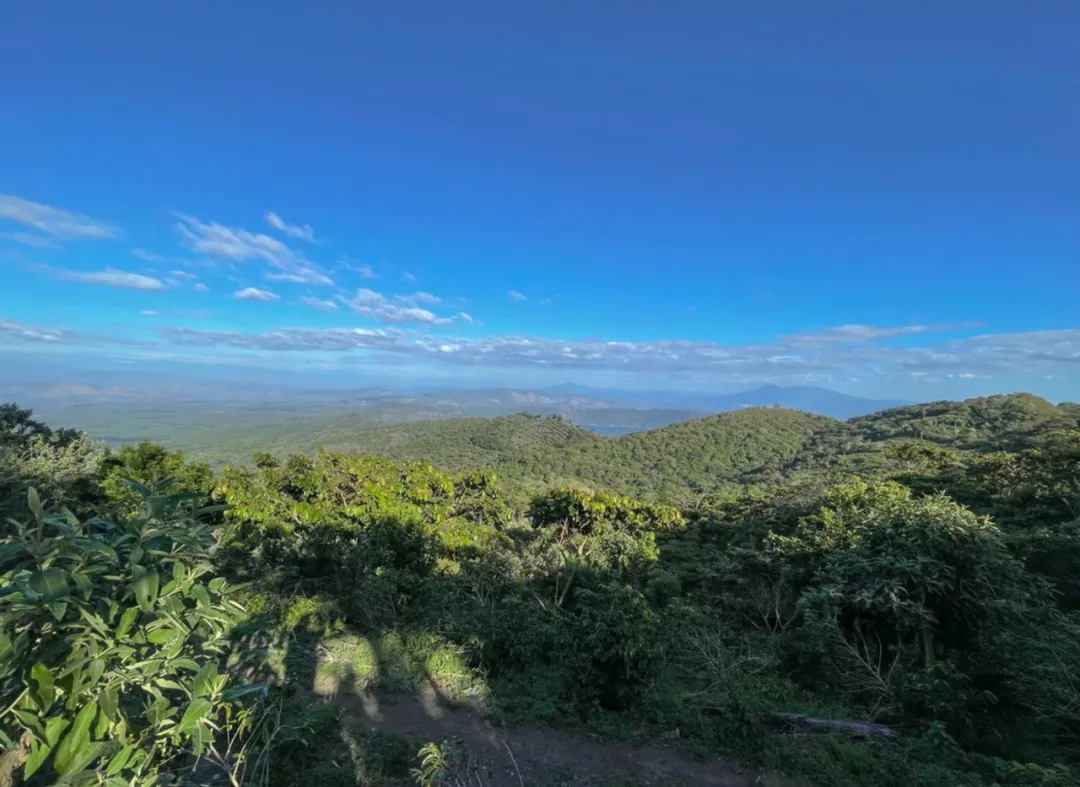
The estate is located on a volcano in Santa Ana, at an altitude of 1650m. The climate here differs from that of other estates: it is hotter and drier, making it very suitable for natural processing, and the greater diurnal temperature difference here, together with the mineral-rich volcanic soil, helps produce high-quality coffee. At present, the estate grows varieties such as Pacamara (Pacamara), Pacas (Pacas), Geisha (Geisha) and SL28, and the estate owner Rafael says that some new varieties will be introduced in the future, such as Sidra (Sidra) and Chiroso (Chiroso).
Related Reading



Comments (0)
Loading comments...
You May Be Interested


Trending Reviews
Popular Videos

With you, wherever you are! We provide useful features to help you find new things you'll love






